

What does a home improvement contractor do? They manage residential remodeling projects like kitchens, bathrooms, additions, and repairs, handling planning, permits, cost estimates, hiring subcontractors, sourcing materials, and quality checks from start to finish. Unlike a specialty tradesperson, they oversee the whole project, and a licensed contractor protects you with insurance if something goes wrong.
Here’s something most homeowners don’t know. A contractor can spend six to eight weeks on permits and planning before a single hammer swings. That waiting game confuses a lot of people who thought hiring help meant work would start right away.
So what does a home improvement contractor do during all that time, and why does it matter to you? The truth is, their job starts long before the demolition begins. They’re checking codes, lining up subcontractors, and building a budget that actually holds up.
We know how confusing this role can feel, especially when other guides lump contractors and general contractors together like they’re the same thing. They’re not always the same, and that difference can change what’s in your contract.
In this guide, you’ll get a real answer. You’ll learn what a home improvement contractor handles day to day, what licensing and insurance actually protect you from, honest cost numbers, and the red flags that separate a good hire from a costly mistake. Let’s start with the basics.
What Is a Home Improvement Contractor?
A home improvement contractor is a licensed professional who manages residential renovation projects from planning through completion. They’re not always the one swinging the hammer. Their real job is making sure the right people do the right work at the right time.
This might sound simple, but it gets confusing fast. Some sites use “home improvement contractor” and “general contractor” like they mean the exact same thing. They don’t always.
How It’s Different From a Specialty Tradesperson
Think about it this way. A plumber fixes pipes. An electrician wires your panel. A home improvement contractor oversees the whole project, even the parts they don’t personally do.
- A specialty tradesperson knows one trade deeply
- A home improvement contractor knows how to run the whole job
- One fixes a piece, the other manages the puzzle
If you just need a leaky faucet fixed, you don’t need a home improvement contractor. You need a plumber. But if you’re redoing your whole kitchen, plumbing, electrical, and cabinetry all at once, that’s when this role earns its keep.
Home Improvement Contractor vs General Contractor: Are They the Same?
Here’s the thing most articles won’t tell you straight. In many states, these two terms overlap so much that homeowners never notice a difference. In others, they’re licensed separately, with different scopes of work written into law.
This distinction actually matters for your contract, not just your vocabulary. If your state licenses these roles separately, hiring someone under the wrong license type can void your protection if something goes wrong. Before you sign anything, check what license category your contractor is actually registered under, not just what title they use on their business card.
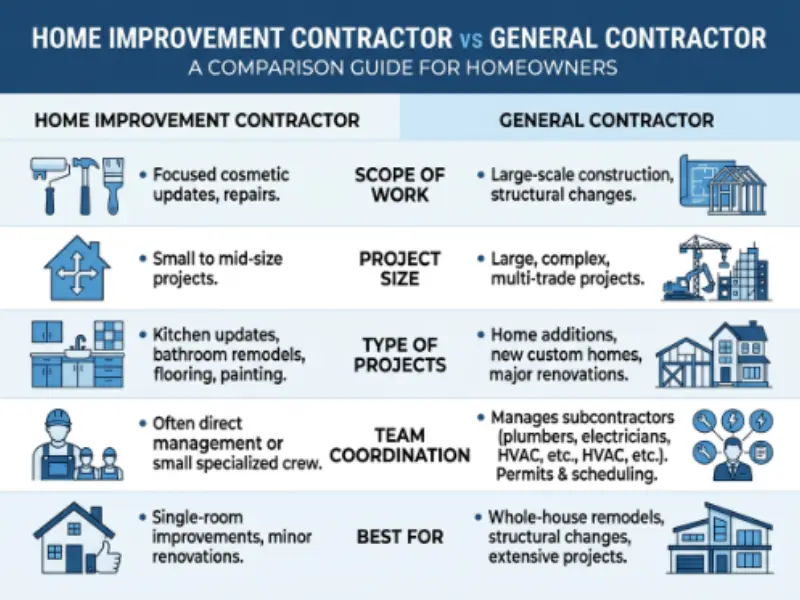
Once you understand what this role actually is, the next question is what they do with their time once you hire them.
What Does a Home Improvement Contractor Do Day to Day?
A home improvement contractor plans your project, pulls permits, hires subcontractors, manages your budget, and checks the finished work before calling the job done.
Planning and Initial Consultation
Every project starts with a conversation. Your contractor asks about your goals, your budget, and how you actually use the space.
- They walk the space with you
- They ask what’s non-negotiable versus nice to have
- They sketch out a rough scope before pricing anything
From real use, the projects that go smoothly are almost always the ones where this first conversation was thorough. Rushed planning shows up later as change orders and surprise costs.
Getting Permits Approved
This part is invisible to most homeowners, but it’s where a lot of the early time goes. Building permits protect you legally and make sure the work meets code.
A mid-size kitchen remodel typically takes a contractor six to eight weeks just for planning and permit approval, before any demolition starts. Homeowners who don’t expect this often assume their contractor is being slow. They’re not. They’re doing the part of the job you never see.
Budgeting and Cost Estimates
Your contractor breaks your project into real numbers: labor, materials, permits, and a buffer for the unexpected.
- Labor costs for every trade involved
- Material costs based on your choices
- Permit fees
- A contingency fund, usually 10 to 15 percent of the total
In practice, any estimate that skips the contingency fund is a red flag on its own. Renovations almost always uncover something once walls open up.
Hiring and Managing Subcontractors
Your contractor finds and books the plumbers, electricians, and other specialists your project needs. They check licenses, schedule everyone so work doesn’t overlap badly, and make sure one trade doesn’t undo another trade’s work.
Quality Checks and Final Walkthrough
Before your project is called finished, your contractor inspects everything against the original plan. You should get a walkthrough where you can point out anything that’s not right before final payment.

Once the day-to-day work is clear, it helps to know exactly which types of projects call for this kind of contractor in the first place.
What Kinds of Projects Do They Handle?
Home improvement contractors handle kitchen and bathroom remodels, room additions, flooring, decks, roofing, and structural repairs. Basically, any project with more than one trade involved.
Common Projects
- Kitchen and bathroom remodels
- Room additions and basement finishing
- Flooring installation across multiple rooms
- Deck building
- Roofing and siding upgrades
- Structural repairs that touch several systems at once
When a Specialty Contractor Makes More Sense Instead
Nobody else really answers this, but it matters just as much as knowing what a home improvement contractor does. If your project only touches one trade, like retiling a single bathroom floor or replacing one window, hiring a specialty contractor directly is usually faster and cheaper. You skip the management layer because there’s nothing to manage.
Here’s a simple way to decide. Ask yourself one question: does this project need two or more trades working together? If yes, a home improvement contractor saves you the headache of coordinating it all yourself. If not, go straight to the specialist.

Now that you know what kind of work they handle, the next thing worth understanding is why their license actually matters, not just that they have one.
Why Does Licensing Actually Matter?
Licensing means the contractor passed a state exam and proved real work experience, which protects you legally if something goes wrong. It’s not just a formality. It’s your safety net.
What a License Actually Requires
Most states require contractors to pass a trade or business exam, show a minimum number of years of documented experience, and carry proof of insurance before they get licensed.
- Pass a trade or business exam
- Show proof of prior work experience
- Carry required insurance
- Register with the state licensing board
Requirements change from state to state. What counts as licensed in Texas might look different in California. That’s exactly why checking your own state matters more than trusting a business card.
How to Verify a License Before You Sign Anything
Here’s something almost no article tells you to actually do. Every state licensing board has a public website where you can search a contractor’s license number and see if it’s active, expired, or has any complaints filed against it. This takes five minutes and it’s the single easiest way to avoid a bad hire.
- Search your state’s contractor licensing board website
- Enter the license number they gave you
- Check the status: active, expired, or suspended
- Look for any complaint history
What actually works is doing this before you even meet the contractor in person. If the license doesn’t check out, you just saved yourself a wasted meeting.
Licensing tells you they’re allowed to do the work. Insurance tells you what happens if something goes wrong while they’re doing it.
What Insurance Should a Home Improvement Contractor Carry?
A legitimate contractor carries general liability insurance, and if they have employees, workers’ compensation insurance too. Without both, you’re the one holding the risk.
General Liability vs Workers’ Compensation
These two types of insurance protect two completely different things.
- General liability covers damage to your home or property during the work
- Workers’ compensation covers injuries to the workers on your property
- You need both if the crew has more than one or two people
- A solo contractor may only carry general liability
Think about it this way. General liability protects your house. Workers’ compensation protects the people working in it.
What Happens If They Don’t Have It
This is the part nobody warns you about. If a worker gets hurt on your property and your contractor has no workers’ compensation insurance, you as the homeowner can be held financially responsible for their medical bills. Your homeowner’s insurance may not cover it either, since the injury happened during commercial work, not a personal accident.
- Ask for a certificate of insurance before work starts
- Confirm the policy is active, not expired
- Call the insurance provider directly if you want extra confirmation
In practice, any contractor who hesitates to show you this certificate is telling you something important without saying a word.
Once you know what protects you legally, the next real question homeowners ask is what all of this is actually going to cost.
How Much Does It Cost to Hire One?
Costs vary by project size, but most home improvement contractors charge either a flat project fee or a management fee of 10 to 20 percent on top of total renovation costs.
What Affects the Price
- Size and complexity of the project
- Number of trades involved
- Your location and local labor rates
- Material choices, since higher-end finishes raise the total
- Whether permits and inspections add extra fees
Here’s a number almost no competitor gives you. For a mid-size kitchen remodel costing 30,000 dollars in materials and labor, expect the contractor’s management fee alone to run somewhere between 3,000 and 6,000 dollars, on top of the actual construction costs. That’s the real cost of having someone manage the whole job for you.
Getting an Accurate Written Estimate
A fair estimate breaks down labor, materials, permits, and a contingency amount separately. It should never be one vague total number.
- Ask for an itemized breakdown, not a lump sum
- Compare at least three written estimates
- Confirm what’s included and what counts as an extra charge
From real use, homeowners who compare three written estimates almost always end up with a fairer price and a clearer sense of what they’re actually paying for.
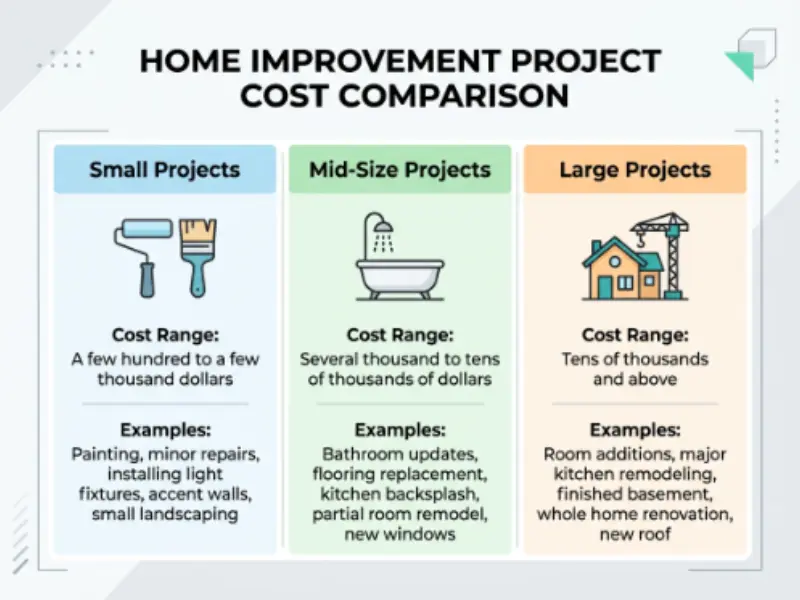
Knowing the real cost helps you plan your budget. But cost alone won’t protect you from a bad contractor. That’s what the next section is for.
What Red Flags Should You Watch For?
Avoid any contractor who demands full payment upfront, has no license, or pressures you to sign the same day. These three signs alone stop most bad hires before they start.
Common Scam Tactics
- Asking for full payment before any work begins
- Refusing to put anything in writing
- Pressuring you to decide immediately
- Showing up uninvited after a storm or disaster
- Only accepting cash, no checks or cards
- Having no local address or business history you can verify
Here’s a pattern almost no competitor mentions. Legitimate contractors are usually busy. If someone can start your entire project tomorrow with zero wait time, that’s often a sign they don’t have real ongoing work, which usually means they’re new, unreliable, or not who they claim to be.
What a Fair Contract Should Include
A written contract protects both sides. Never work off a verbal agreement, no matter how nice the contractor seems.
- A detailed scope of work, not a vague summary
- Start date and estimated completion date
- Payment schedule tied to project milestones, not just time
- Warranty terms in writing
- A clause for handling unexpected changes or costs
In practice, a typical fair payment schedule looks like this: a deposit of 10 to 30 percent to start, progress payments tied to completed milestones, and a final payment held back until the work passes your walkthrough. If a contractor wants more than a third upfront, ask why.
Once you know what to avoid, the last step is knowing exactly how to pick the right person with confidence.
How Do You Choose the Right One for Your Project?
Compare licenses, insurance, past reviews, and written estimates from at least three contractors before deciding.
Here’s how to actually use this, instead of just reading vague tips.
Questions to Ask Before You Hire
Ask these questions to every contractor you’re considering, before you commit to anyone.
- How many years have you worked on this specific type of project?
- Can I see your license number and verify it myself?
- Do you carry general liability and workers’ compensation insurance?
- Can you give me three references from recent jobs?
- What’s your estimated timeline, including permit approval?
- How do you handle unexpected costs once work begins?
- What does your payment schedule look like?
Here’s a simple test that works better than any checklist. Ask each contractor the same question, word for word, and compare their answers side by side. The ones who give clear, specific answers without hesitation are usually the ones who do this the right way every time. The ones who get vague or defensive are telling you something too.
From real use, homeowners who interview at least three contractors with the same set of questions almost always end up more confident in their final choice, even if they end up picking the first one they talked to.

You now know exactly what a home improvement contractor does, how to check their credentials, and how to avoid the mistakes that trip up most homeowners.
Frequently Asked Questions
What is the difference between a home improvement contractor and a general contractor?
A home improvement contractor often focuses on residential remodeling projects like kitchens and additions, while a general contractor manages any construction project, including new builds. In many states, the terms overlap in licensing. Always check your state’s specific license category before signing a contract to know exactly what you’re covered for.
Do I need a license to hire a home improvement contractor?
Yes, you should only hire a licensed contractor. Licensing means they passed a state exam and proved work experience, which protects you legally. Check your state’s contractor licensing board website and enter their license number to confirm it’s active before you agree to any work.
How long does a typical home renovation project take?
It depends on the project size, but planning and permit approval alone usually takes six to eight weeks before any physical work starts. A mid-size kitchen remodel often takes two to three months total, while a full home renovation can take four to six months or longer.
Can a home improvement contractor also design my project?
Some can, but not all. Many contractors handle basic layout and material choices, but a complex design change, like moving walls, may need an architect or interior designer involved too. Ask upfront whether design services are included or if you’ll need to hire a separate designer.
What should I ask a contractor before hiring them?
Ask about their years of experience, license number, insurance coverage, references from recent jobs, and estimated timeline including permits. Also ask how they handle unexpected costs and what their payment schedule looks like. Clear, specific answers are a good sign you’re talking to the right person.
How much do home improvement contractors charge?
Costs vary by project, but most charge either a flat fee or a management fee of 10 to 20 percent on top of total renovation costs. For a 30,000 dollar kitchen remodel, expect the management fee alone to run between 3,000 and 6,000 dollars.
What insurance should my contractor have?
Your contractor should carry general liability insurance, which covers damage to your home, and workers’ compensation insurance if they have employees, which covers worker injuries. Ask for a certificate of insurance before work starts and confirm the policy is active, not expired, for real protection.
Do home improvement contractors pull permits themselves?
Yes, pulling permits is usually part of their job. They handle the paperwork, submit plans to your local building department, and make sure the work meets code. This process often takes several weeks, which is why planning starts long before any visible work begins.
What are warning signs of a bad contractor?
Watch for anyone who demands full payment upfront, has no verifiable license, pressures you to sign the same day, or refuses to put anything in writing. Legitimate contractors are usually busy, so someone who can start immediately with no wait time is often a red flag.
Can I hire a home improvement contractor for a single room only?
Yes, many contractors handle single-room projects like a bathroom or kitchen remodel. But if the project only involves one trade, like retiling a floor, hiring a specialty contractor directly is usually faster and cheaper since there’s no project management layer needed.
Conclusion
So, what does a home improvement contractor do? Now you have the full picture. They plan the project, pull permits, hire subcontractors, manage your budget, and protect you through licensing and insurance every step of the way. You’ve also seen real numbers on cost, and know exactly which red flags mean it’s time to walk away.
Here’s your next step. Before you hire anyone, pull up your state’s licensing board website and verify their license number. It takes five minutes and it’s the easiest way to avoid a bad hire. Then interview at least three contractors using the same questions from this guide, and compare their answers side by side.
If this article helped you feel more prepared, share it with a friend or family member who’s about to start their own renovation. A little preparation now saves a lot of stress later, and you’re already ahead of most homeowners starting this process.