
What Is Home Improvement? Home improvement means any project that makes your home better, bigger, or more valuable. This covers remodeling a kitchen, adding a deck, upgrading electrical systems, or improving energy efficiency. It’s different from repairs or routine maintenance, which just keep your home working as is. Home improvement is about upgrading your space, not fixing what’s broken.
You start googling one simple question, what is home improvement, and suddenly you’re drowning in seven-thousand-word contractor guides or a one-line dictionary definition that tells you nothing useful. It’s frustrating when you just want a clear answer. Here’s the good news. Home improvement isn’t complicated once someone actually explains it in plain language.
It’s not about permits, structural engineers, or gutting your whole kitchen unless you want it to be. In this article, you’ll get a real answer to what home improvement means, how it’s different from repair and maintenance, and what kinds of projects actually count.
You’ll also learn which improvements genuinely raise your home’s value and which ones are just for your own comfort, something most guides gloss over completely. No jargon, no filler, just what you actually came here to find out. Let’s start with the part everyone gets confused about first.
What Is Home Improvement?
Home improvement means making a change to your house that makes it better than it was before. That includes anything that boosts its look, its value, or how well it works for you.
Here’s the thing. A lot of people think home improvement has to mean a huge renovation with contractors, permits, and a mess of dust everywhere. It doesn’t. Even something as simple as swapping out an old light fixture counts. What matters isn’t the size of the project. It’s what the project actually does to your home.
The Simple Definition
Think of it this way. If a project adds something new, makes something look nicer, or makes your home run more efficiently, it’s a home improvement. A few quick examples:
- Remodeling your kitchen or bathroom
- Adding a deck or a patio
- Installing new energy efficient windows
- Upgrading your electrical panel
- Finishing an unused basement
Each one of these takes your home from where it was to something better.
Why People Confuse It With Repairs
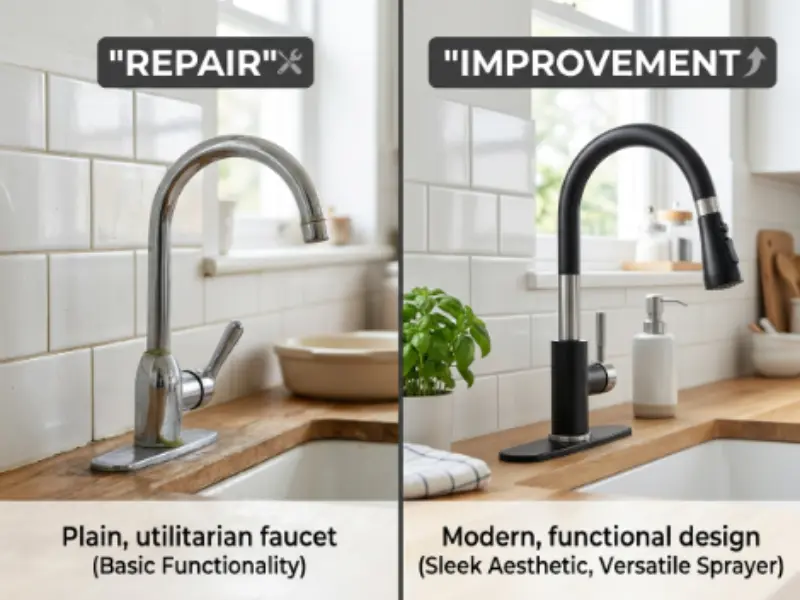
Here’s where most people get tripped up. If your dishwasher breaks and you replace it with the exact same model, that’s not really an improvement. You’re just getting back to where you started.
But if you replace that same broken dishwasher with a newer, more efficient model that also looks better in your kitchen, now you’ve crossed into home improvement territory. The line can be thin, but it’s there.
From working with homeowners and reading dozens of contractor sites, here’s a trick that actually works. Ask yourself one question before starting any project: “Am I bringing this back to normal, or am I making it better than normal?” If the answer is “better than normal,” you’re doing home improvement. This one test clears up almost every confusing case.
Once you’ve got this basic idea down, it gets a lot easier to spot where maintenance ends and improvement begins, which is exactly what we’ll break down next.
What Is the Difference Between Home Improvement and Home Maintenance?
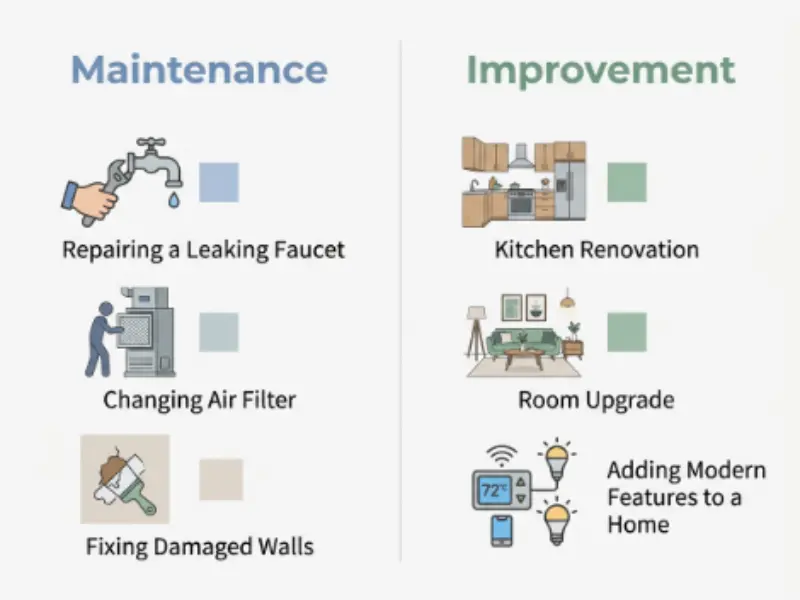
Home maintenance keeps your home working the way it already does. Home improvement makes your home better than it currently is.
The easiest way to picture this is a simple line in the sand. On one side, you’re preventing problems and keeping things running. On the other side, you’re upgrading, adding, or enhancing something that already works fine.
Home Maintenance Examples
Maintenance is the routine stuff that protects your home from wear and tear. Nothing here is exciting, but skipping it costs you later. Common maintenance tasks include:
- Cleaning out your gutters twice a year
- Servicing your HVAC system before summer and winter
- Checking for small leaks around sinks and toilets
- Sealing small gaps around windows and doors
- Mowing the lawn and trimming bushes
None of these make your home better. They just keep it from getting worse.
Home Improvement Examples
Improvement goes a step further. You’re not just protecting what you have. You’re adding real value or comfort that wasn’t there before. This includes projects like:
- Remodeling a kitchen or bathroom
- Adding smart home devices like smart thermostats
- Landscaping upgrades beyond basic lawn care
- Converting a garage into a livable room
- Installing new flooring throughout your home
Here’s a quick self-test you can use on any project sitting on your to-do list. Ask: “If I never did this, would my home slowly get worse, or would it just stay the same?” If your home would get worse without it, that’s maintenance. If your home would simply stay the same, but doing it makes life better, that’s an improvement. This single question solves almost every gray area homeowners run into.
In practice, most homes need a healthy mix of both. Skipping maintenance to chase improvements is one of the most common and costly mistakes homeowners make, since neglected maintenance often leads to bigger, more expensive repairs down the road.
| Home Maintenance | Home Improvement | |
| Goal | Keep things working | Make things better |
| Example | Cleaning gutters | Adding a new deck |
| Skipping it | Leads to bigger problems | Just means no upgrade happens |
| Adds value? | Rarely | Usually yes |
Maintenance and improvement are only half the picture though. There’s a third term that trips people up just as often, home repair, and that’s exactly what we’ll untangle next.
What Is the Difference Between Home Improvement and Home Repair?
Home repair means fixing something that’s broken. Home improvement means adding or upgrading something, whether or not anything was broken to begin with.
Honestly, this is the mix-up that trips up more homeowners than anything else on this list, especially when it comes to figuring out taxes, insurance claims, or contractor quotes.
Common Repair Examples
Repairs are reactive. Something stopped working, and you’re bringing it back to normal. Typical repair jobs include:
- Fixing a leaking pipe under the sink
- Patching a hole in the drywall
- Replacing a cracked roof shingle
- Fixing a broken garage door spring
- Repairing a malfunctioning water heater
After a repair, your home isn’t better than before. It’s just working again.
Common Improvement Examples
Improvement is proactive. You’re choosing to upgrade something, even if it was working just fine already. Examples include:
- Replacing old windows with energy efficient ones
- Adding a bathroom that didn’t exist before
- Upgrading your electrical panel for more capacity
- Installing hardwood floors over old carpet
- Building a deck where there wasn’t one
What actually works here is looking at your receipt or invoice after the project. If the work restored something to its original condition, it’s a repair. If the work left your home in better shape than it started, even slightly, it’s an improvement. This matters more than people realize, especially since the IRS treats capital improvements differently from repairs when it comes to your home’s tax basis.
The truth is, a single project can include both. Say your roof is leaking, so you replace it, and while you’re at it, you upgrade to a better, longer-lasting shingle. The leak fix is a repair. The upgrade to better shingles is an improvement. Both can happen in the same afternoon.
Now that you know how improvement stacks up against both maintenance and repair, the next natural question is what kinds of home improvement projects people actually take on the most.
What Are the Most Common Types of Home Improvement Projects?
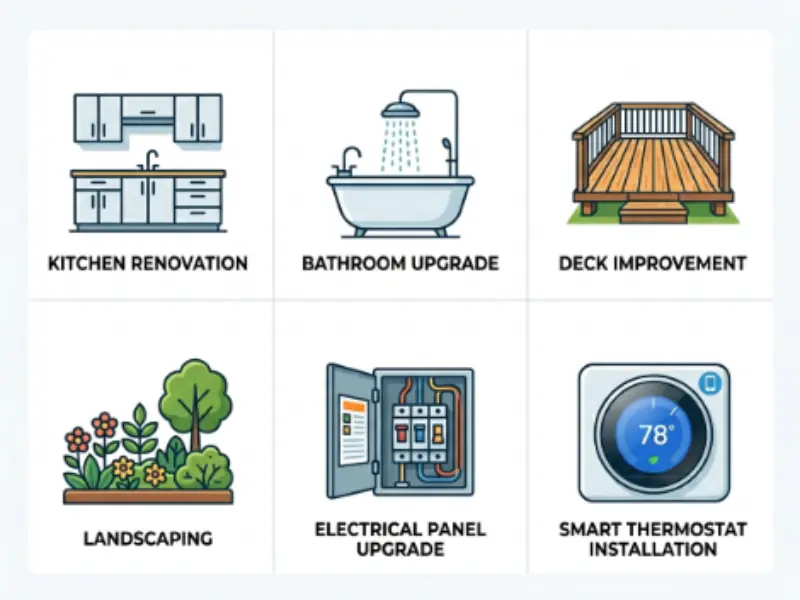
The most common home improvement projects are kitchen and bathroom remodels, flooring upgrades, exterior curb appeal work, and system upgrades like electrical and HVAC.
Different rooms and systems need different kinds of attention. Some projects change how your home looks. Others change how it works. Here’s a simple breakdown by category.
Interior Improvements
These are the projects people notice the moment they walk in. They’re also usually the ones with the biggest price tags. Common interior projects include:
- Remodeling a kitchen with new cabinets and counters
- Updating a bathroom with a new vanity and shower
- Replacing old carpet with hardwood or vinyl plank flooring
- Adding fresh paint and updated lighting fixtures
- Finishing an unused basement into a livable space
Exterior Improvements
These projects boost what real estate agents call curb appeal, the first impression your home makes from the street. Popular exterior projects include:
- Adding a deck or patio for outdoor living
- Upgrading landscaping with new plants and mulch
- Replacing an old front door with a bold new one
- Installing outdoor lighting along walkways
- Repainting or resealing your home’s siding
System Upgrades
These improvements happen mostly behind the walls, but they matter just as much. They’re less exciting to look at, but they often make the biggest difference in comfort and safety. Examples include:
- Upgrading an outdated electrical panel
- Installing a smart thermostat or smart home devices
- Replacing an aging HVAC system
- Switching to energy efficient windows
- Adding insulation to reduce energy bills
In practice, homeowners usually start with the project they can see every day, like a kitchen or bathroom, and put off system upgrades like electrical panels until something forces the issue. That’s backwards.
From real use, tackling system upgrades first tends to pay off more, since they protect everything you build on top of them later. A brand new kitchen means nothing if the electrical panel behind it can’t handle the load. An outdated 100-amp panel, for example, often can’t handle a modern kitchen with an induction range and an EV charger added later.
Knowing what kinds of projects exist is one thing. Knowing which ones are actually worth your money is a completely different question, and that’s exactly what we’ll cover next.
Does Home Improvement Increase Your Home’s Value?
Yes, most home improvement projects increase your home’s value, but how much depends heavily on the type of project you choose.
Not every upgrade pays you back the same way. Some projects are smart financial moves. Others are purely about making your life more comfortable, with little return at resale.
Projects That Add the Most Value
Certain projects consistently perform well when it’s time to sell. These tend to focus on function over flash:
- Garage door replacement
- Minor kitchen remodels
- New entry door
- Energy efficient window replacement
- Fresh exterior paint
These projects typically recover 70 to over 100 percent of their cost at resale, based on industry cost-versus-value data, since buyers notice them immediately and they solve a problem buyers actually care about.
Projects That Add Comfort but Not Much Resale Value
Some improvements are worth every penny for how they make your daily life better, even if they don’t move the needle much on resale value:
- Swimming pools in most climates
- Highly custom home theaters
- Elaborate landscaping features
- Luxury bathroom upgrades with high-end finishes
Here’s something most guides skip entirely. The “value” of a home improvement isn’t only measured in resale dollars. If you’re planning to stay in your home for years, a pool or a custom home theater might be worth every cent in daily happiness, even with a weak resale return. The real question isn’t “will this add value,” it’s “am I adding value for resale, or value for my own life.” Both are valid. You just need to know which one you’re chasing before you spend the money.
Here’s a simple way to picture it. A buyer walking through your home doesn’t care that you love your custom wine cellar. But you do, every single day you live there. That’s worth something too, even if it never shows up on an appraisal.
Value is one big reason people take on home improvement projects, but cost is usually the first thing that stops them. So let’s clear up a common myth about just how expensive these projects really need to be.
Is Home Improvement Always a Big, Expensive Project?
No, home improvement doesn’t have to be big or expensive. Plenty of meaningful upgrades cost very little and take just a weekend.
Most guides online make home improvement sound like it always involves contractors, permits, and thousands of dollars. That’s simply not true for a huge number of projects.
Small Budget-Friendly Improvements
You can genuinely improve your home without spending much at all. Simple, low-cost projects include:
- Painting an accent wall for under 50 dollars in supplies
- Swapping outdated cabinet hardware for new pulls
- Installing a modern light fixture in an entryway
- Adding peel-and-stick backsplash tile in a kitchen
- Replacing old faucets with updated finishes
Every one of these takes a single weekend, sometimes just a few hours, and makes a real difference in how your home feels.
Once you’ve knocked out a small win or two, you’ll have a much better sense of whether your home actually needs something bigger.
When to Consider a Bigger Renovation
Bigger projects make sense when the upgrade affects something structural, or when several small fixes would cost more over time than one larger investment. Signs it’s time to go bigger include:
- Your electrical panel can’t handle modern appliance loads
- Your kitchen layout blocks natural traffic flow
- Multiple systems need replacing around the same time
- You’re planning to stay in the home long term
In real projects, starting small tends to work better, and it builds momentum. Homeowners who begin with one small, satisfying project, like a fresh coat of paint, are far more likely to follow through on bigger renovations later. Starting with a massive kitchen gut job first often leads to burnout, budget overruns, and projects that sit half-finished for months.
Bottom line, home improvement bends to fit your budget and your timeline, not the other way around. There’s no minimum size requirement to call something a real improvement.
Frequently Asked Questions
What is considered home improvement?
Anything that upgrades, adds to, or enhances your home counts as home improvement. This includes remodeling a kitchen, adding a deck, replacing old windows with energy efficient ones, or upgrading your electrical panel. If the project makes your home better than it was, not just back to normal, it’s a home improvement.
What is the difference between home improvement and home repair?
Repair fixes something broken and brings it back to normal. Home improvement adds something new or better, even if nothing was broken. Fixing a leaking pipe is a repair. Replacing that same pipe with a better system while upgrading your kitchen counters is home improvement.
What is the difference between home improvement and renovation?
Renovation usually means restoring or updating an existing space to its former or improved condition, often within the same layout. Home improvement is the broader term, covering renovations plus additions, upgrades, and brand new features. Every renovation fits under this umbrella, but not every upgrade counts as a full renovation.
Is painting considered a home improvement?
Yes, painting counts as a home improvement if you’re updating the color, style, or finish to make your home look better. If you’re simply touching up the exact same paint to cover damage, that leans closer to maintenance. Most homeowners treat a fresh coat as a simple, affordable improvement.
Do home improvements need a permit?
Some do, some don’t. Projects involving electrical work, plumbing changes, structural walls, or additions usually require a permit from your local building department. Simple cosmetic upgrades like painting, new light fixtures, or cabinet hardware typically don’t. Always check with your local permit office before starting bigger projects.
What home improvement adds the most value to a house?
Garage door replacement, minor kitchen remodels, new entry doors, and energy efficient window replacements consistently add strong resale value. These projects tend to recover a large share of their cost because buyers notice them right away and they solve problems buyers actually care about.
Can home improvement costs be tax deductible?
These costs usually aren’t deductible in the year you pay for them, but they can increase your home’s cost basis, which may lower capital gains tax when you sell. Repairs generally don’t count toward this. Keep every receipt and consult a tax professional for your specific situation.
What is the difference between home improvement and remodeling?
Remodeling means changing the structure or layout of a space, like knocking down a wall to open up a kitchen. Home improvement is the bigger umbrella term that includes remodeling along with smaller upgrades like new flooring or fixtures that don’t touch the layout at all.
How much does the average home improvement project cost?
Costs vary widely by project type. A small upgrade like painting a room might cost under 100 dollars in supplies, while a full kitchen remodel can run into the tens of thousands. The key is matching the project scope to your actual budget and needs.
Is home improvement worth it if I’m not planning to sell soon?
Yes, plenty of these upgrades are worth doing purely for comfort, even without a sale in mind. Things like better lighting, smart thermostats, or a finished basement improve daily life immediately. You don’t need to be selling your home to benefit from making it work better for you.
Conclusion
By now, you know exactly what separates home improvement from repair and maintenance, and you’ve got a simple test you can use on any project you’re considering. You’ve also seen which upgrades tend to boost resale value and which ones are worth doing purely for your own comfort, something most guides never bother explaining clearly.
The next step is simple. Look around your own home right now. Is there one small, budget-friendly improvement you’ve been putting off, a light fixture, a fresh coat of paint, new cabinet hardware? Start there. You don’t need a big budget or a full renovation plan to make real progress.
If you’re thinking about a bigger home improvement project down the line, use what you learned here to figure out whether it’s about resale value or everyday comfort, since that answer will shape every decision after it. Bookmark this article so you can come back to it, and if you know someone who’s confused about where their next project fits, send this their way. It might save them a lot of second-guessing.