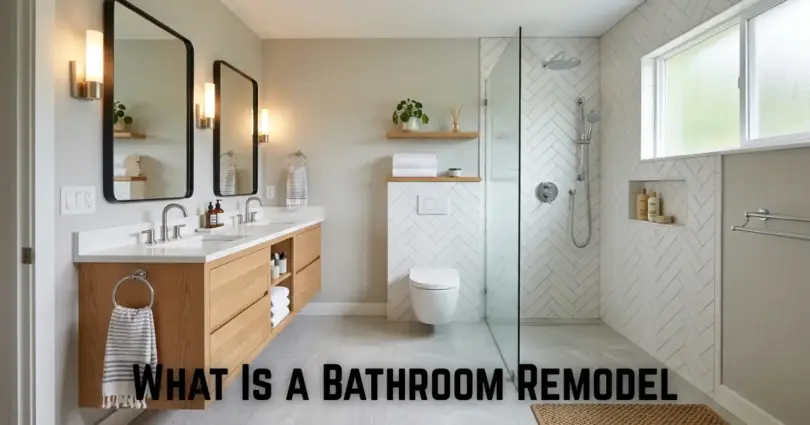

What is a bathroom remodel? It’s a project that changes how your bathroom works, looks, or is laid out. It can mean a new shower, moved plumbing, updated fixtures, or a full layout change. Unlike a renovation, which just refreshes finishes, a remodel makes real structural or functional changes. Most remodels take a few weeks and cost anywhere from a few thousand dollars to tens of thousands, depending on scope.
You searched what is a bathroom remodel and got five different answers from five different websites. One contractor’s blog calls it a full teardown. Another says it just means new fixtures. That mix of definitions makes it hard to know what you’re actually signing up for or how much to budget.
The truth is, what is a bathroom remodel has one clear answer once you strip away the marketing language. It comes down to whether the layout, plumbing, or structure of your bathroom changes, not just the surface finishes.
This guide gives you that clear answer, plus everything that follows from it. You’ll learn what a full remodel includes, the real steps involved, honest cost ranges instead of one company’s local pricing, and whether you even need a permit. We’ll also show you a quick way to check if your project needs a remodel or something smaller.
By the end, you won’t need to open another tab to figure this out.
What Is a Bathroom Remodel, Exactly?
A bathroom remodel is a project that changes your bathroom’s layout, structure, or function, not just its look. It goes beyond fresh paint or new towels. It changes how the room actually works.
Here’s the thing. A lot of people use “remodel” loosely for any bathroom project. But there’s a real line between fixing up a room and changing it.
How a Remodel Is Different From Just Redecorating
Redecorating means new towels, a new bath mat, or a fresh coat of paint. Nothing structural changes. The pipes stay where they are. The layout stays the same.
A bathroom remodel is different. It can mean:
- Moving a sink or toilet to a new spot
- Tearing out a tub to build a walk-in shower
- Knocking down a wall to make the room bigger
- Rewiring for new lighting or outlets
If your project touches plumbing lines, walls, or the floor plan, you’re in remodel territory.
The Core Idea Behind Remodeling
Think about it this way. Redecorating changes what you see. Remodeling changes how the room behaves.
In practice, most remodels start because something about the bathroom doesn’t work anymore. Maybe the tub is hard to get in and out of. Maybe there’s no storage. Maybe two people can’t use the room at once in the morning.
Here’s a simple 3-question test you can use right now. If you answer yes to any of these, you’re planning a remodel, not a renovation:
- Are you moving any plumbing (sink, toilet, shower, or tub)?
- Are you changing the room’s layout or square footage?
- Are you adding or removing a wall?
If all three answers are no, you’re likely looking at a renovation instead, which is a lighter, cheaper project. We’ll cover that difference in detail shortly.
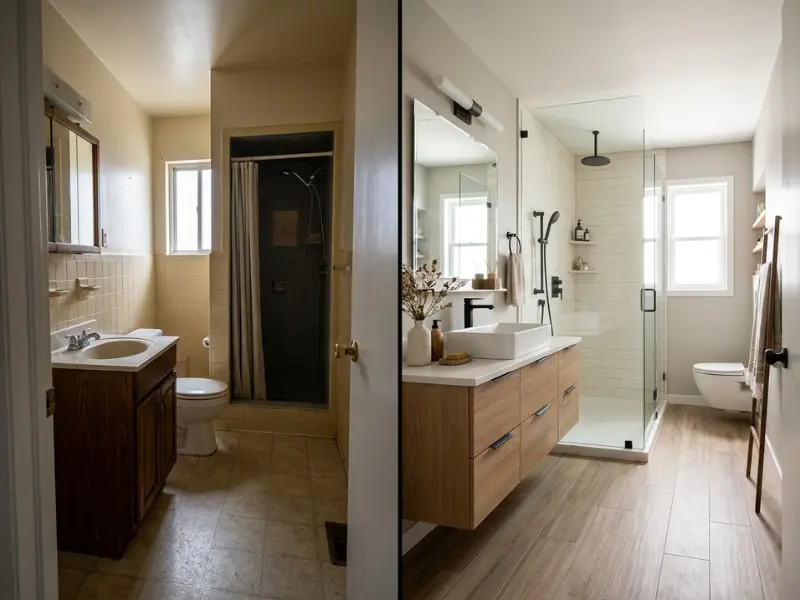
Once you know what counts as a remodel, the next question is simple: what actually goes into one?
What Does a Full Bathroom Remodel Include?
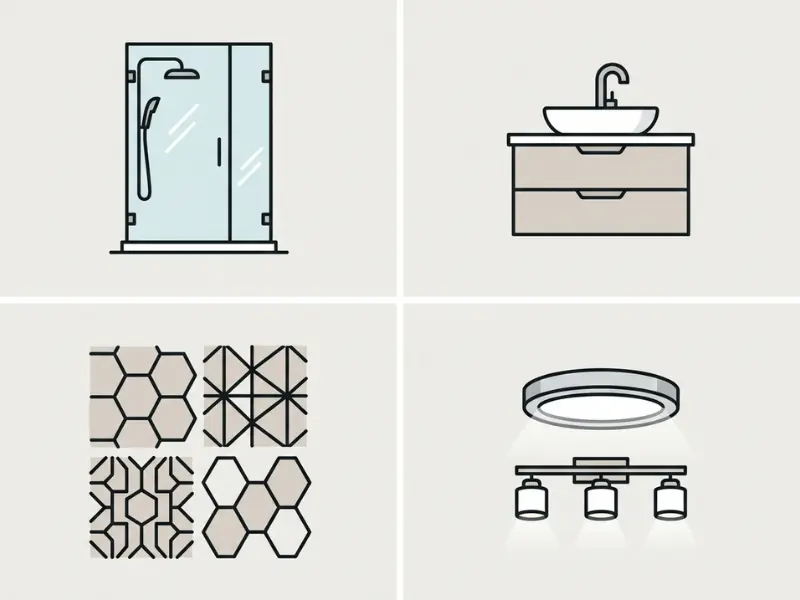
A full bathroom remodel usually touches fixtures, the vanity, tile, lighting, and plumbing. Bigger remodels also touch the layout itself.
No two bathrooms need the exact same work. But most full remodels cover the same handful of areas. Let’s go through each one.
Fixtures and Plumbing
This is often the biggest part of the job. It can include:
- A new tub or shower
- A new toilet
- New sink and faucets
- Moving supply lines or drain pipes
If pipes are moving even a few feet, expect more time and cost. Plumbers usually need to open the wall or floor to get to them.
Vanity and Storage
A tired, cramped vanity is one of the top reasons people start a bathroom remodel. This part of the project can include:
- A new vanity cabinet
- Updated countertops
- Built-in shelving or a medicine cabinet
- Better use of corner space
Tile, Flooring, and Waterproofing
This is the part most homeowners underestimate. New tile looks great, but the waterproofing behind it matters more.
From real use, a shower that leaks behind the tile causes way more damage than an outdated design ever will. A proper remodel includes:
- New floor tile
- Shower or tub surround
- A waterproof membrane behind the tile
- Fresh grout and sealant
Lighting and Electrical
Bathrooms need more light than people think, especially around the mirror. Here’s what usually gets touched:
- Vanity lighting
- An exhaust fan (required in most codes)
- New outlets, including GFCI outlets near water
- Switches and dimmers
Here’s a quick way to think about it. If you can check off items from four or more of these categories, you’re doing a full remodel. If you’re only touching one or two, you’re likely doing a partial remodel, which costs and takes far less.
Now that you know what’s included, let’s clear up the confusion between a remodel and a renovation once and for all.
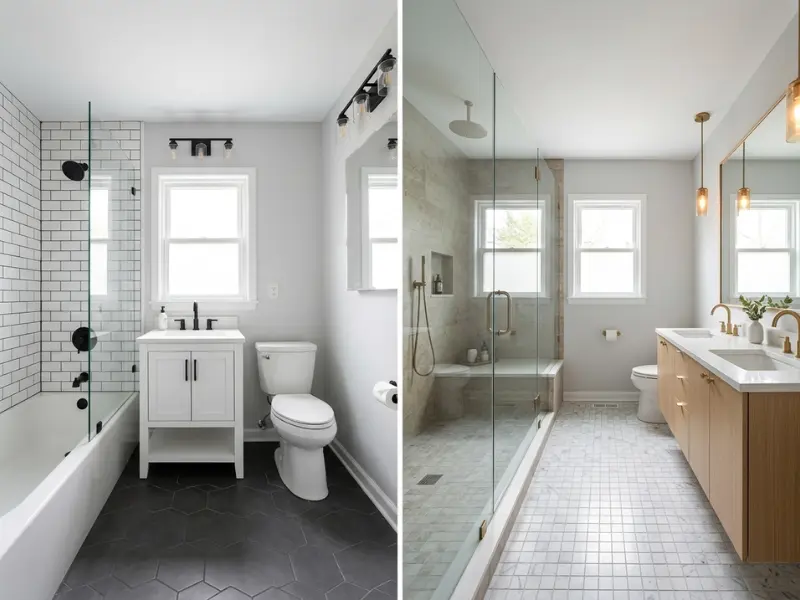
Bathroom Remodel vs. Renovation: What’s the Real Difference?
A remodel changes your bathroom’s structure and function. A renovation refreshes what’s already there without changing the layout.
This is the single most confused part of bathroom projects, and getting it wrong can throw off your whole budget. Here’s a simple table to make it clear.
Quick Comparison Table
| Renovation | Remodel | |
| Scope | Cosmetic updates like paint, tile, or fixtures | Layout, structural, or plumbing changes |
| Cost | Lower, usually a few hundred to a few thousand dollars | Higher, often $10,000 and up |
| Time | Days to two weeks | Several weeks to a few months |
| Permit needed | Rarely | Often, especially with plumbing or electrical work |
| Best for | A bathroom that looks tired but works fine | A bathroom that doesn’t function well anymore |
How to Tell Which One You Actually Need
If your bathroom’s layout works and the pipes are fine, but the tile is cracked and the vanity looks like it’s from 1998, that’s a renovation.
If the shower is too small, there’s nowhere to put your towels, or the toilet sits awkwardly in the corner, that’s a remodel.
Here’s a fast way to sort it out. If the room bothers you visually, that’s usually a renovation. If it bothers you every time you actually use it, that points toward a remodel. We’ll turn this into a full checklist shortly.
Once you know which project you need, the natural next question is what the actual process looks like from start to finish.
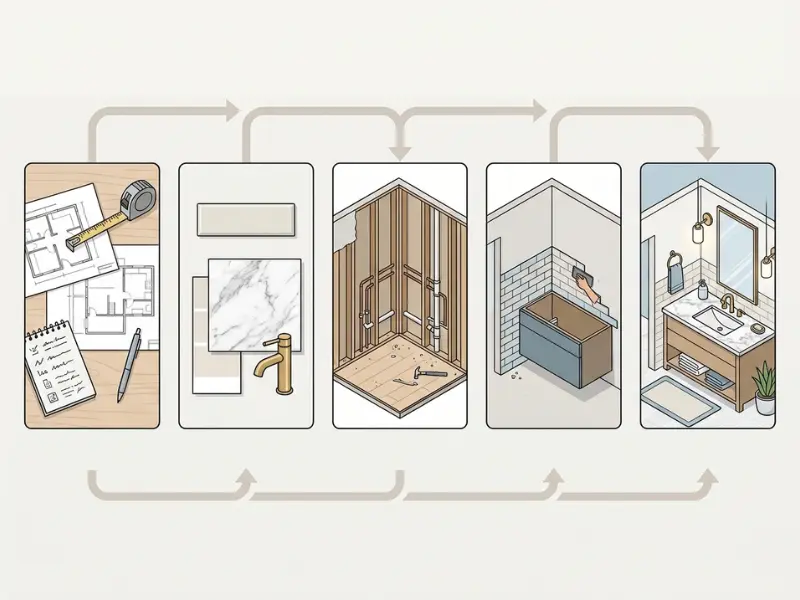
What Does a Bathroom Remodel Actually Look Like Step by Step?
A bathroom remodel usually follows five stages: planning, design, demolition, plumbing and electrical work, then finishing. Each stage has to happen in order, or things get messy fast.
None of the competitor articles walked through this clearly. Here’s the plain version.
Planning and Budgeting
This is where you figure out what you actually want and what you can spend. You walk through the space, list your problems, and set a real number.
Skip this step and you’ll end up making expensive decisions mid-project. That’s the number one cause of remodels going over budget.
Design and Material Selection
Now you pick your layout, tile, fixtures, and vanity. This step matters more than people think.
In practice, tile and custom vanities can take 4 to 8 weeks to arrive. If you pick materials after demolition starts, your project sits idle waiting on deliveries. Order everything before the first hammer swings.
Demolition
Old tile, fixtures, and sometimes drywall come out. This is loud, dusty, and usually takes just a few days.
This step also reveals problems you couldn’t see before, like water damage or old plumbing behind the walls.
Plumbing, Electrical, and Waterproofing
Pipes get moved if needed. Wiring gets updated. Waterproofing goes in behind every tile surface.
This is the part of the remodel you’ll never see again once it’s done, but it’s the part that matters most long term.
Finishing Touches
Tile goes in. Fixtures get installed. Paint, trim, mirrors, and hardware go up last.
This stage is usually the most satisfying, since the room finally starts to look done.
Knowing the steps is one thing. Knowing how long each one takes is what actually helps you plan your life around it.
How Long Does a Bathroom Remodel Take?
Most bathroom remodels take 3 to 10 weeks, depending on the size of the project and how much is changing.
A small update moves fast. A full remodel with layout changes takes much longer. Here’s how that breaks down.
Small Remodel Timeline
A small remodel, like a new vanity and fixtures with no layout change, usually takes 3 to 4 weeks. Most of that time goes to ordering materials, not actual labor.
Full Remodel Timeline
A full remodel with a new layout, moved plumbing, and full tile work usually takes 6 to 10 weeks. Bigger or custom projects can run longer.
What Slows a Remodel Down
Even a well-planned remodel can hit delays. The usual culprits are:
- Permits taking longer than expected to approve
- Tile or fixtures on backorder
- Hidden water damage found during demolition
- Changing your mind on materials mid-project
From real use, the single biggest delay isn’t the contractor. It’s decision-making. Homeowners who pick every material before demolition starts finish 2 to 3 weeks faster than those who decide as they go.
Once you know the timeline, the next natural question is what all of this is going to cost you.
How Much Does a Bathroom Remodel Cost?
A bathroom remodel typically costs between $10,000 and $35,000, depending on the size of the space and the quality of materials.
This is a national range, not one contractor’s local pricing. Your actual number depends heavily on scope.
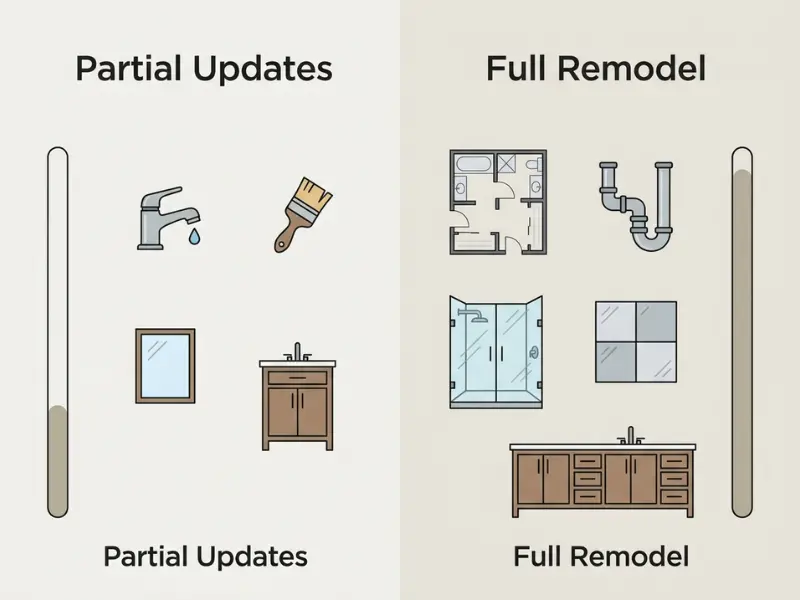
Small or Partial Remodel Costs
A partial remodel, like a new vanity, toilet, and fixtures without moving plumbing, usually runs $5,000 to $12,000.
Full Remodel Costs
A full remodel with a new layout, moved plumbing, and full tile work usually runs $15,000 to $35,000. High-end finishes push this even higher.
What Actually Drives the Price Up
Three things push your price up faster than anything else:
- Moving plumbing, even a few feet
- Custom tile work, especially in a shower
- Structural changes like removing a wall
Fixtures alone rarely break the budget. Labor tied to plumbing and structural work does.
Cost is only half the picture though. Before you spend a dollar, you need to know whether your city requires a permit for any of this.
Do You Need a Permit for a Bathroom Remodel?
Usually yes, if you’re moving plumbing, changing electrical wiring, or altering the layout. Simple cosmetic updates usually don’t need one.
Permits feel like a hassle, but skipping one you actually need can cost you a lot more later. Here’s how to know where you stand.
When You Do Need a Permit
Most cities require a permit if your remodel includes:
- Moving or adding plumbing lines
- Adding or rewiring electrical circuits
- Removing or moving a wall
- Changing the size of the room
When You Don’t Need a Permit
You usually don’t need one for:
- Repainting walls
- Swapping a faucet for a like-for-like replacement
- Replacing a toilet in the same spot
- Refinishing an existing tub
How to Check With Your City
Every city has different rules. Call your local building department or check their website before work starts.
Here’s something most guides skip. Skipping a required permit doesn’t just risk a fine. It can also cause problems when you sell your home, since buyers’ inspectors often catch unpermitted plumbing or electrical work. Some lenders and insurance companies also ask about permit history after water damage claims.
Once permits are sorted, the last big question is simple: do you actually need a remodel, or would a renovation get the job done?
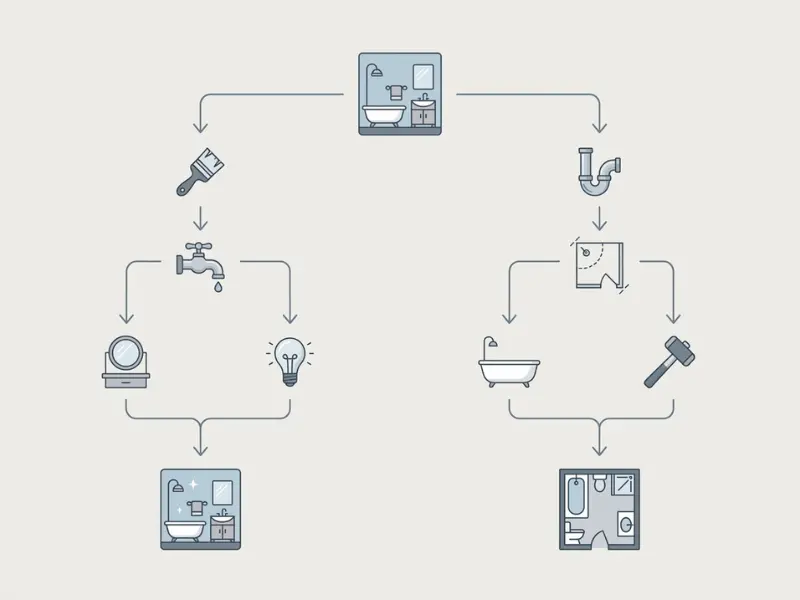
How Do You Know If You Need a Remodel or Just a Renovation?
If your layout and plumbing work fine but the room looks tired, renovate. If the space doesn’t function well anymore, remodel.
This decision saves you money either way. Here’s a simple way to sort it out.
Signs You Need a Remodel
You’re likely looking at a remodel if:
- The shower or tub is hard to use or get in and out of
- There isn’t enough storage no matter how you organize it
- Two people can’t use the bathroom at the same time
- The layout feels cramped or awkward to move through
Signs a Renovation Is Enough
A renovation is probably enough if:
- The tile is outdated but not damaged
- The vanity works fine but looks old
- Lighting or fixtures feel dated
- The layout already works for your daily routine
What actually works is asking yourself one question before calling any contractor: “Am I annoyed by how this room looks, or how it works?” Looks means renovation. Function means remodel. This one question saves most homeowners from over-scoping or under-scoping their project.
Once you’ve picked your path, it helps to know what that investment actually gets you back.
Does a Bathroom Remodel Add Value to Your Home?
Yes. A midrange bathroom remodel returned about 80% of its cost at resale in 2025, the highest that figure has been since 2007.
That number comes from real cost versus value data, not a guess. Here’s what it means for you.
Remodel ROI vs. Renovation ROI
A full remodel tends to add more total value to your home, since it improves function, not just looks. A lighter renovation often returns a higher percentage of what you spent, since the upfront cost is much lower.
According to the Journal of Light Construction’s 2025 Cost vs. Value Report, midrange remodels averaged around 80% ROI, while upscale, higher-cost remodels averaged closer to 42-50% ROI.
In practice, the highest ROI usually comes from fixing function, not chasing luxury. A walk-in shower or better storage adds more resale appeal than marble countertops most buyers will never notice on a walkthrough.
Now that you know what a remodel is, what it costs, and what it’s worth, let’s clear up the last few questions homeowners ask most.
Frequently Asked Questions
What does a full bathroom remodel include?
A full bathroom remodel usually includes a new tub or shower, updated vanity, flooring, lighting, and plumbing fixtures. It can also involve expanding storage or changing the room’s layout. If four or more of these areas change, you’re looking at a full remodel, not a partial one.
How much does a bathroom remodel cost on average?
Most bathroom remodels cost between $10,000 and $35,000. A partial remodel with no layout changes runs $5,000 to $12,000. A full remodel with moved plumbing and new layout runs $15,000 to $35,000, depending on materials and finishes chosen.
How long does a bathroom remodel take?
A small remodel with no layout changes usually takes 3 to 4 weeks. A full remodel with moved plumbing and new tile work takes 6 to 10 weeks. Permits, material delays, and hidden water damage are the most common reasons projects run longer.
Do you need a permit to remodel a bathroom?
Usually, yes, if the work involves moving plumbing, adding electrical circuits, or changing the layout. Simple cosmetic updates like repainting or swapping a faucet typically don’t require one. Permit rules are set locally, so confirm with your city’s building department before starting.
What is the hardest part of a bathroom remodel?
The hardest parts are usually plumbing changes, layout adjustments, and living without a working bathroom during construction. Hidden water damage found during demolition can also slow things down and raise costs. Planning ahead and picking materials early helps avoid most of these problems.
Can you remodel just part of a bathroom?
Yes. Many homeowners choose a partial remodel, updating only the vanity, shower, or flooring instead of the entire room. This costs less and takes less time than a full remodel while still improving how the space looks and works.
Which adds more value, a bathroom remodel or a renovation?
A full remodel typically adds more total value, since it improves function, not just looks. A lighter renovation often returns a higher percentage of what you spent. Midrange remodels average around 80% ROI at resale, according to 2025 cost versus value data.
What’s trending in bathroom remodels right now?
Walk-in showers, soaking tubs, and warm neutral tones are popular in 2026. Smart features like app-controlled faucets and mood lighting are becoming more common too. Storage-focused vanities are also trending, helping homeowners cut clutter without expanding the bathroom’s footprint.
Can you live in your house during a bathroom remodel?
Yes, if it’s your only bathroom, most contractors schedule work to limit downtime, often keeping the toilet or a temporary setup usable. If you have a second bathroom, living through the remodel is much easier. Ask your contractor about the plan before work starts.
What is the most expensive part of a bathroom remodel?
Labor tied to plumbing and layout changes is usually the most expensive part. Moving pipes, expanding a shower, or removing a wall costs far more than fixtures alone. Custom tile work in a shower also adds significant labor cost compared to standard tile.
Conclusion
Now that you know what is a bathroom remodel, you’re already ahead of most homeowners who start calling contractors without a clue what they’re asking for. You know the difference between a remodel and a renovation, what a full project actually includes, and roughly what it costs to get there.
Here’s the thing. A bathroom remodel isn’t just about a prettier room. Done right, it fixes what never worked in the first place, whether that’s a cramped shower, missing storage, or a layout that never made sense. And with midrange remodels returning around 80% of their cost at resale, it’s an investment that pays you back too.
Whatever you decide, big remodel or a lighter renovation, you now have the tools to plan it with confidence instead of guesswork. Trust the process, ask the right questions, and don’t be afraid to take your time on the decisions that matter most.
If this helped clear things up, share it with a friend who’s staring at their own outdated bathroom right now wondering where to start.