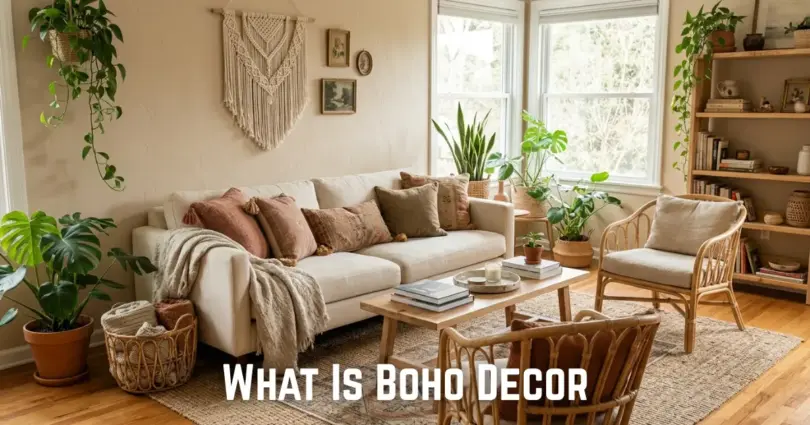

What is boho decor? It’s a relaxed, free-spirited home style that mixes natural materials, layered textiles, mixed patterns, plants, and handmade or vintage pieces. It grew from bohemian artist culture and the hippie era. Colors are usually earthy, like terracotta and cream, with small pops of bright color. The goal is a cozy, personal room that looks collected, not copied from a catalog.
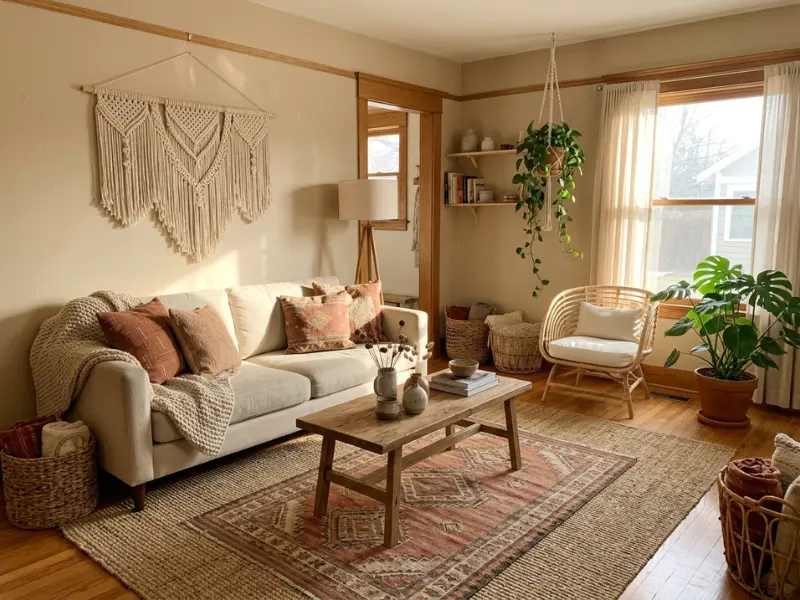
You’ve seen the boho decor photos. Soft rugs, woven baskets, plants hanging near a sunny window. You want that cozy feeling at home, but every time you try, your room ends up looking cluttered instead of collected.
We know how hard this can be. The look seems simple, yet no one explains the rules behind it. So what is boho decor, really, and how do you get it right without wasting money?
Here is the thing. This style is relaxed, but it still follows a pattern. Once you see it, you can build it in any room, big or small.
That’s what you’ll find here. You’ll learn the key features, the layered textures and colors that work, and how the main boho types differ.
You’ll also get a quick test for your own room, one easy rule that stops clutter, and ideas for every room, including the kitchen and bathroom. You’ll find budget tips and pet-safe choices too.
Let me explain it from the beginning.
What Is Boho Decor in Simple Words?
Boho decor is a home style where your own taste matters more than matching sets. You pick pieces you love and let them share a room.
You’ll see what “boho” means, then test your own room.
What does “boho” actually mean?
Boho is short for bohemian. Today the word stands for a free, creative way to live. In decor, your taste leads and rules step aside.
Picture two living rooms. In one, the sofa, table and shelf come from the same store. In the other, a gray sofa sits beside a thrifted wood table, a basket from a trip, and a rug in your favorite color.
The second room is the boho one.
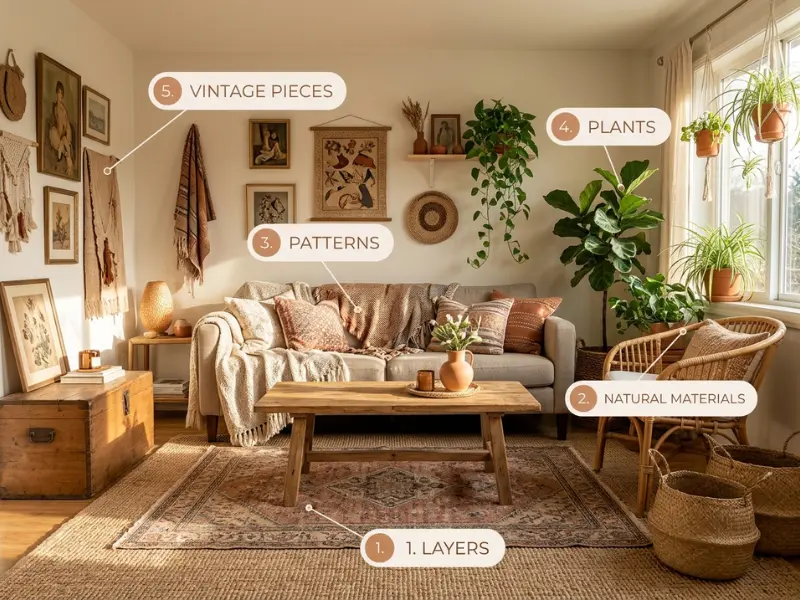
5 quick signs your room is boho
Look around your room and count how many of these you can find:
- Layers: a throw on a sofa, or a rug on a rug
- Natural materials: rattan, wicker, jute or raw wood
- Mixed patterns: two or more prints in one room
- Plants: green in more than one spot
- Handmade or vintage: one piece with a story
Four or five signs? Your room is already boho. Two or three? You have boho touches. Zero or one? You get to choose every piece fresh. In practice, test one room at a time.
So where did a style with so few rules begin? The story starts in 1800s Paris.
Where Does Boho Decor Come From?
Boho decor has two roots: artists in 1800s Paris, and young people in the 1960s and 70s who wanted a more personal way to live.
Each root left something you can still see in a boho room today.
Bohemian artists of the 1800s
The French first used the word “bohémien” in the 1400s. They wrongly thought Roma travelers came from Bohemia, a region in today’s Czech Republic.
By the 1800s, Paris artists and writers living on little money took the word as their own. Writer Henri Murger began publishing stories about artist life in 1845, and the word caught on.
What they left you: secondhand and handmade pieces, because artists lived on small budgets.
The hippie revival of the 1960s and 70s
In the 1960s and 70s, many young people pushed back on mass-produced, store-bought homes. They chose handmade crafts, textiles from other cultures, and thrifted finds.
What they left you: macramé, global textiles, and the habit of mixing cultures in one room.
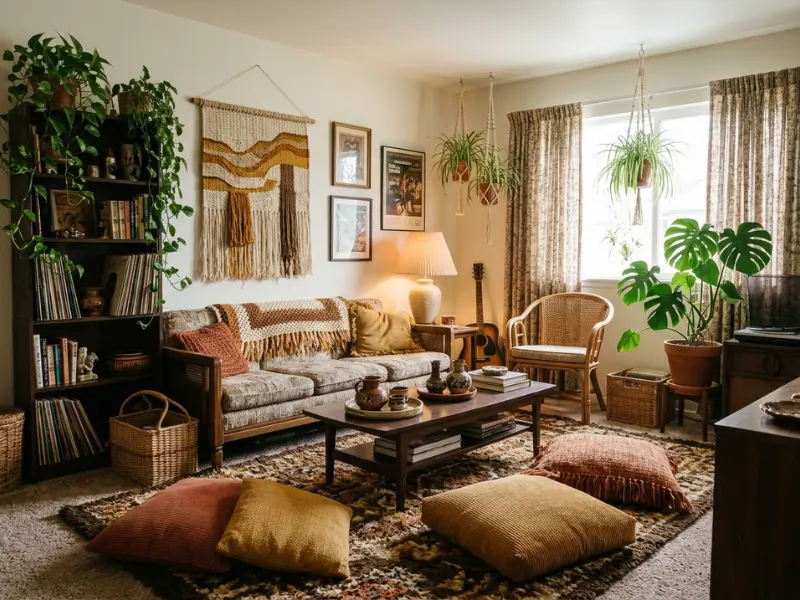
Why boho keeps coming back
Boho keeps coming back, and it changes each time. Today’s version is often softer and more neutral than the bright 1970s one.
Now you know the roots. Next comes what to look for in a real room.
What Are the Key Features of Boho Decor?
Boho rooms share seven features: layered textiles, natural materials, mixed patterns, plants, handmade or vintage pieces, textured wall decor, and warm lighting.
You don’t need all seven in every room. Each feature below comes with one starter piece, so you know where to begin.
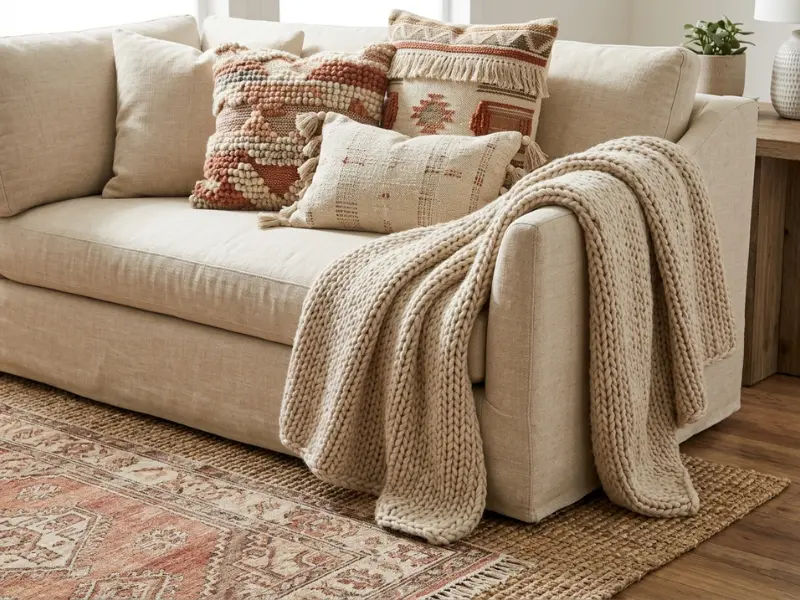
Layered textiles (rugs, pillows, throws)
Think about it this way: layers work like clothes. One thin shirt feels cold, but add a sweater and a scarf and you feel warm. A room works the same way.
- Rugs: pick two that share one color, so the layers look planned
- Pillows: mix two or three sizes on one sofa
- Throws: drape one over an arm or the foot of a bed
Starter piece: one large, textured rug.
Natural materials (rattan, wicker, jute, wood)
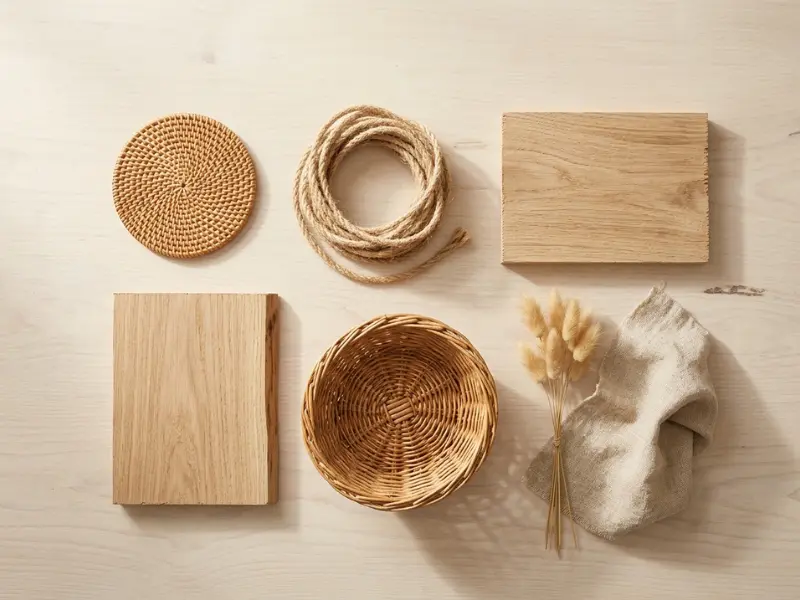
Boho rooms feel earthy because they use materials from nature. Two of these names confuse people, so let me explain:
- Rattan: a strong palm vine used for chairs and baskets
- Wicker: a weaving style, not a material
- Jute: a plant fiber common in rugs
- Wood: raw or aged finishes, not high gloss
Makers often weave wicker from rattan. Starter piece: one woven basket.
Mixed patterns that still look calm
Boho loves patterns, but calm rooms follow one rule: the patterns share a color. A floral and a stripe can sit together if both include the same rust.
What actually works is one large pattern, one medium and one small.
Starter piece: two pillows with different prints that share one color.
Plants, big and small
Plants add living green and soft shapes. Mix heights so your eye travels around the room.
- Hanging: a spider plant in a hanging pot
- Floor: a parlor palm in a corner
- Table: small pots on a shelf or table
Starter piece: one hanging plant.
Handmade, vintage and global pieces
These pieces give your room its story. A thrifted wood stool, a hand-painted bowl from a trip, a flat-woven kilim rug, or a Moroccan pouf each says something about you.
One piece with a story does more for a room than ten bought to match.
Starter piece: one thrifted item you love.
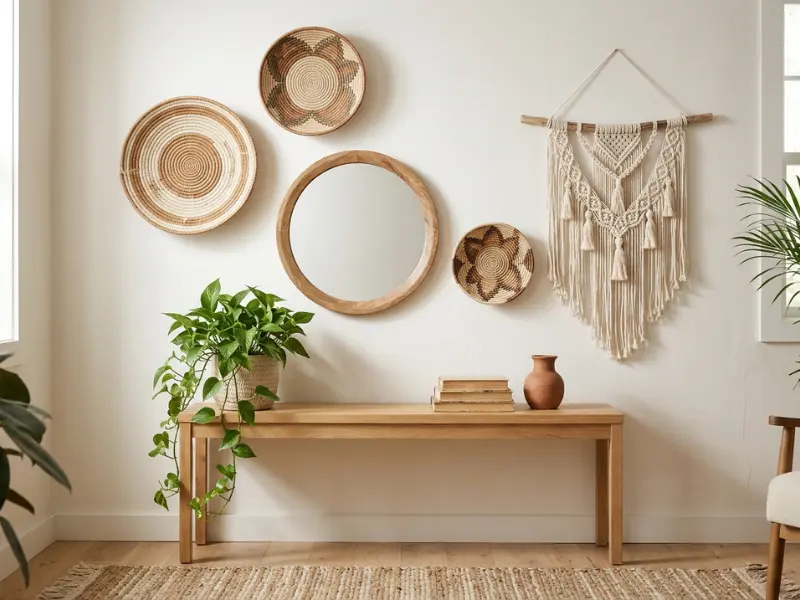
Boho wall decor (macramé, baskets, mirrors, tapestries)
Walls look soft and textured, not flat and framed.
- Macramé: knotted cord hangings that add soft texture
- Baskets: hang three together for depth
- Mirrors: wood, rattan or metal frames that bounce light
- Tapestries: a fabric piece used as art
Starter piece: one large macramé hanging above the sofa or bed.
Warm lighting
Light stays low and warm. Use lamps and string lights instead of one bright ceiling light.
Pick bulbs labeled 2700K, which gives a soft yellow glow.
Starter piece: a floor lamp with a woven shade.
Features give a room its shape. Color decides how it feels.
What Colors Are Used in Boho Style?
Boho colors are mostly earthy: cream, beige, terracotta, rust and olive. Small hits of teal, mustard or deep red add life, and gold or brass adds a warm shine.
Two palettes work, one bold and one soft, and a simple split keeps either one balanced.
Classic boho colors (warm and bold)
Classic boho leans warm, like a desert sunset. A terracotta wall, a rust throw and a mustard pillow can share one sofa.
- Terracotta: a warm orange-brown clay color
- Mustard: a deep yellow that glows under lamplight
- Teal or turquoise: a cool pop that balances the warmth
- Gold and brass: small touches in frames, lamps and bowls
Soft neutral boho colors
Not everyone wants bold color. A soft palette uses white, cream, sand and clay pink, and lets wood and rattan do the talking.
What actually works is letting texture do the job that color does in a bold room.
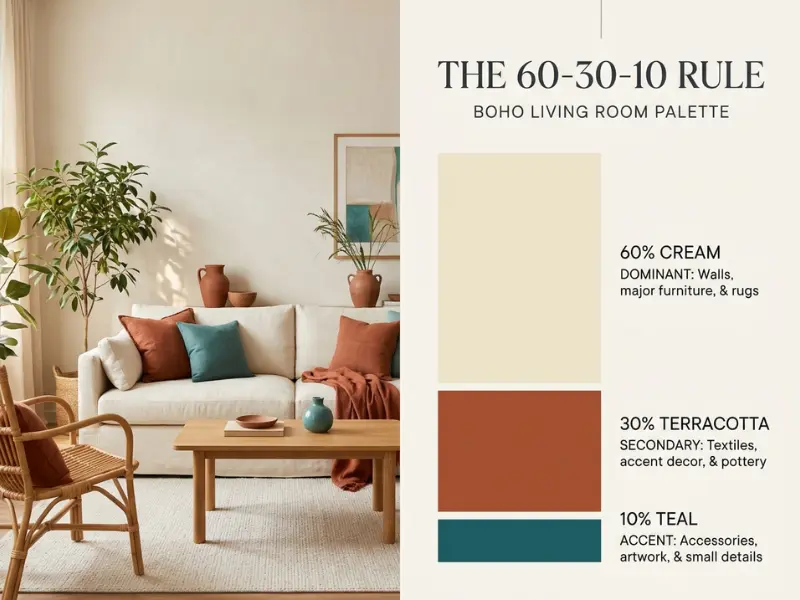
A simple 60/30/10 color split for a boho room
Colors go wrong when they fight for attention. Fix that with a 60/30/10 split:
- 60 percent: your main color, like cream walls and a beige sofa
- 30 percent: a second color, like a terracotta rug and curtains
- 10 percent: an accent, like teal pillows and a brass lamp
Leave wood, rattan and plants out of your count. They act like neutral background.
Colors also shift from one boho look to the next, because boho comes in more than one flavor.
What Are the Different Types of Boho Style?
Boho comes in four main looks: classic bohemian, boho chic, modern boho, and scandi boho. They run from bold and layered to calm and edited.
Some guides call boho minimalist, and others say it’s the opposite. They’re both right, because boho is a range. This table shows the whole range at a glance:
| Type | Look | Main colors | Best for |
| Classic bohemian | Bold, many layers | Terracotta, mustard, teal | Color and collecting lovers |
| Boho chic | Neat, fewer pieces | Cream, beige, pastels | Boho without clutter |
| Modern boho | Calm, few accessories | White, clay pink, tan | Small rooms |
| Scandi boho | Clean lines, soft textures | White, gray, light wood | Scandinavian fans |
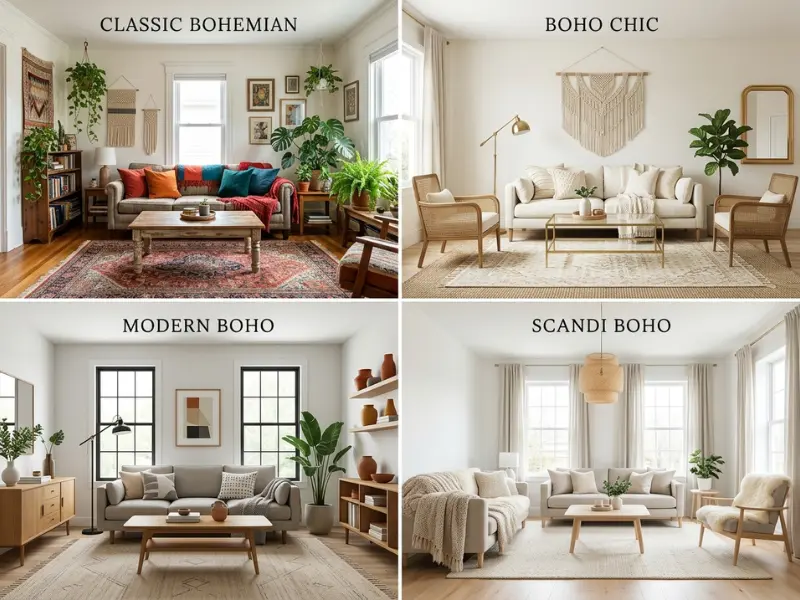
Classic bohemian
The original look. It’s bold, full and layered.
- Picture it: a terracotta wall, three patterned pillows and a plant in every corner
- Skip it if: you want bare surfaces
Boho chic
Boho with an edit. You keep the textures but use fewer pieces.
- Picture it: a cream sofa, one rattan chair and one patterned rug
- Skip it if: you love lots of color
Modern or organic boho
The calm version. Plenty of natural texture, very few accessories.
- Picture it: white walls, a light wood table and one woven basket
- Skip it if: you love collecting things
Scandi boho
Scandinavian calm meets boho softness. Clean lines, with woven and knit textures on top.
- Picture it: a simple sofa with a wool throw and a rattan lamp
- Skip it if: you want bold patterns
Boho vs bohemian vs boho chic: is there a difference?
Boho and bohemian mean the same thing. One is just the short name. Boho chic is different, because it’s the tidier, edited version.
So the real difference is how much you edit, not which word you use.
Boho sits close to a few other styles, and they’re easy to mix up.
How Is Boho Different From Other Home Decor Styles?
Boho is looser than minimalist, more global than farmhouse, and more natural than maximalist. Eclectic is its closest cousin.
The truth is, boho and eclectic are the easiest pair to mix up. The table shows each style at a glance.
| Style | Looks like | Difference from boho |
| Minimalist | Few pieces, bare surfaces | Boho layers, minimalist removes |
| Eclectic | Mixed eras and materials | Boho has a natural, handmade theme |
| Farmhouse | Rustic wood, white walls | Farmhouse is country, boho is global |
| Maximalist | Bold colors, many pieces | Boho stays natural and relaxed |
Boho vs minimalist
Minimalist rooms keep little and love bare surfaces. Boho layers on purpose. Modern boho sits in between.
Boho vs eclectic
Every boho room is eclectic, but not every eclectic room is boho. In practice, count the materials. If most pieces are natural and handmade, call it boho.
Boho vs farmhouse
Farmhouse feels like a country home. Boho looks outward, so a global textile can sit next to a plain wood stool.
Boho vs maximalist
Maximalist means more is more, in any style. A neon, glossy room can be maximalist without being boho.
Once you know which look you want, the room comes together in a clear order.
How Do You Decorate in Boho Style Step by Step?
Start with a calm base, then add textiles, plants, wall decor and warm light, in that order. Finish by taking one item out.
Big things go first and small things go last, so you never have to start over.
Start with a calm base (walls and big furniture)
Step 1: Paint the walls warm white, cream or soft sand, and pick a sofa or bed in a neutral color. Big pieces stay quiet so small pieces can shine.
A beige sofa against a cream wall gives every pattern a calm place to sit.
Layer rugs and textiles
Step 2: Lay your biggest rug first. In a living room, rest at least the front legs of your sofa and chairs on it.
Then add pillows and a throw, one at a time. Start with three textures and add more only if the room needs them.
Add plants and natural pieces
Step 3: Group plants in clusters of three instead of lining them up.
Then give each surface one natural piece, like a wood bowl on the table or a basket under the console.
Hang art and wall pieces
Step 4: Hang your biggest piece first, such as a mirror or a macramé hanging. On an open wall, center it 57 to 60 inches from the floor, the height galleries use. Above a sofa, hang it 6 to 8 inches over the sofa back instead.
Then fill in around it and leave gaps.
Finish with warm lighting
Step 5: Place light at three heights: a floor lamp by the sofa, a table lamp on a side table, and string lights on a shelf.
Then switch off the ceiling light for one evening. If the room feels right, you can stop here.
Edit before you call it done
Step 6: Take one item out. What actually works is removing the piece you like least, not the one that cost the most.
Then take a photo of the room. A photo shows clutter your eyes skip over.
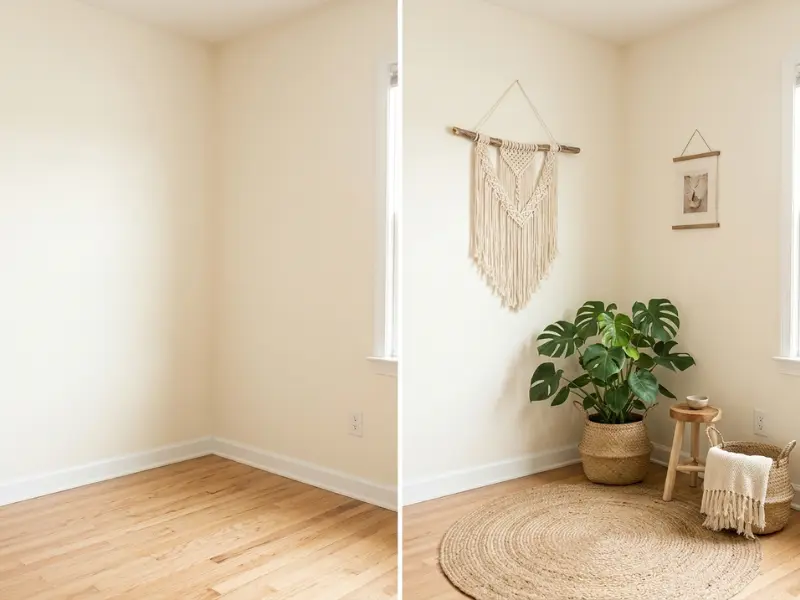
The same six steps work in every room, but each room has its own job.
How Do You Use Boho Style in Each Room?
Use the same boho rules in every room, then adjust for what the room does. Kitchens and bathrooms need pieces that handle water and grease.
You’ll get simple ideas for four rooms, plus what to skip in the two that get wet or greasy.
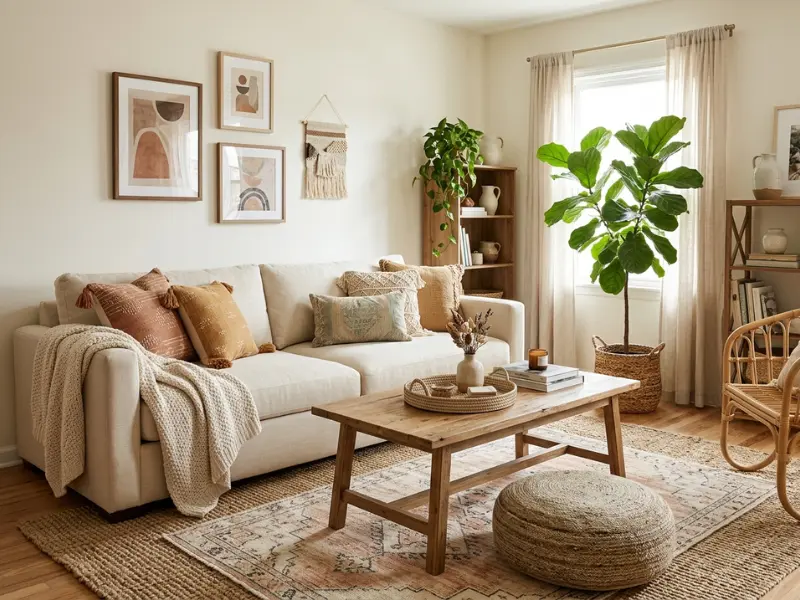
Living room
A boho living room can take the most layers, because people sit and stay here.
- Seating: a floor cushion or pouf for extra guests
- Table: a wood coffee table with a woven tray
- Corner: one large plant to anchor the room
- Light: a floor lamp in the darkest corner
Bedroom
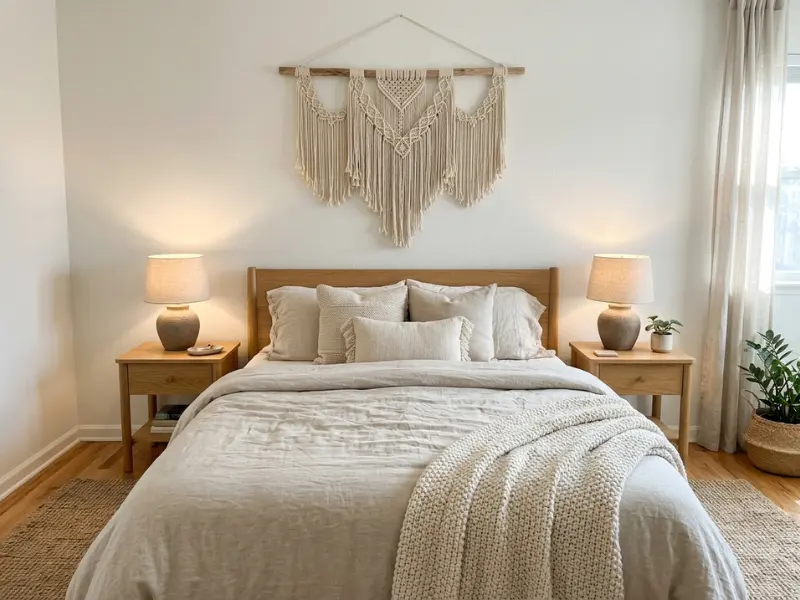
A boho bedroom works best with fewer colors and more softness, because you rest here. What actually works is picking one wall for pattern and keeping the other three calm.
- Bed: cotton or linen bedding with a chunky knit throw
- Wall: a tapestry or macramé piece behind the bed, or one wall of soft floral wallpaper
- Sides: a warm lamp on each nightstand
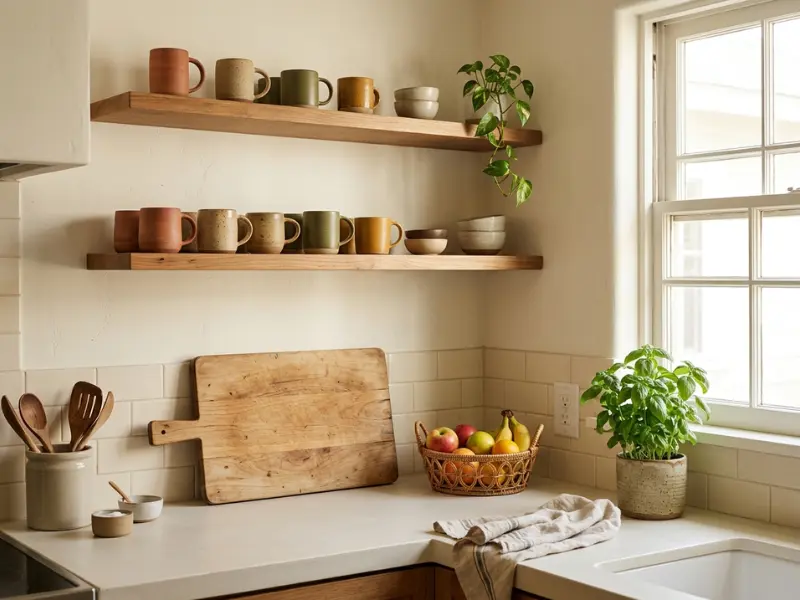
Kitchen
Kitchens get steam and grease, so choose pieces you can wash or wipe. A basil pot, a wood board and cotton towels already make a boho kitchen.
- Plants: a pot of basil on the window sill
- Wood and baskets: a cutting board on display and a basket for fruit or bread
- Shelves: handmade mugs and bowls out in the open
- Textiles: cotton dish towels and a washable runner
- Skip: dried flowers by the stove or sink, since steam and grease dull them
Bathroom
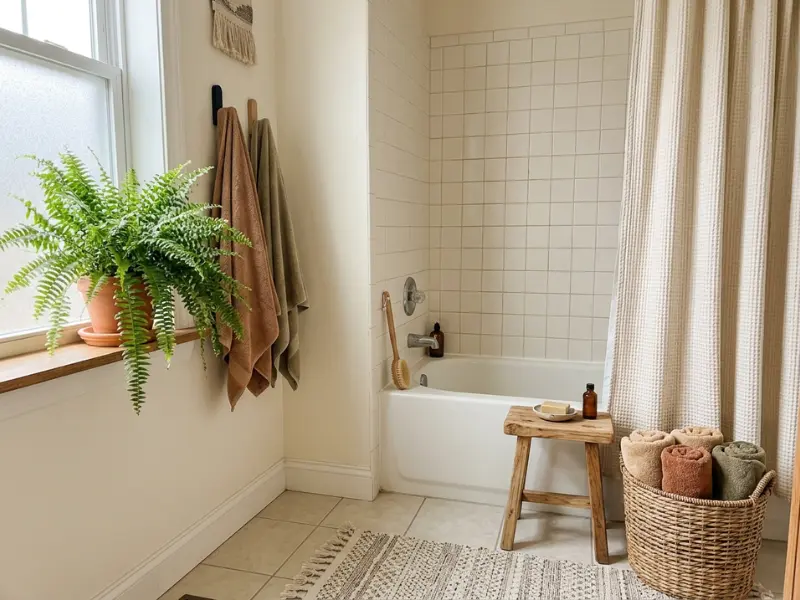
A boho bathroom stays damp, so pick materials that handle moisture.
- Plants: a Boston fern near a window, since ferns like steam and bright, indirect light
- Wood: a teak or sealed wood stool for towels
- Storage: a woven basket for rolled towels, away from the shower spray
- Textiles: cotton towels in earth tones and a washable bath mat
- Skip: jute rugs near the shower, since jute soaks up water and can grow mildew
Doing all of this doesn’t mean spending a lot.
How Can You Get the Boho Look on a Budget?
Thrift, swap and make things yourself. Buy a few big pieces new and fill the rest with secondhand finds and simple DIY.
Boho decor on a budget comes down to four things: where to shop, three easy projects, where your money matters most, and what works if you rent.
Where to find boho pieces for less (thrift stores, flea markets, estate sales, online marketplaces)
Secondhand is the easiest way into boho home decor, and it fits the style. Look for these in each place:
- Thrift stores: baskets, wood stools, brass bowls and lamps
- Flea markets: rugs, textiles and handmade pottery
- Estate sales: solid wood furniture and vintage mirrors
- Online marketplaces: Facebook Marketplace and eBay for furniture, Etsy for handmade pieces
Look at the frame and the weave first. You can wash a fabric, but you can’t fix a weak frame.
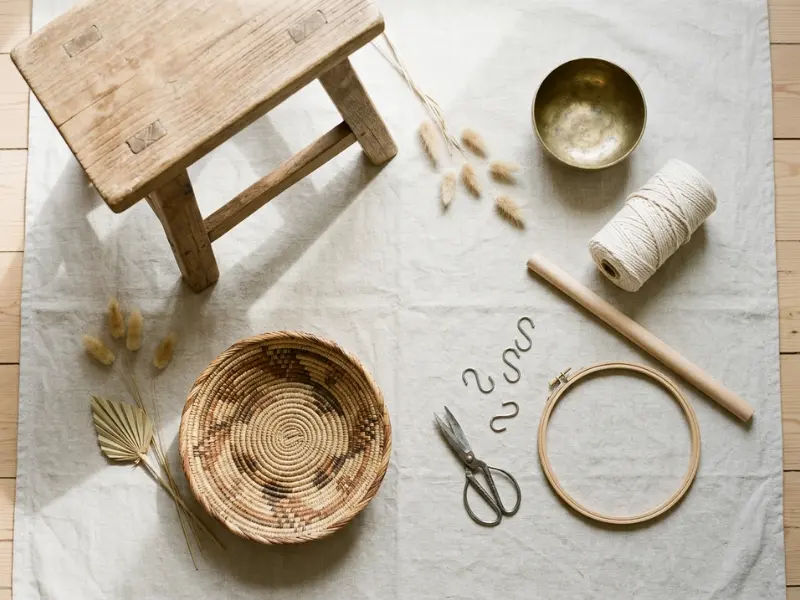
Easy DIY ideas (macramé, painted baskets, fabric scraps as art)
Three projects that take an afternoon or less:
- Macramé: cord and a wooden dowel make a wall hanging with simple knots
- Painted baskets: acrylic paint turns a plain thrifted basket into a pattern piece
- Fabric as art: stretch a favorite scrap in an embroidery hoop
Start with the hoop. It takes minutes.
Where to spend and where to save
Spend on what you use and see every day. Save on what you can swap out.
- Spend: a rug, since feet wear it down and it sets the whole room
- Spend: a good floor lamp, since light changes how everything looks
- Save: pillows, throws and covers, which you can swap anytime
- Save: wall art, baskets and plants
Boho ideas for renters
No drilling? Check your lease first, then try these:
- Hooks: removable hooks for lightweight macramé and baskets
- Walls: peel-and-stick wallpaper on one wall
- Floors: a big rug over flooring you don’t like
- Light: plug-in lamps and string lights
- Curtains: patterned panels on a tension rod
Cheap doesn’t have to mean messy, though. A few simple mistakes are what make boho look cluttered.
What Mistakes Make a Boho Room Look Messy, and How Do You Keep It Safe?
Boho looks messy when patterns fight, shelves have no gaps, or you copy pieces without knowing what they mean. It also needs care around pets, kids and heat.
Each fix below takes minutes, and a few protect your family.
Too many patterns with no link
Squint at your room. If one print jumps out and fights the rest, swap it for a calmer one. That one test catches the print that doesn’t belong.
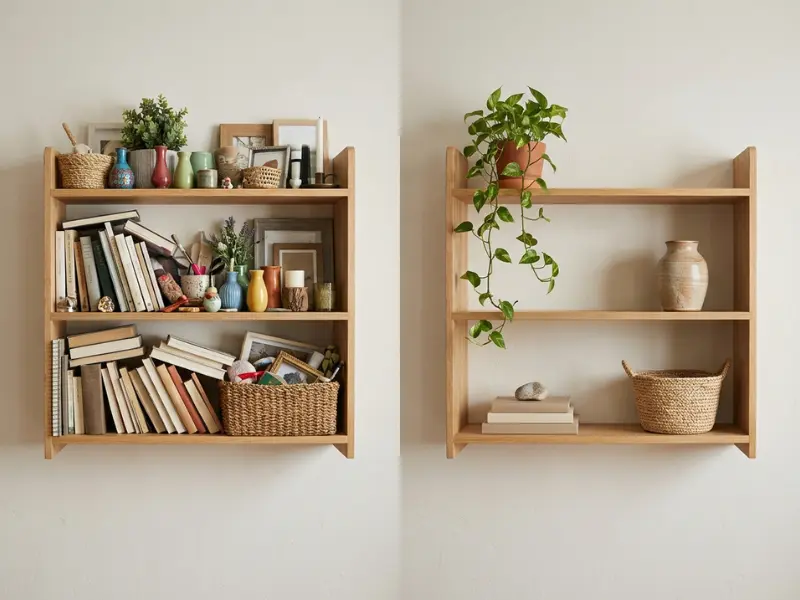
No space to breathe
Full surfaces tire the eye. Group small items in threes, and leave a hand’s width between groups.
Using global pieces with respect
Boho borrows from many cultures, so treat each piece as work made by real people.
- Learn where a piece comes from before you buy it
- Buy from makers or sellers who name them
- Skip sacred or religious items unless they mean something to you
- Use pieces the way makers meant them, like a rug on a floor
Pets, kids and safety (toxic plants, slippery layered rugs, hanging items near heat)
Safety takes six checks:
- Plants: pothos, snake plant and sago palm are on the ASPCA toxic list for pets
- Safer picks: spider plant and parlor palm
- Rugs: put a non-slip pad under the bottom rug and grippers under the top one
- Heat: keep macramé, dried plants and fabric 3 feet from heaters, stoves and fireplaces, per the NFPA
- Candles: keep them 12 inches from anything that can burn, per the NFPA
- Kids: keep long cords and fringe out of reach of babies and toddlers
Even pet-safe plants can upset a stomach if chewed, so check the ASPCA list before you buy.
Keeping textiles and dried plants clean
Textures hold dust. A short routine keeps boho fresh:
- Rugs: vacuum once a week
- Throws and covers: wash by the care label
- Dried plants and macramé: dust with a soft brush or a hair dryer on cool, low
- Baskets: wipe with a dry cloth
In practice, a five-minute weekly sweep beats a big clean-up every few months.
A few questions come up again and again, so quick answers follow.
Frequently Asked Questions
What is boho decor style?
Boho decor is a relaxed home style built around your own taste, not matching sets. Think layered rugs and pillows, rattan and jute, mixed prints, plants, and pieces that are handmade or secondhand. The word is short for bohemian, which artists in 1800s Paris made popular. The result feels cozy and personal.
What is the difference between boho and bohemian decor?
There is no difference. Boho is the short, casual name for bohemian, and both words describe the same style. Boho chic is the one that differs, since it trims the look down to fewer pieces. What changes the style is how much you edit, not the word you pick.
What are the main elements of boho decor?
Look for layered textiles, natural materials like rattan and jute, mixed patterns, plants, vintage or handmade finds, wall pieces with texture, and warm lighting. Spot most of these in a room and it reads as boho. Rugs, pillows and plants are the easiest place to begin.
What colors are used in boho style?
The most common boho colors are warm earth tones: cream, beige, terracotta, rust and olive. Classic boho adds bold pops of mustard, teal or deep red. Soft versions stick to white, sand and clay pink. Gold or brass touches add warmth. For balance, use about 60 percent main color, 30 percent second color and 10 percent accent.
What is boho chic?
Boho chic is a tidier, more edited version of boho. It keeps natural materials, layered textures and handmade pieces, but uses fewer items, softer colors like cream and pastels, and more empty space. Think of it as boho with a calm, polished feel, good for people who like the look but dislike clutter.
What is modern boho decor?
Modern boho is the calm version of boho. It uses white walls, light wood, clay pink and desert tan, with only a few handmade accessories. Texture does the work that bright color does in classic boho. It suits small rooms well, because fewer pieces leave more space to move and breathe.
Is boho decor still in style?
Yes, boho decor is still popular, but the look has softened. Design writers in 2026 describe a refined version with neutral colors, rich texture and fewer, carefully chosen pieces instead of piles of accessories. Pinterest also predicted a colorful boho style with African influences for 2026. The personal, collected feel behind it has lasted for decades.
What is the difference between boho and eclectic decor?
Boho is one kind of eclectic style, but eclectic is wider. Eclectic mixes any eras, colors and materials with no set theme. Boho has a clear theme: natural materials, handmade or vintage pieces and layered textures. To tell them apart, check the materials. Mostly natural and handmade means boho.
How do you decorate boho on a budget?
Boho decor costs less when you shop secondhand. Try thrift stores, flea markets and estate sales, then make easy DIY pieces like macramé. Put your money into a rug and a good lamp, and save on pillows, throws and wall art. Renters can use removable hooks and peel-and-stick wallpaper. Start with three pieces, not a whole room.
Can you mix boho with modern furniture?
Yes, and it works well. Keep the big pieces simple, like a clean-lined sofa or a plain table, then bring in boho through rugs, pillows, plants and wood. Repeat one wood tone or metal across both styles so they connect. Scandinavian and minimalist rooms take boho especially well.
Conclusion
So, what is boho decor, in one line? It’s a relaxed, personal style built on soft layers, natural materials, plants and pieces with a story. It runs from bold and colorful to soft and neutral, so you choose the version that fits your space.
Use the five-sign test to see what your room already has, then fill the gaps one piece at a time.
Your plan for this weekend is simple. Pick one room. Lay down one large rug, add one plant that’s safe for pets, and hang one piece on the wall.
Then take one item out and look at the room again. If it feels calm and cozy, you’re done.
Fill in the rest with thrifted finds and cheap DIY, and save your spending for the rug and the lamp.
Try the steps and see how boho decor feels in your own room by Monday.