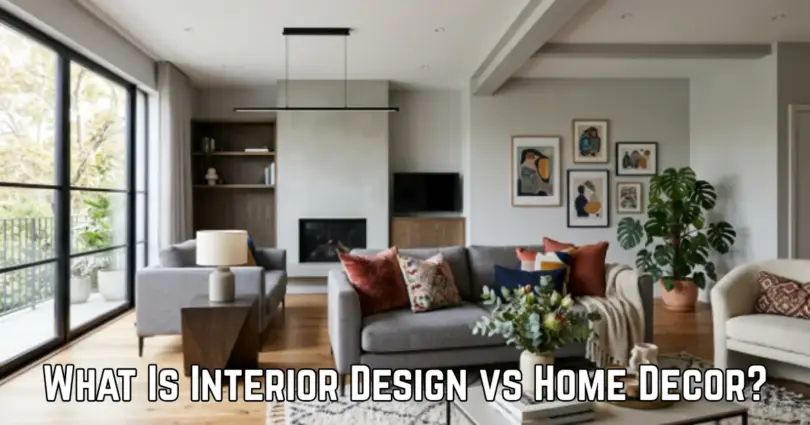

What is interior design vs home decor? Interior design is planning how a space functions, its layout, lighting, and even structural changes, and it needs formal training. Home decor is styling a space with furniture, color, and accessories to make it look good. Design changes the bones of a room. Decor changes the look. You can hire a designer, a decorator, or do decor yourself.
Here’s something wild. A designer can spend eight months planning a room and never pick a single throw pillow. That’s how far apart interior design and home decor actually are, even though most people use the two words like they mean the same thing. If you have ever wondered what is interior design vs home decor, you are not alone.
Even some people in the design world mix them up. The truth is these two terms cover completely different jobs, different skills, and different price tags. One is about how a room functions. The other is about how it feels. Get this wrong and you could end up paying a designer for a job a decorator could have done for a fraction of the cost, or worse, hiring a decorator when you actually needed structural changes.
In this guide, you will get a clear, simple answer to interior design vs home decor, plus real cost numbers and a renter’s guide that most articles skip completely. By the end, you will know exactly which one your space needs.
What Is Interior Design vs Home Decor?
Interior design plans how a room works, its layout, lighting, and sometimes even its walls. Home decor is the furniture, color, and accessories you add to make that room look good.
Here’s the simplest way to think about interior design vs home decor. One changes the bones of a room. The other changes its outfit.
The Flip Test: A Quick Way to Tell Them Apart
Try this. Picture flipping your room upside down like a snow globe.
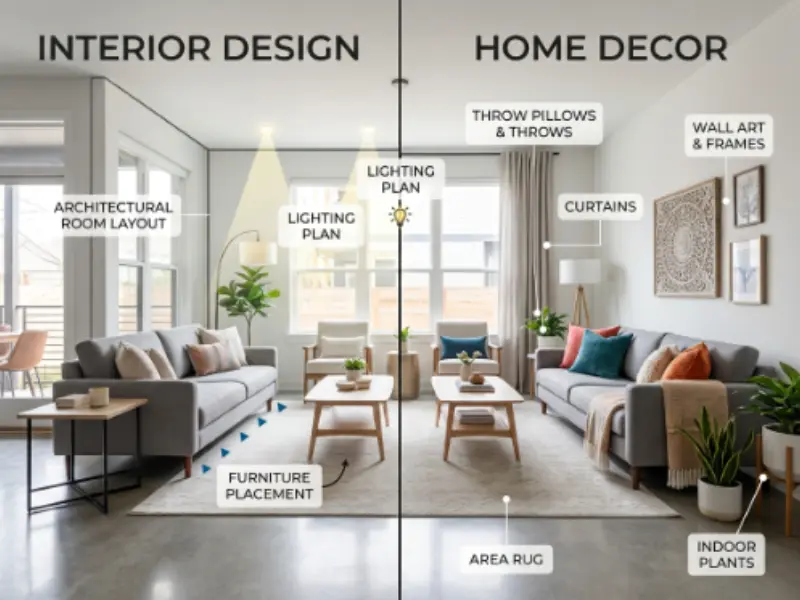
- Whatever stays bolted in place is design: your flooring, your lighting fixtures, your cabinets, your windows.
- Whatever falls out and scatters is decor: your pillows, your rugs, your lamps, your framed art.
This flip test isn’t something you’ll find spelled out clearly anywhere else. Debowsky hints at a version of this idea, but never turns it into something you can actually use to sort your own room in ten seconds.
Why People Mix These Two Terms Up
Most people mix them up for one simple reason. Both jobs happen in the same room, sometimes even on the same day.
A designer might finish knocking down a wall on a Tuesday. A decorator might walk in that Thursday and hang curtains in the exact same spot. Same room, two completely different jobs.
In practice, this overlap is exactly why so many homeowners end up calling the wrong professional first and wasting a consultation fee.
Once you can spot the difference between structure and style, the rest of this guide will make a lot more sense.
What Does an Interior Designer Actually Do?
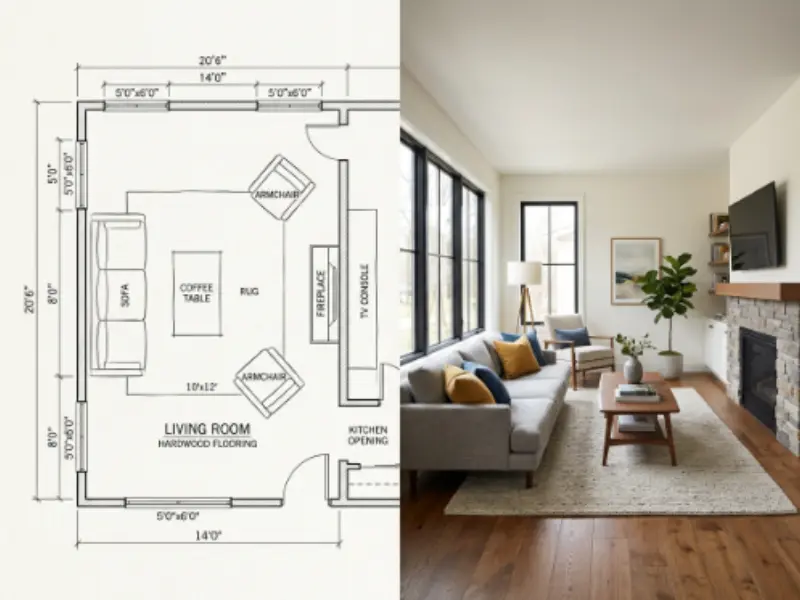
An interior designer plans your room’s layout, lighting, and any structural changes, and works with contractors to keep everything up to code.
An interior designer’s job starts long before anything gets decorated. Think of them as the person who decides where your kitchen island goes before anyone even picks a paint color.
Space Planning and Layout
This is where a designer earns their fee. They figure out how you’ll actually move through a room.
- Where furniture should sit so the room doesn’t feel cramped.
- How traffic flows from your front door to your kitchen.
- Whether a wall is helping your space or holding it back.
A good designer thinks about a 5 year old running through your living room just as much as they think about how a couch looks.
Structural Changes and Renovations
The truth is. Only a designer touches your walls, your plumbing lines, or your electrical layout, and this is the single biggest difference between interior design and home decor.
If you want to knock down the wall between your kitchen and living room, that’s a designer’s job. Not a decorator.
Interior designers coordinate directly with contractors and architects to make sure structural changes are safe and legal.
Lighting and Technical Knowledge
Lighting is design, not decor, even though it feels like a small detail.
A designer decides where recessed lighting goes, how much natural light a room needs, and whether your kitchen needs task lighting over the counter versus soft ambient lighting in the living room.
They also think about fire safety codes, accessibility, and how materials like flooring will hold up over 10 or 15 years of daily use.
Do Interior Designers Need a License or Certification?
The truth is, this depends entirely on your state.
Some states require interior designers to be licensed or registered before they can call themselves that professionally. Many designers also earn the NCIDQ Certificate, which is the industry’s main way of proving they actually know their stuff, from building codes to space planning.
None of the top ranking articles explain what the NCIDQ certificate actually verifies. It’s not a college degree. It’s a professional exam covering building codes, life safety, and construction standards, and it’s the closest thing this industry has to a universal stamp of competence. If you’re hiring a designer for anything structural, asking if they hold this certificate is a fair and smart question.
What Does Home Decor Actually Mean?
Home decor is the furniture, color, and accessories you add to a room to make it look good, without touching its walls or layout.
If interior design is the skeleton of a room, home decor is everything that gives it personality.
Furniture and Color Choices
Furniture selection is the biggest decor decision most people make. It’s not just about what looks nice. It’s about what fits your actual life.
- A soft sectional works for a family movie night.
- A sleek loveseat works better for a small studio apartment.
Color works the same way. A soft blue can calm down a bedroom. A bold red can wake up a dining room.
Accessories, Textiles, and Wall Art
This is where a room starts to feel like yours.
- Throw pillows and rugs add texture and warmth.
- Wall art and mirrors add personality and can even make a small room feel bigger.
- Curtains and lamps finish off the mood of a space.
None of these items change how your room functions. They just change how it feels to be in it.
What Makes Decor Easy to Change
Here’s what actually works, based on how most home refreshes really go. Decor is designed to be swapped, and that’s exactly why it’s the easiest, cheapest way to update a space.
Try this simple weekend decor swap list, something none of the competitor articles give you:
- Swap your throw pillow covers for a new color or pattern.
- Add one large piece of wall art above your couch or bed.
- Switch your lamp shades instead of buying new lamps.
- Layer a new rug over your existing flooring.
- Group 3 to 5 plants or vases together on a shelf or table.
Every single one of these can be done in an afternoon, on almost any budget, without calling a single contractor.
That ease of change is exactly why home decor feels approachable, while interior design still needs a trained professional.
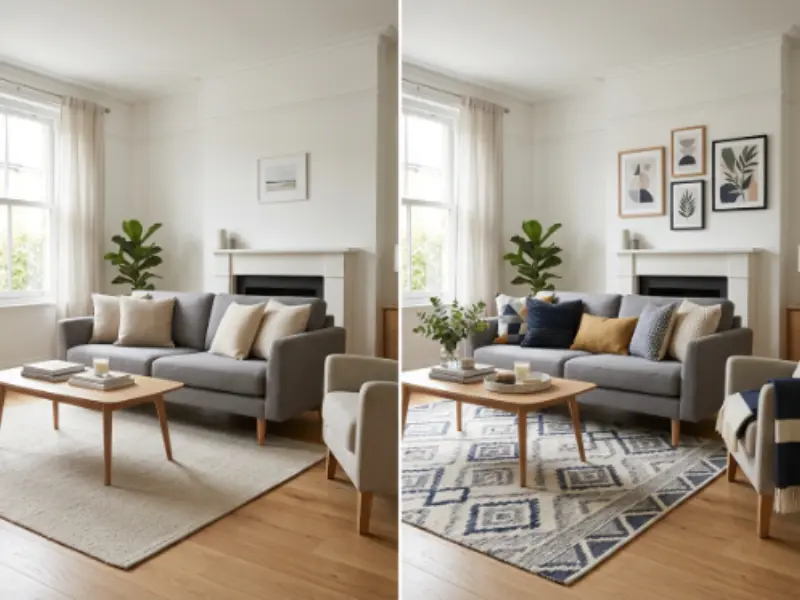
What’s the Real Difference Between Interior Design and Home Decor?
Interior design changes how a room functions and requires training. Home decor changes how a room looks and doesn’t require any license at all.
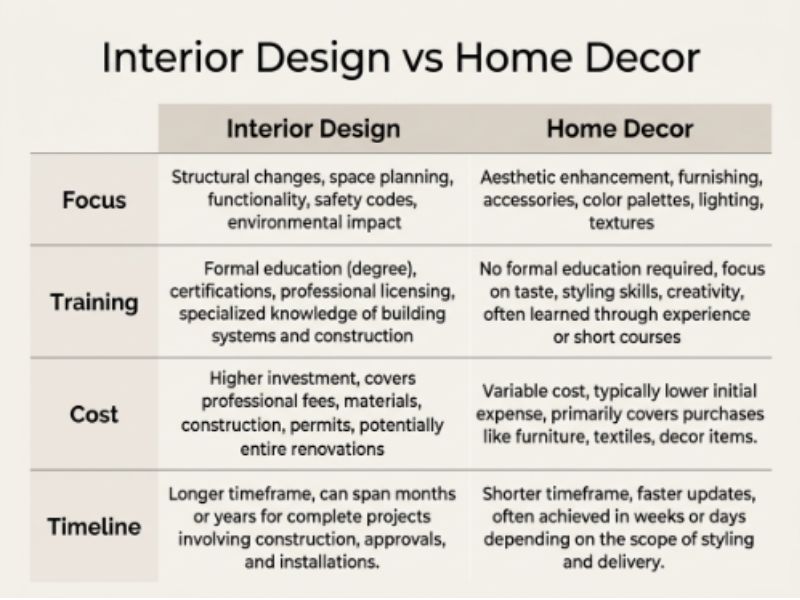
You’ve now seen both sides separately. Here’s what it looks like when you put them side by side.
Side by Side Comparison Table
| Aspect | Interior Design | Home Decor |
| Focus | Layout, function, structure | Style, color, accessories |
| Training Needed | Formal education, often NCIDQ certified | No formal training required |
| Can Change Walls | Yes | No |
| Typical Cost | Higher, project-based | Lower, item-based |
| Who Does It | Interior designer | Homeowner, decorator, or both |
| Timeline | Weeks to months | A single afternoon to a few days |
Can One Person Do Both?
Yes, and this happens more often than you’d think.
Many interior designers also offer decorating as part of their service. So is a designer who also decorates really doing the same job twice? Not exactly.
A designer who decorates is still doing two separate jobs, just back to back. They plan your layout first. Then they style it second.
What actually works in practice is asking your designer directly whether decor is included in their fee or billed separately. Most homeowners assume it’s bundled in, and that assumption is exactly where budgets go sideways.
This table makes the difference clear on paper. But numbers matter just as much as definitions, so let’s talk about what each one actually costs you.
How Much Does Each One Cost?
Interior design usually costs more because of labor, permits, and materials. Home decor can cost as little as $50 or scale into the thousands, depending entirely on what you buy.
None of the top ranking articles talk about real numbers, and that’s a problem, because cost is usually the first thing that decides which route you take.
What Affects Interior Design Cost
Interior designers typically charge in one of a few ways.
- A flat project fee, often starting around $2,000 to $5,000 for a single room.
- An hourly rate, commonly between $75 and $200 an hour depending on experience.
- A percentage of your total renovation cost, usually 10 to 20 percent.
On top of the designer’s fee, you’re also paying for contractors, permits if you’re changing structure, and the materials themselves.
What Affects Home Decor Cost
Home decor cost depends entirely on your choices, which is exactly why it’s the more budget-friendly option.
- New throw pillows and a rug can run you $50 to $150 total.
- A full living room refresh with new furniture can run $1,000 to $3,000.
- Hiring a home decorator to style a room typically costs a few hundred dollars, far less than a full design project.
Here’s a number worth knowing. A full structural design project can run 5 to 10 times the cost of a decor-only refresh for the exact same room. If your budget is under $1,000, decor is almost always your realistic starting point, not design.
From real use, that 5 to 10 times cost gap is the number that actually changes what people decide to do first, not the definitions.
Cost usually points you in a direction. But the real deciding factor is what your project actually needs, and whether you even own the space you’re updating.
Do You Need an Interior Designer or Can You Just Decorate Yourself?
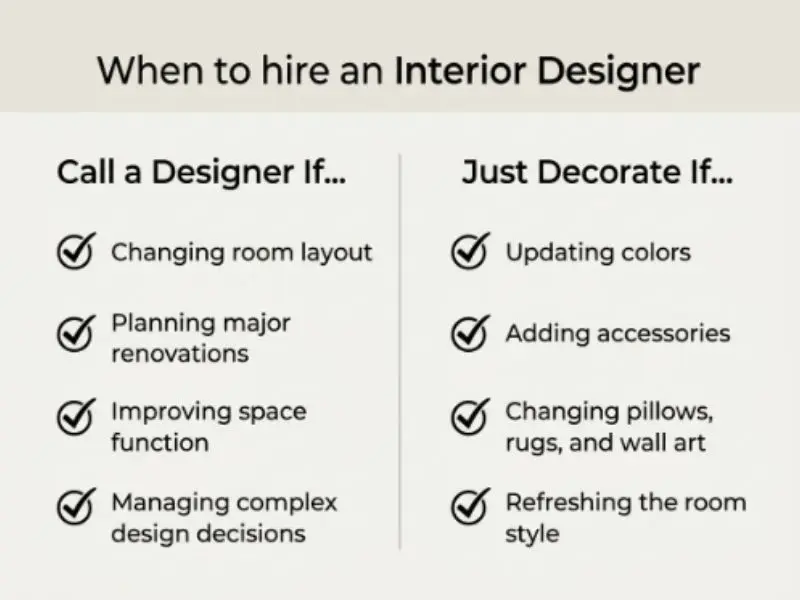
If you’re changing your layout, walls, or lighting, hire a designer. If you’re just updating the look of a room, you can decorate it yourself or hire a decorator.
Think about it this way. The question isn’t which one is better. It’s which one your specific project actually calls for.
Signs You Need an Interior Designer
- You want to remove or add a wall.
- You’re renovating a kitchen or bathroom layout.
- You need help with permits or building codes.
- You’re building an addition or new construction.
Signs You Can Handle It With Just Decor
- You want a new color scheme or furniture arrangement.
- You’re refreshing a room for a new season or a special occasion.
- Your layout already works, it just looks tired.
- You’re working with a smaller, flexible budget.
What If You Rent Your Home?
This is a gap every single competitor article missed completely, and it matters for a huge chunk of readers.
If you rent, structural changes usually aren’t even an option. Most standard leases block tenants from touching walls, plumbing, or built-in lighting, and many require written landlord approval even for something as small as a paint color.
That means home decor isn’t just the cheaper choice for renters. In practice, it’s often the only realistic choice you have.
- Focus on furniture, rugs, and removable wall art.
- Use tension curtain rods instead of drilled ones.
- Try peel-and-stick options for temporary color or texture changes.
Once you know which category your project falls into, the rest of your decision gets a lot easier.
Frequently Asked Questions
What is interior design vs home decor in simple terms?
Interior design is planning how a room functions, its layout, lighting, and sometimes its walls. Home decor is styling that room with furniture, color, and accessories. Design changes structure. Decor changes style. One needs training. The other doesn’t. Think of design as the skeleton and decor as the outfit.
Is interior design more expensive than home decor?
Yes, almost always. Interior design involves labor, permits, and contractor costs, often starting around $2,000 to $5,000 per room. Home decor can cost as little as $50 for new pillows or a few thousand for full furniture. A design project can run 5 to 10 times more than a decor refresh.
Can I decorate my home without hiring anyone?
Yes, and most homeowners already do. Home decor doesn’t require any license or formal training. You can pick furniture, colors, rugs, and wall art entirely on your own. Most homeowners handle decor themselves and only call a professional decorator for larger projects or when they want expert color and style guidance.
Do I need both an interior designer and a home decor plan?
Not always, but they often work together. A designer plans your layout and structure first. Decor comes second, adding furniture and style on top. If you’re only refreshing how a room looks, you can skip the designer entirely and go straight to decor.
What’s the difference between an interior designer and an interior decorator?
An interior designer plans layout, structure, and lighting, and usually needs formal training or certification. A decorator focuses purely on style, choosing furniture, colors, and accessories, with no formal license required. Designers can touch walls and permits. Decorators cannot.
How long does an interior design project usually take?
A single room design project typically takes a few weeks to a few months, depending on structural work and permits. Home decor moves much faster. Most decor refreshes, like new furniture or accessories, can be finished in a single afternoon to a few days.
Can an interior designer also do my home decor?
Yes, many interior designers offer decor as an add-on service after finishing the layout and structural work. It’s not always included in their base fee though. Always ask directly whether decor is bundled into your quote or billed as a separate cost.
What should I hire first if I’m renovating a whole room?
Hire an interior designer first if your renovation involves layout changes, walls, or plumbing. Decor always comes after design work is finished, since furniture and accessories are chosen once the structure and layout are already locked in.
Is home decor easy to change later?
Yes, that’s exactly what makes decor different from design. Pillows, rugs, lamps, and wall art can be swapped in a single afternoon without touching your room’s structure. This is why decor is the easiest and cheapest way to refresh a space anytime.
What’s the best approach for a small space or a rental?
Focus on home decor only. Most rental leases don’t allow structural changes like knocking down walls. Use furniture, rugs, tension curtain rods, and peel-and-stick accents instead. These options update your space fully without needing landlord approval or a licensed designer.
Conclusion
At this point, you know exactly what is interior design vs home decor, and honestly, that puts you ahead of most homeowners. The flip test alone will save you from confusing conversations with contractors and designers for years to come. Remember, design changes the bones of your room, while decor changes its personality, and neither one is better than the other. They just solve different problems.
If your project involves walls, layout, or lighting, you now know a trained interior designer is worth every dollar. If you’re just craving a fresh look, that weekend decor swap list can genuinely transform a room without touching your budget too hard. And if you rent, you already have a clear, realistic path forward too.
Your space doesn’t need to be perfect right away. It just needs a starting point, and you now have one. Pick one small change from this guide, whether it’s a new rug or a serious conversation with a designer, and start there. You’ve got everything you need to make the right call for your home.