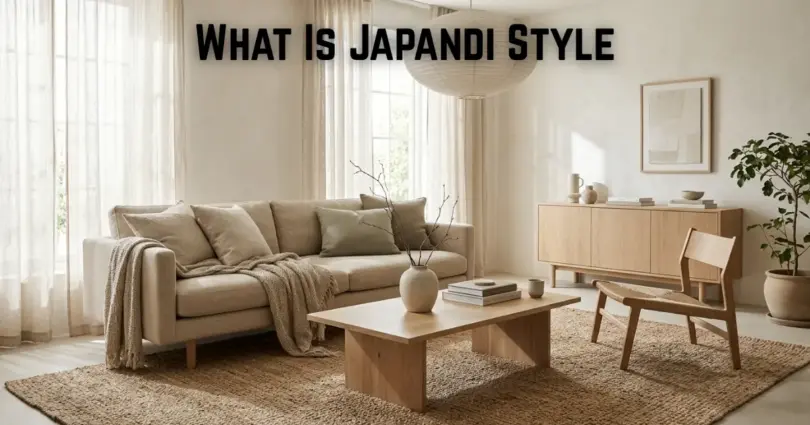

What is Japandi style? Japandi style is a home decor approach that combines Japanese minimalism with Scandinavian warmth and comfort. It uses natural materials, earthy colors, simple furniture, clean lines, and open space to create a calm, useful, and welcoming home. Wood, linen, stone, handmade decor, and soft lighting help bring this look to life without adding clutter.
A room can look beautiful without expensive furniture, bold colors, or shelves full of decorations. Sometimes, fewer things and better choices make the biggest difference. That’s one reason Japandi interiors have caught the attention of homeowners who want a calm, welcoming space.
If you’ve wondered what is japandi style and how you can bring it into your home, the good news is that you don’t need to start from scratch. Small changes to your furniture, lighting, colors, and decor can make a real difference.
You’ll learn how Japanese minimalism and Scandinavian comfort work together, which colors and materials suit this look, and how to use it in your living room, bedroom, kitchen, or bathroom. I’ll also share practical ways to decorate on a budget, avoid rooms that feel cold or empty, and choose pieces that work for your daily life.
By the end, you’ll have practical ideas for bringing Japandi style into your home, whether you’re updating one room or starting with a few small changes. First, let’s look at what Japandi style really means and what makes it different from other interior design styles.
What Is Japandi Style in Interior Design?
Japandi style combines Japanese simplicity with Scandinavian warmth to create a home that feels calm, useful, and welcoming.
Instead of filling every corner with furniture and decorations, you choose a few useful pieces, natural materials, and colors that work well together.
What Does the Word Japandi Mean?
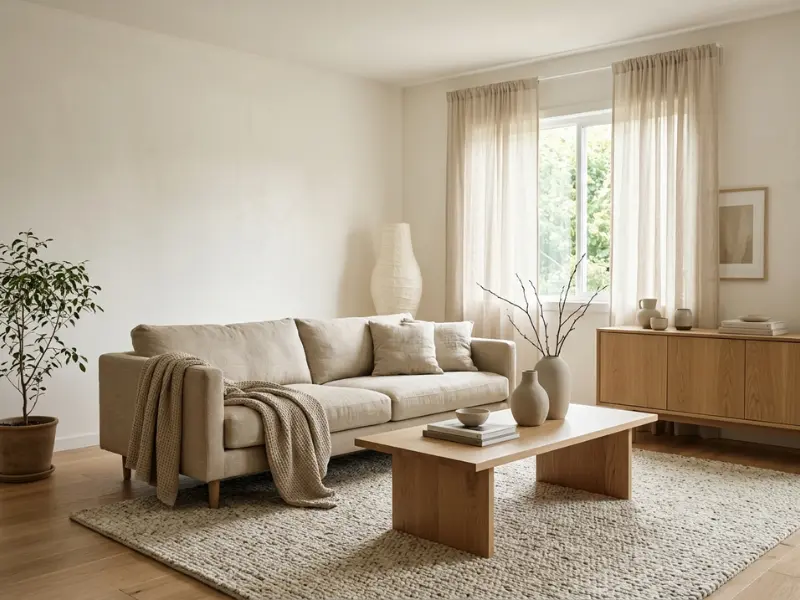
The word Japandi combines two words, Japanese and Scandinavian. It describes a design style that brings ideas from both cultures into one home.
Japanese interiors often focus on simplicity, natural materials, and a strong connection to nature. Scandinavian interiors add warmth, comfort, and practical design.
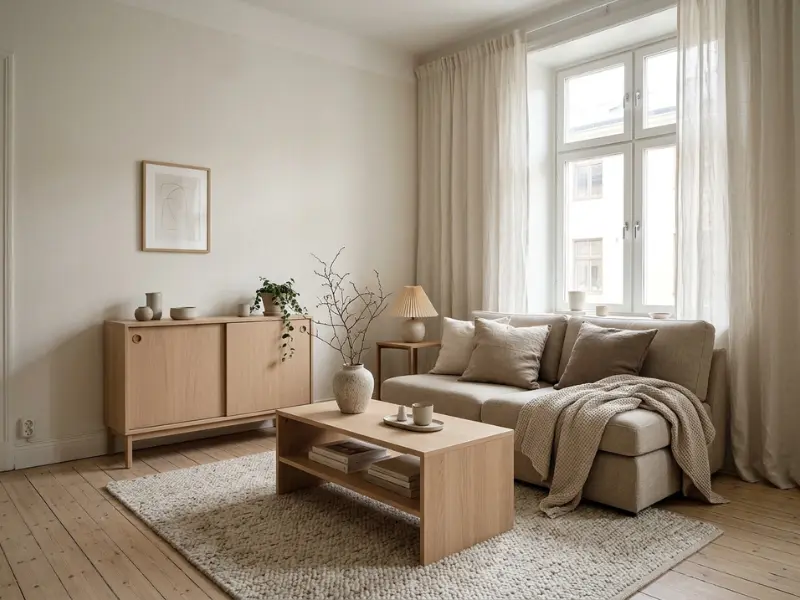
Think about a living room with a low wooden coffee table, a soft beige sofa, linen curtains, and a handmade ceramic vase. Every item has a purpose, but the room still feels warm and comfortable.
That’s the basic idea behind Japandi.
How Does Japandi Blend Japanese and Scandinavian Design?
Japanese and Scandinavian design share a love of simple shapes, natural materials, and useful spaces. Japandi brings these shared ideas together while keeping the best parts of each style.
Japanese design often adds:
- Low furniture and simple shapes.
- Natural wood, stone, and handmade objects.
- A calm layout with open space.
Scandinavian design often adds:
- Soft fabrics and cozy seating.
- Warm lighting for dark or cloudy days.
- Practical furniture for everyday life.
For example, you could pair a Japanese-inspired wooden dining table with Scandinavian-style chairs and soft fabric cushions. The result feels simple without looking plain.
What Makes Japandi Different From Plain Minimalism?
Minimalism focuses on keeping things simple and removing what you don’t need. Japandi follows that idea but adds more warmth through natural textures, soft fabrics, and carefully chosen decor.
A plain minimalist room might have white walls, a simple sofa, and very few objects. A Japandi room could have the same clean layout, with oak furniture, a wool rug, linen cushions, and a handmade bowl.
Before removing an item from your room, ask two questions: Does it serve a purpose, and does it make the space feel more comfortable? Keep items that meet at least one of these needs.
You don’t need to make your home look empty to achieve this style. You just need to give each item a clear place and reason to be there.
Where Did Japandi Style Come From?
Japandi grew from Japanese and Scandinavian design ideas that value simplicity, nature, useful objects, and thoughtful craftsmanship.
Although the two traditions developed in different parts of the world, they share many design values. Understanding those roots helps you use Japandi style without treating it as a fixed set of decorating rules.
Japanese Design and Its Love of Simplicity
Traditional Japanese interiors often use natural materials, simple forms, and open space. Sliding doors, wood, paper screens, and carefully placed objects can help rooms feel calm and connected to nature.
The Japanese idea of wabi-sabi also plays a part in Japandi design. It values natural flaws, age, and the beauty of things that aren’t perfectly polished.
For example, a handmade ceramic cup with a slightly uneven shape can add more character than a factory-made ornament that looks exactly like every other one.
Scandinavian Design and Everyday Comfort
Scandinavian design comes from Northern European countries, including Denmark, Sweden, and Norway. It often uses light wood, simple furniture, soft fabrics, and practical layouts.
Comfort matters just as much as appearance. A room should look good, but you should also enjoy sitting, resting, reading, or spending time with family there.
The Danish word hygge describes a feeling of coziness and comfort. Soft blankets, warm lamps, and comfortable seating can help create that feeling.
How Wabi-Sabi and Hygge Influence Japandi
Wabi-sabi encourages you to appreciate natural flaws, while hygge encourages you to make your home feel warm and comfortable.
Together, these ideas help Japandi rooms feel simple without losing their character.
For example, you could place a handmade clay vase on a clean wooden shelf and add a soft lamp nearby. The vase brings natural character, while the lamp makes the space feel inviting.
You don’t need to copy Japanese or Scandinavian interiors exactly. Start with the feeling you want in your room, then choose details from both styles that support it.
In practice, a room used for family evenings may need more soft seating and warm lighting than a quiet reading corner. Both can follow Japandi principles.
What Are the Main Characteristics of Japandi Style?
Japandi style uses natural materials, simple furniture, warm neutral colors, soft lighting, and open space to create a calm home.
The key is balance. Too many decorations can make a room feel busy, while too few soft textures can leave it feeling cold.
Natural Materials and Organic Textures
Wood, stone, linen, cotton, wool, bamboo, and ceramics help bring nature into your home. Their different textures add interest without the need for bright colors or extra decorations.
You could combine:
- An oak coffee table.
- Linen curtains.
- A wool rug.
- A handmade ceramic bowl.
These materials work well together because they add texture while keeping the room simple.
Simple Furniture With Clean Lines
Japandi furniture often has simple shapes, smooth lines, and little decoration. Low-profile sofas, wooden tables, and practical storage pieces suit this look.
Choose furniture based on how you use your room. A large sofa may work in a family living room, while a smaller sofa and nesting tables may suit a compact apartment.
Avoid buying every piece from the same collection just to make everything match. A mix of well-chosen pieces can feel more natural.
Clutter-Free Spaces and Negative Space
Negative space means the open area around your furniture and decorations. It gives your eyes room to rest and helps each item stand out.
You don’t need to leave large empty areas everywhere. Keep walkways clear, avoid overcrowding shelves, and leave some open space around larger furniture.
For example, one vase on a side table may look better than five small ornaments competing for attention.
Natural Light and Warm Lighting
Natural light helps show the colors and textures of wood, fabric, and stone. Keep windows as clear as you can, and use light curtains when you want privacy without blocking too much daylight.
After dark, use warm lamps instead of relying on one bright ceiling light.
A floor lamp beside a sofa and a small bedside lamp can make a room feel more comfortable. Choose lighting that suits the activity, whether you’re reading, cooking, or relaxing.
Handmade Decor and Useful Details
Handmade objects add character because small differences in shape and finish make each piece feel unique. Choose a few items that you enjoy looking at or use regularly.
Good options include ceramic bowls, woven baskets, simple artwork, and small indoor plants.
Check your room at three times of day: morning, afternoon, and evening. A color or material that looks warm in daylight may look dull under artificial light. This simple check can help you choose finishes and lamps that work throughout the day.
Before buying more decor, ask whether it adds useful storage, comfort, or texture to the room.
What Colors Work Best in Japandi Style?
Japandi style works best with warm whites, beige, soft gray, earthy brown, and muted green. These colors pair well with natural materials and help your home feel calm without looking dull.
You can use light shades for large surfaces and darker colors for small details. The key is to choose colors that work together rather than using too many shades at once.
Neutral Colors for Walls and Large Furniture
Neutral colors create a quiet base for your room. They also make it easier to change small decor items without needing to repaint or replace large pieces.
Good choices include:
- Warm white for walls and ceilings.
- Beige for sofas and curtains.
- Light gray for rugs and soft furnishings.
- Cream for bedding and cushions.
Warm white often works better than a very cold white because it pairs naturally with wood and soft fabrics.
Earthy Colors for Depth and Contrast
Earthy colors bring a little depth to a room without taking away its calm feel. You can use them in cushions, artwork, pottery, rugs, or a single piece of furniture.
Good options include muted sage green, clay brown, charcoal, and deep olive.
For example, a beige sofa with an oak coffee table and two sage green cushions can feel balanced without making the room look busy.
How to Combine Japandi Colors Without Clashing
Start with one main color, one supporting color, and one small accent color. This gives you a simple plan before you buy paint, furniture, or decor.
Here are three color combinations you can use:
| Main color | Supporting color | Accent color |
| Warm white | Natural oak | Sage green |
| Sand beige | Medium brown wood | Charcoal |
| Soft gray | Cream | Muted olive |
Before painting a whole room, test your chosen color on a small patch of wall. Check it in morning daylight and again at night under your lamps. The same shade can look warmer or cooler as the light changes.
Which Materials and Furniture Suit Japandi Style?
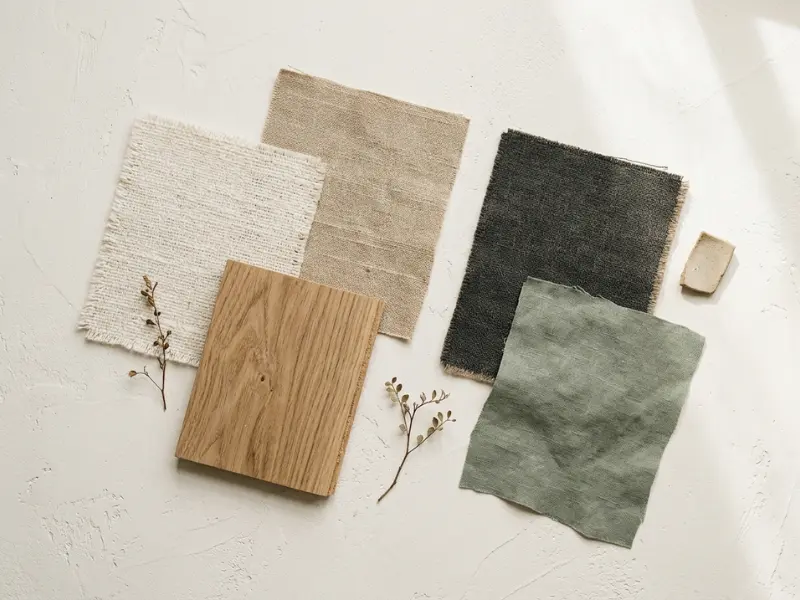
Japandi furniture often features natural wood, simple shapes, low profiles, and practical storage. Linen, wool, cotton, stone, and handmade ceramics add texture without making the room feel crowded.
You don’t need to buy a complete matching furniture set. A few well-chosen pieces can give your home the look while keeping it comfortable for daily use.
Best Wood Types and Natural Materials
Wood is one of the easiest ways to bring warmth into a Japandi room. Light oak, ash, walnut, and other natural wood finishes can work well, depending on how light or dark you want the space to feel.
Other useful materials include:
- Bamboo and rattan for natural texture.
- Linen and cotton for curtains and cushions.
- Wool for rugs and throws.
- Stone for tabletops and selected finishes.
- Ceramic for bowls, vases, and small decor.
You don’t need every material in one room. Choose two or three that work well together, such as oak, linen, and ceramic.
Sofas, Beds, Tables, and Storage
Choose furniture that fits your room and serves a clear purpose. Simple shapes and clean lines help create the look, while comfortable seats and useful storage make the space practical.
For a living room, you might choose a low sofa, a wooden coffee table, and a closed cabinet for everyday items.
For a bedroom, a simple wood bed frame, a small bedside table, and a wardrobe with plain doors may be enough.
Rugs, Curtains, Ceramics, and Small Decor
Soft furnishings help balance the hard surfaces of wood and stone. A wool rug, linen curtains, or cotton cushions can make a simple room feel more inviting.
Keep decorative items limited to pieces you enjoy or use. One handmade vase or a small ceramic bowl can add more character than a shelf full of unrelated ornaments.
Before buying new furniture, measure the space where it will go and leave enough room to walk around it comfortably. A beautiful table that blocks a walkway will make your room harder to use, no matter how well it fits the style.
The best furniture choices suit your daily habits first and the look second. For example, choose a comfortable sofa and practical storage before focusing on appearance.
How Can You Use Japandi Style in Each Room?
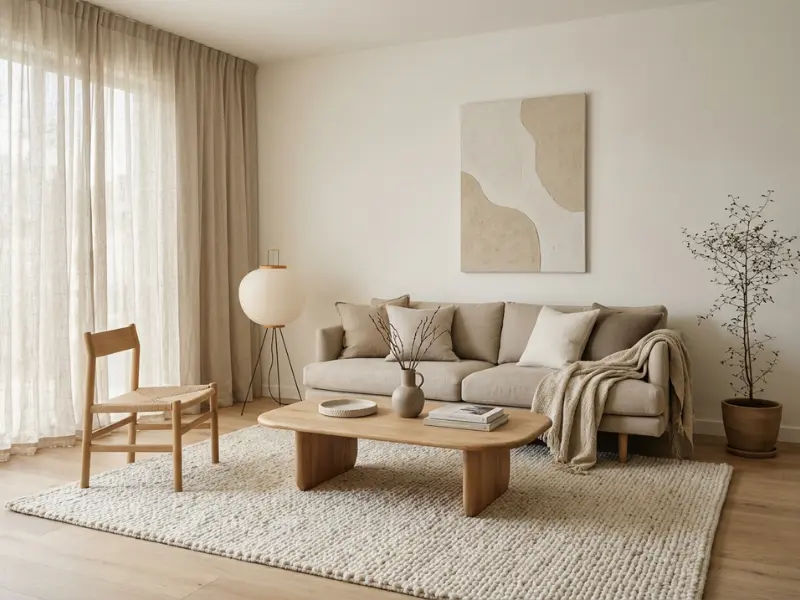
You can bring Japandi style into every room by choosing useful furniture, natural finishes, calm colors, and lighting that suits the way you use the space.
Each room needs a different approach. Your living room may need comfortable seating, while your kitchen needs clear counters and easy-to-reach storage.
Japandi Living Room
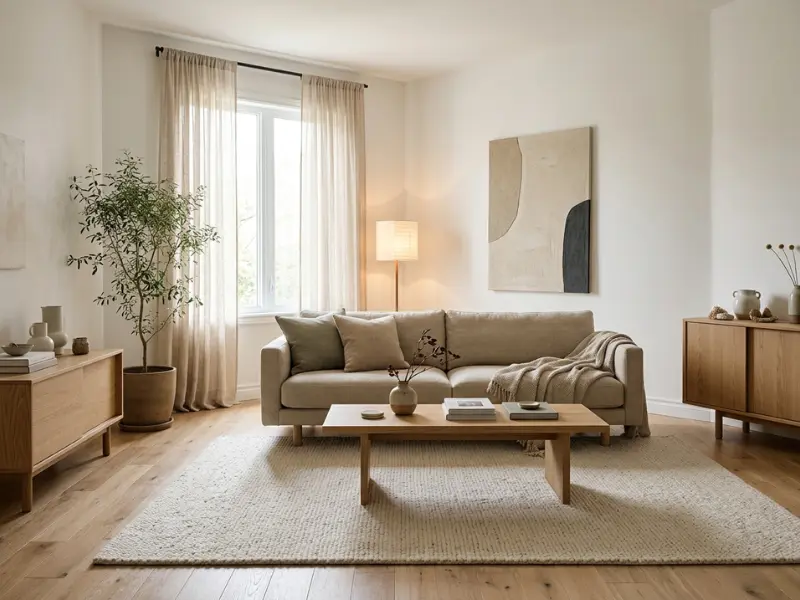
Keep the main furniture simple and leave clear paths between pieces. A low sofa, a wood coffee table, and a textured rug can create a warm starting point.
Use a floor lamp or table lamp to add soft light in the evening. Keep remote controls, chargers, and other daily items in a basket or cabinet instead of leaving them scattered around.
Japandi Bedroom
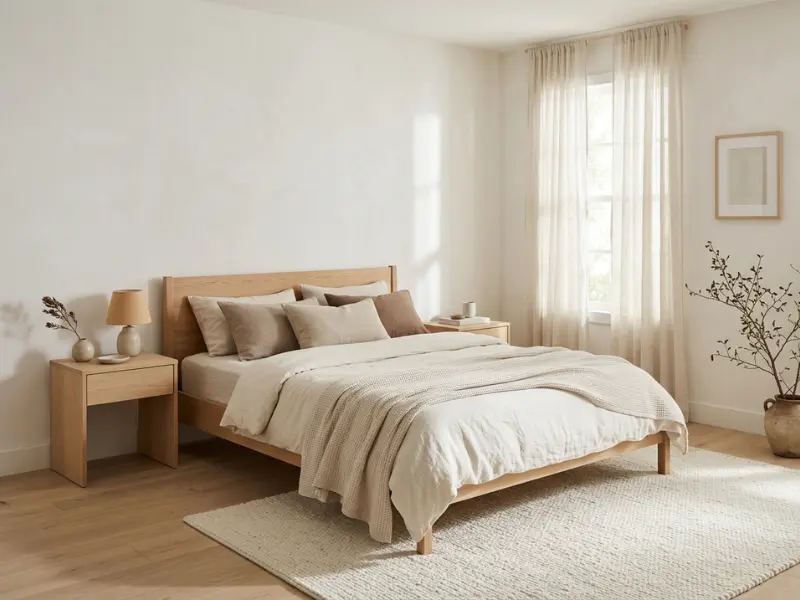
Your bedroom should feel calm and easy to keep tidy. Choose simple bedding, natural fabrics, and furniture that leaves enough space to move around the bed.
You could use cream bedding, a wood bed frame, and matching bedside lamps. Keep the top of your bedside table clear except for the items you use each night.
Japandi Kitchen
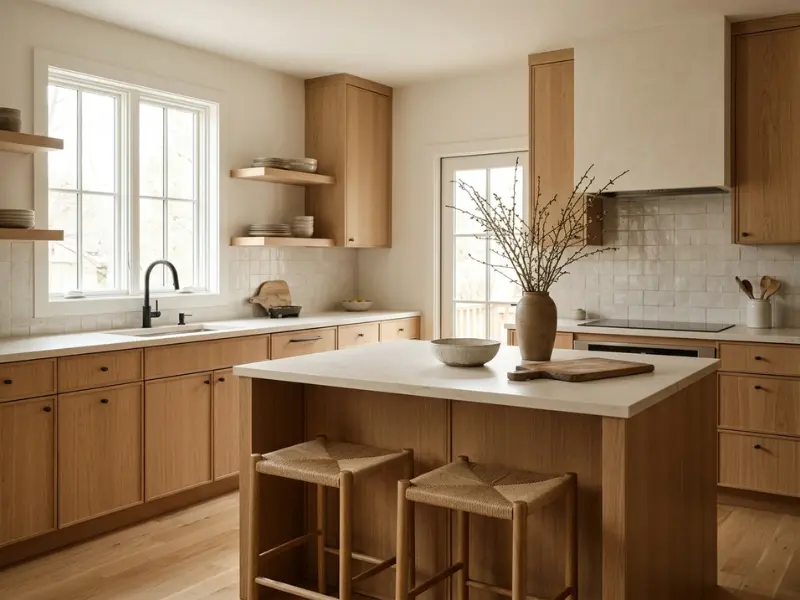
Japandi kitchens combine a clean look with practical work areas. Plain cabinet fronts, natural wood, and simple handles help keep the design quiet.
Store small appliances you rarely use inside cabinets, but keep daily items easy to reach. A clear counter near the sink gives you room to prepare food without moving things around first.
Japandi Bathroom
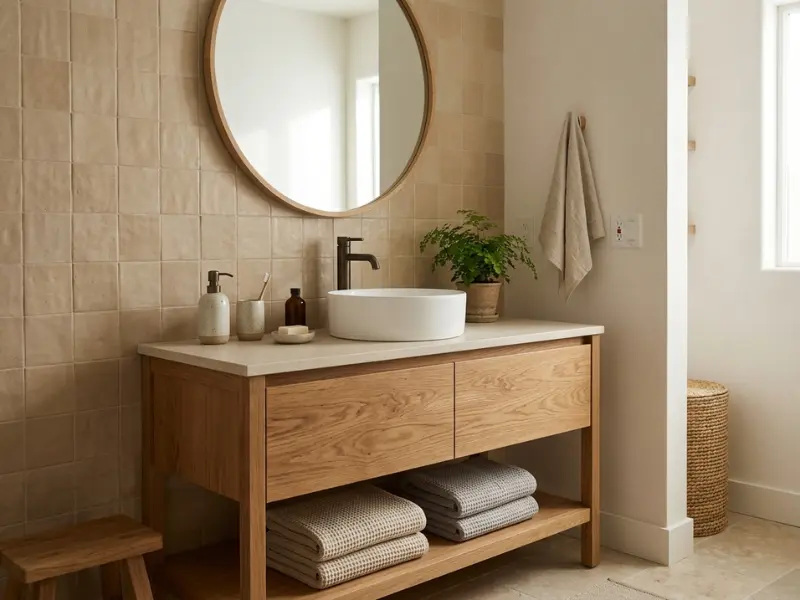
Use simple finishes and keep daily products organized. Wood-look details, stone textures, neutral towels, and warm lighting can help the room feel calm.
If you have limited space, use a cabinet or wall shelf to store extra products instead of placing them all around the sink.
Japandi Entryway and Small Spaces
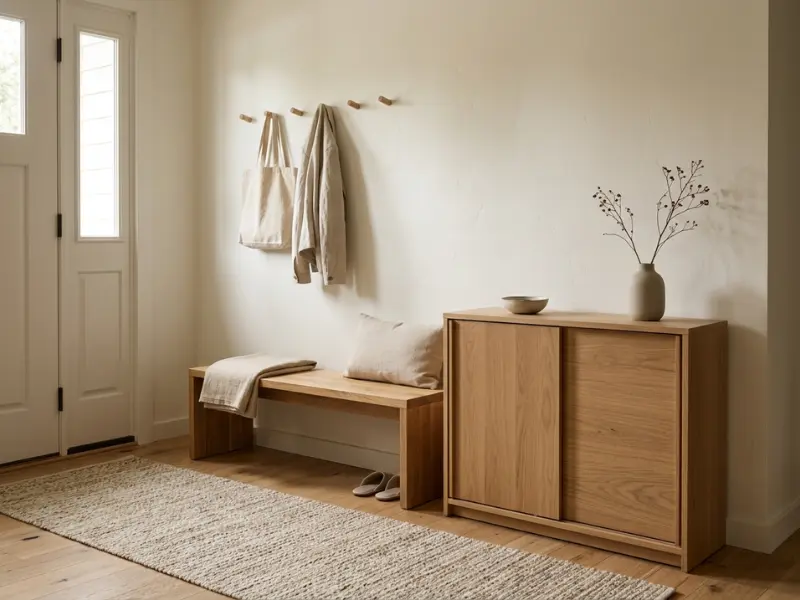
An entryway needs to handle shoes, coats, bags, and keys without becoming cluttered. A small bench, a closed shoe cabinet, and a simple wall hook can cover most daily needs.
In a small apartment, choose furniture that does more than one job when possible. A storage bench, nesting tables, or a bed with drawers can save space without adding extra pieces.
Look at what gathers in each room during a normal week. If shoes pile up near the door, add shoe storage there. If blankets end up on the sofa, place a basket nearby. Japandi works best when your storage matches your real habits.
How Can You Create Japandi Style on a Budget?
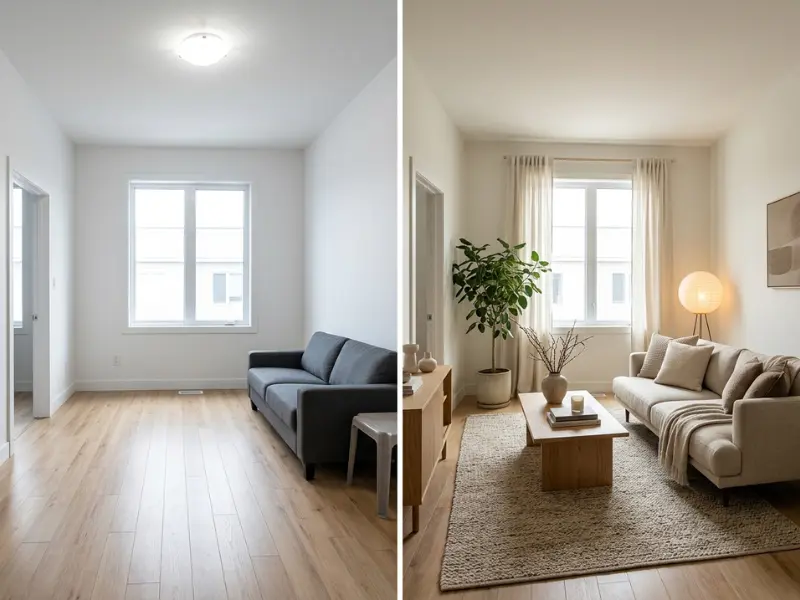
You can create Japandi style on a budget by removing clutter, improving lighting, adding natural textures, and reusing furniture you already own. You don’t need to replace everything to make your home feel calmer and more comfortable.
Start with small changes that affect how your room looks and feels. Spend money on new furniture only when an existing piece no longer meets your needs.
What to Keep, Remove, and Replace First
Before buying anything, look at your room and decide what is working and what is not. A simple review can help you avoid spending money on things you don’t need.
- Keep furniture that is comfortable, useful, and in good condition.
- Remove decorations and items that make surfaces feel crowded.
- Repair loose handles, scratched wood, or worn furniture when practical.
- Replace items that no longer work for your daily needs.
For example, if your living room feels busy, clear the coffee table and remove a few decorations before buying a new sofa.
Affordable Japandi Decor Worth Buying
Choose a few items that add warmth or improve daily use. Natural textures often make a bigger difference than expensive decorative pieces.
Consider these affordable options:
- Plain cotton or linen-look cushion covers.
- A simple neutral throw blanket.
- Secondhand wood furniture.
- Ceramic bowls or handmade-looking vases.
- Warm white LED bulbs.
- Woven baskets for everyday storage.
You can also check thrift stores and local secondhand listings for solid wood tables, chairs, and cabinets. Focus on the item’s condition and usefulness rather than its brand.
How to Reuse Furniture You Already Own
Your current furniture may fit Japandi style with a few changes. A dark wood table, for example, can work well with cream textiles, simple ceramics, and uncluttered surroundings.
Try changing cushion covers, removing unnecessary items from shelves, or replacing mismatched handles with simple ones. If you rent your home, use removable accessories instead of making permanent changes.
Follow this spending order: declutter first, improve lighting second, add soft textures third, and replace furniture last. This helps you see what your room actually needs before you spend money.
Make one change at a time. For example, improve the lighting first, then decide whether the room also needs new textiles or furniture.
What Are the Most Common Japandi Decorating Mistakes?
The most common Japandi decorating mistakes are making a room feel cold, using too many colors or decorations, and choosing looks over comfort. You can avoid them by balancing simple design with practical furniture, warm textures, and enough storage.
A room does not need to look perfect or empty to suit this style. It should feel natural, comfortable, and easy to use.
Making the Room Feel Cold or Empty
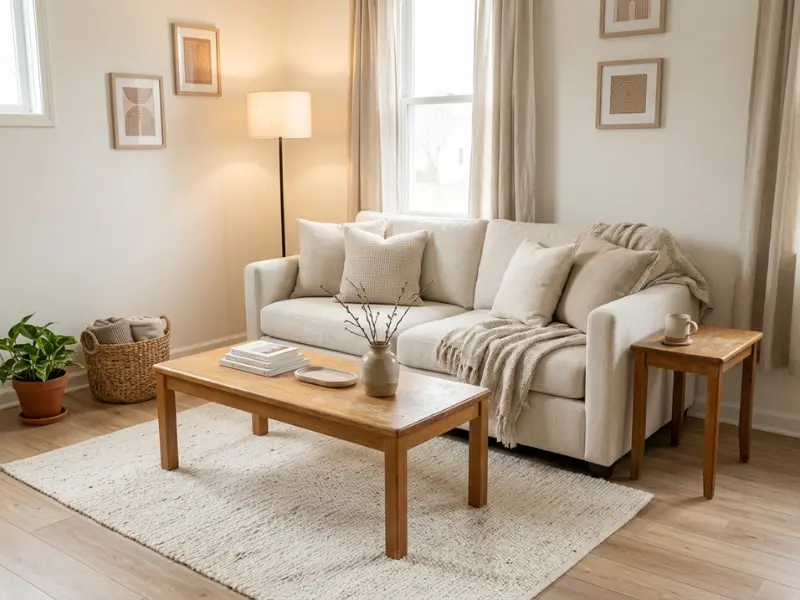
Too much white, bare walls, and hard surfaces can make a room feel unfinished. Minimal furniture may look neat, but it can also make the space uncomfortable if you remove every soft detail.
How to fix it:
- Add a textured rug or soft curtains.
- Use warm lighting instead of relying only on ceiling lights.
- Include a few wood or handmade ceramic pieces.
- Choose comfortable seating with soft cushions.
For example, a room with white walls and a plain sofa can feel warmer with a wood coffee table, a wool rug, and a soft floor lamp.
Using Too Many Colors or Decorative Items
Japandi rooms usually look best when the colors and decor feel connected. Adding many bright cushions, colorful ornaments, and unrelated patterns can make the space feel busy.
How to fix it:
- Choose two or three main colors.
- Group small decorative items instead of spreading them everywhere.
- Leave some shelf and tabletop space empty.
- Repeat a few materials, such as oak and linen, across the room.
You can still display personal items. Choose the ones that matter most instead of hiding everything that makes your home feel personal.
Choosing Looks Over Comfort and Function
A low sofa may suit the style, but it is not a good choice if it is uncomfortable for your family. Open shelves may look attractive, but they can become messy if you have many daily items.
How to fix it:
- Test furniture before buying when possible.
- Choose storage based on what you need to put away.
- Keep walkways clear.
- Pick washable fabrics if you have pets or children.
Before buying a piece, ask yourself how you will use it every week. If it looks good but makes cleaning, storage, or daily tasks harder, it may not be the right choice for your home.
How Is Japandi Different From Scandinavian, Minimalist, and Wabi-Sabi Styles?
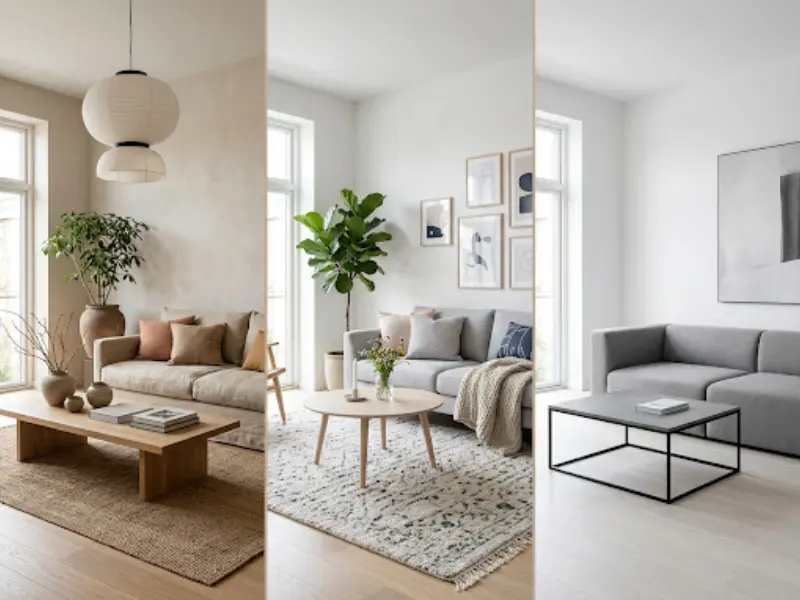
Japandi combines Japanese simplicity with Scandinavian warmth, while Scandinavian design focuses strongly on comfort and everyday function. Minimalism centers on reducing excess, and wabi-sabi values natural flaws, age, and imperfection.
These styles share some features, including simple forms and thoughtful use of space. The main difference is the feeling each one aims to create.
Japandi vs. Scandinavian Design
Scandinavian interiors often use light wood, soft fabrics, bright rooms, and cozy details. Japandi includes many of these features but adds more Japanese influence, such as low furniture, restrained decor, and an appreciation for natural imperfections.
For example, a Scandinavian living room might have a pale sofa, colorful cushions, and cozy blankets. A Japandi version may use a lower sofa, fewer cushions, earthy colors, and handmade ceramics.
Japandi vs. Minimalism
Minimalism focuses on keeping what you need and removing what you don’t. Japandi also values simplicity, but it places extra attention on natural materials, comfort, and the character of each object.
A minimalist room might have a plain table and almost no decor. A Japandi room could use the same simple table with a textured rug, a linen cushion, and a handmade bowl.
Japandi vs. Wabi-Sabi
Wabi-sabi is a Japanese way of appreciating natural change, irregular shapes, and signs of age. Japandi can include this idea, but it also draws on Scandinavian comfort and practical design.
A handmade vase with an uneven shape may reflect wabi-sabi. In a Japandi room, that vase might sit beside clean-lined furniture and warm lighting.
| Style | Main focus | Common look |
| Japandi | Simplicity with warmth | Natural materials, earthy colors, useful decor |
| Scandinavian | Comfort and everyday function | Light wood, soft fabrics, bright spaces |
| Minimalism | Keeping only what matters | Simple forms, fewer items, open space |
| Wabi-sabi | Natural flaws and age | Handmade pieces, worn textures, irregular forms |
You don’t have to follow only one style. If you prefer a bright Scandinavian room but like handmade pottery, Japanese-inspired furniture, and natural flaws, you can combine those features. Start with the feeling you want, then choose pieces that work together.
Is Japandi Style Timeless, and Does It Work in Small Homes?
Japandi can stay appealing for years because simple furniture and natural materials are easy to adapt as your taste changes. It also works well in small homes when you use space carefully and choose furniture that serves a clear purpose.
You don’t need a large house or a big budget to create this look. The key is to make every part of your space useful, comfortable, and easy to maintain.
Why Japandi Can Stay Appealing Over Time
Trendy colors and decorative items can quickly feel outdated. Simple furniture and neutral fabrics are easy to update with new cushions, lamps, or small decorative pieces when your taste changes.
You can refresh the look by changing small items instead of replacing the main furniture. For example, keep your oak dining table and neutral sofa, then update the cushions or add a new handmade vase when your taste changes.
Japandi is not automatically timeless, though. Poor-quality furniture or materials that don’t suit your daily needs may need replacing sooner.
How to Adapt Japandi to a Small Apartment or Rental
Small spaces benefit from simple layouts and furniture that does more than one job. Avoid filling every corner just because it is empty.
Try these ideas:
- Choose a storage bed to keep extra bedding out of sight.
- Use nesting tables that can be moved when needed.
- Add wall shelves instead of bulky floor cabinets.
- Use light colors to keep the room feeling open.
- Choose curtains that allow daylight into the room.
- Keep walkways clear and limit oversized furniture.
For a small apartment, a compact sofa, a narrow wood coffee table, and one closed storage unit may be more useful than several separate pieces.
Measure your room and mark furniture sizes on the floor with painter’s tape before buying anything. This simple test helps you see whether a sofa, table, or cabinet will leave enough space to walk around comfortably.
A small home doesn’t need less comfort. It needs fewer wasted spaces and furniture that fits the way you live.
Frequently Asked Questions About Japandi Style
What Is the Meaning of Japandi Style?
Japandi is a design style that combines Japanese simplicity with Scandinavian comfort. The name comes from “Japanese” and “Scandinavian.” It focuses on natural materials, simple furniture, neutral colors, and useful decor. The goal is to create a home that feels calm, warm, and comfortable without unnecessary clutter.
What Are the Main Characteristics of Japandi Style?
The main characteristics of Japandi style include natural wood, earthy colors, clean lines, simple furniture, soft lighting, and open space. Linen, wool, stone, and handmade ceramics add texture. Each item should serve a purpose or add comfort, helping your home feel welcoming rather than empty or crowded.
Is Japandi the Same as Wabi-Sabi?
No, Japandi and wabi-sabi are different, although they share some ideas. Wabi-sabi is a Japanese way of appreciating natural flaws, age, and imperfection. Japandi combines Japanese design ideas with Scandinavian comfort. A handmade ceramic bowl with an uneven shape can reflect wabi-sabi within a Japandi room.
What Is the Difference Between Japandi and Scandinavian Design?
Scandinavian design focuses on comfort, practical furniture, natural light, and cozy details. Japandi includes these features while adding more Japanese influence, such as low furniture, restrained decor, and an appreciation for natural imperfections. Both styles use simple forms, but Japandi often feels more earthy and carefully edited.
Is Japandi Style the Same as Minimalism?
No, Japandi is not exactly the same as minimalism. Minimalism focuses on reducing items and keeping what you need. Japandi also values simplicity but adds natural textures, warm lighting, comfortable furniture, and handmade details. You can have a simple Japandi room without making it feel bare or cold.
What Colors Are Best for Japandi Interiors?
Warm white, beige, cream, soft gray, earthy brown, and muted green work well in Japandi interiors. You can use a neutral shade for walls, natural wood for furniture, and one earthy accent color for cushions or decor. Keeping the main palette to two or three colors helps create a balanced look.
What Flooring Works Best in a Japandi Home?
Natural wood flooring or wood-look flooring works well in a Japandi home because it adds warmth and texture. Light oak creates a bright, open feel, while walnut offers deeper contrast. Stone-look tile can also suit kitchens and bathrooms. Choose flooring based on durability, cleaning needs, moisture, and your budget.
Can You Create Japandi Style on a Budget?
Yes, you can create Japandi style without replacing all your furniture. Start by removing clutter, improving lighting, and adding simple textiles such as neutral cushion covers or a soft rug. Look for secondhand wood furniture and affordable ceramic decor. Spend on replacements only when your current items no longer work well.
Is Japandi Style Still Popular?
Japandi remains a recognizable interior design style because it combines simple shapes, natural materials, and comfortable spaces. Its long-term appeal depends less on trends and more on how well the design suits your needs. You can keep the look fresh by choosing useful furniture and changing small decor items over time.
How Do You Make a Japandi Room Feel Warm and Cozy?
Make a Japandi room feel warm by combining natural wood, soft fabrics, and gentle lighting. Add a wool rug, linen curtains, comfortable cushions, or a warm table lamp. Keep some open space, but don’t remove every personal item. A few meaningful objects can make the room feel lived-in and welcoming.
Conclusion
Your home doesn’t need expensive furniture or perfect decorations to feel beautiful. Sometimes, a few thoughtful changes can make your space feel calmer, warmer, and more comfortable.
What is Japandi style? It’s a way to bring Japanese simplicity and Scandinavian comfort together, creating rooms that look clean without feeling empty. Natural materials, earthy colors, simple furniture, and soft lighting help you achieve this balance. You can start with what you already own instead of spending money on a complete makeover.
The goal isn’t to copy a picture from a magazine. It’s to create a home that supports your daily life and reflects your personal taste. Keep the pieces you love, remove what you don’t need, and choose new items with care. Even a small change, like adding a wooden table or improving your lighting, can make a difference.
Ready to give your home a calmer, more natural feel? Try one Japandi idea from this guide today and make your space feel more like home.