
There are five main types of home improvement projects: cosmetic, structural, energy-efficiency, safety, and maintenance. Common examples include kitchen and bathroom remodels, roof replacement, basement conversions, additions, flooring, and insulation upgrades. Knowing the real types of home improvement projects helps you pick the right one for your budget and goal.
Here’s something most homeowners don’t know. A kitchen remodel can return over 85 percent of what you spend, but a fancy upscale bathroom often gives back less than half. That gap alone changes how you should plan your next project.
Most guides throw a random list at you and call it done. They mix cheap paint jobs with full additions like they belong in the same bucket. That mix up leaves you confused about where to actually spend your time and money.
This guide fixes that. You will learn every major type of home improvement project, grouped in a way that actually makes sense. We will walk through cosmetic fixes, structural work, energy upgrades, safety projects, and regular maintenance.
You will also see real cost and ROI numbers side by side, something almost no other article bothers to show you. And you will know exactly which jobs you can handle yourself and which ones need a licensed pro.
Let’s start with the basics: what actually counts as a home improvement project in the first place.
By the end, you’ll understand every one of the types of home improvement projects that fit your budget and your goal.
What Counts as a Home Improvement Project?
A home improvement project is any work you do to fix, update, or add value to your home. It covers everything from a five minute repair to a full room addition.
Here’s the thing. People throw around “improvement,” “renovation,” and “remodel” like they mean the same thing. They don’t, and mixing them up leads to bad planning.
Home Improvement vs Renovation vs Remodel
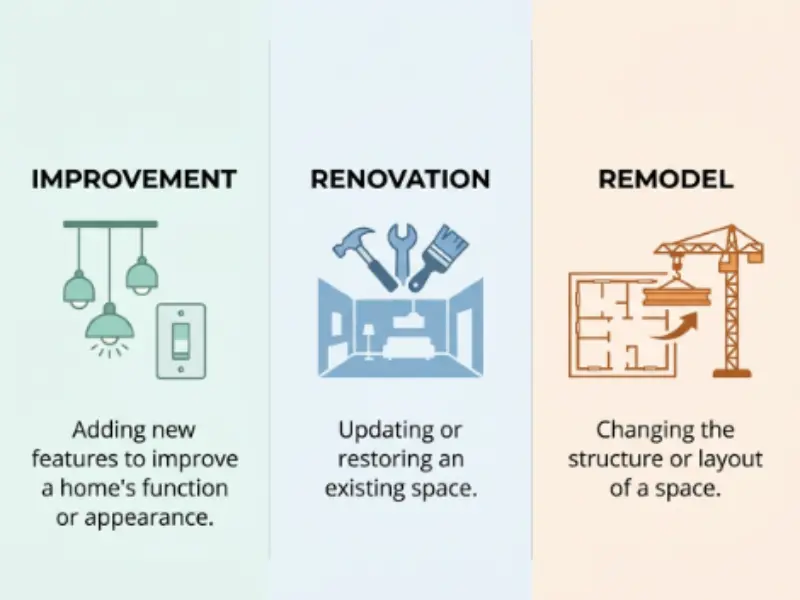
Think of these three words as a ladder. Each one goes one step deeper than the last.
- Home improvement: any change that makes your home better, big or small.
- Renovation: restoring or updating something that already exists, like refinishing old floors.
- Remodel: changing the actual structure or layout, like knocking down a wall.
So painting a bedroom is home improvement. Refinishing that same room’s original hardwood is a renovation. Turning that bedroom into a bathroom is a remodel.
Here’s a simple test we use: if you can undo the project in a weekend, its improvement. If you need a permit, it’s likely a remodel.
Interior vs Exterior Projects
Every project also falls into one of two spaces.
- Interior projects: kitchens, bathrooms, flooring, painting, basements.
- Exterior projects: roofing, siding, landscaping, decks, garage doors.
Knowing which side you’re working on helps you plan your budget and your timeline. Exterior work often depends on weather, so spring and summer fill up fast for contractors.
Now that you know what actually counts as home improvement, let’s break every project type into groups that actually make sense.
What Are the 5 Main Types of Home Improvement Projects?
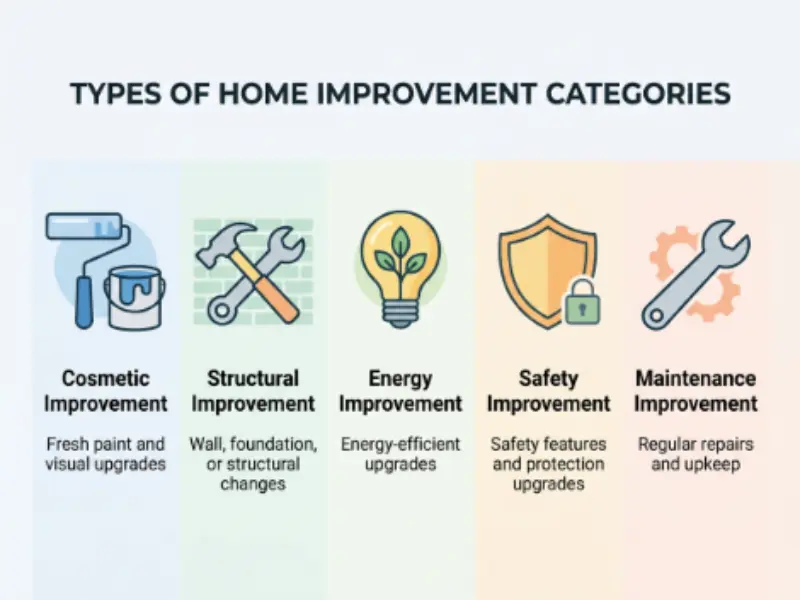
Home improvement projects group into five main types: cosmetic, structural, energy-efficiency, safety, and maintenance.
Most articles just list random projects with no order. That’s confusing. Grouping by purpose tells you exactly why you’d choose one project over another.
Cosmetic Improvements
These change how your home looks, not how it functions.
- Fresh paint
- New light fixtures
- Cabinet hardware swaps
- Updated flooring
In practice, cosmetic projects are the fastest way to refresh a home on a small budget. Most take a single weekend.
Structural Improvements
These change your home’s actual bones. Walls, layout, foundation, additions.
- Removing or adding walls
- Room additions
- Basement conversions
- Foundation repair
What actually works here is planning early. Structural work almost always needs a permit and sometimes an engineer, so rushing it costs you later.
Energy-Efficiency Improvements
These lower your energy bill and make your home more comfortable.
- New windows and doors
- Insulation upgrades
- Smart thermostats
- Upgraded HVAC systems
Safety and Preparedness Improvements
These protect your home and the people in it.
- Smoke and carbon monoxide detectors
- Backup generators
- Handrail and lighting fixes
- Updated electrical panels
Maintenance and Repair Improvements
These keep what you already have working right.
- Gutter cleaning
- Roof repair
- Plumbing fixes
- HVAC servicing
Here’s a ranking trick almost nobody talks about: if you’re short on cash, tackle maintenance first. Skipped maintenance is what quietly turns into an expensive structural problem two years later.
Once you know which type you’re dealing with, it’s easier to understand specific projects like the kitchen remodel, one of the highest ROI projects on this list.
What Is a Kitchen Remodel?
A kitchen remodel updates your cabinets, counters, appliances, or layout, and it’s the project that gives you back the most money.
Kitchens sell homes. Realtors will tell you buyers spend more time in the kitchen than almost any other room during a showing.
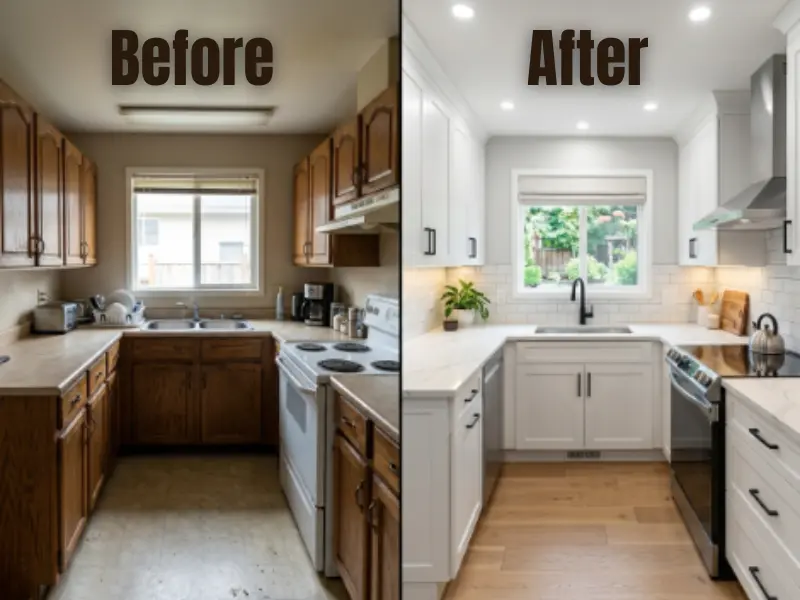
Cosmetic Kitchen Updates vs Full Remodel
- Cosmetic kitchen update: new countertops, cabinet fronts, appliances. No layout change.
- Full kitchen remodel: moving walls, changing the footprint, rerouting plumbing or electrical.
The truth is, most homeowners don’t need a full remodel. A cosmetic refresh often delivers nearly the same visual impact for a fraction of the cost.
Average Cost and ROI
Real numbers matter here, so let’s use them.
- A cosmetic kitchen remodel around $26,790 can return about $22,963 at resale.
- That works out to roughly an 85.7 percent return on investment.
- A major remodel with custom cabinets and high-end appliances usually returns a smaller percentage, even though it costs far more.
From real use, the sweet spot is spending on things buyers can see and touch first, counters, hardware, lighting, and saving the big structural changes for when you plan to stay in the home long term, not sell soon.
Bathrooms work on a similar logic, but the numbers shift in a way most homeowners don’t expect.
What Is a Bathroom Remodel?
A bathroom remodel updates fixtures, tile, vanities, or layout to make the space more comfortable and boost how much your home sells for.
Bathrooms are small, but buyers judge them hard. A tired, outdated bathroom can make an entire home feel old, even if every other room looks great.
Mid-Range vs Upscale Bathroom Remodel
Bigger spend does not always mean bigger return, and bathrooms prove that better than any other project.
- Mid-range remodel: new tile, updated vanity, modern fixtures, fresh paint.
- Upscale remodel: soaker tubs, dual vanities, heated floors, custom tile work.
A mid-range bathroom remodel returns about 64 percent of what you spend. An upscale remodel actually returns less, around 56 percent.
Think about it this way. Once a bathroom looks clean, modern, and functional, extra luxury touches mostly please you, not the buyer. Save the heated floors for a home you plan to keep long term.
What to Prioritize First
If your budget is tight, order matters.
- Fix any water damage or leaks first
- Replace the vanity and lighting next
- Update tile or flooring last if money allows

Bathrooms and kitchens get most of the attention, but basements hide some of the biggest value in your entire home.
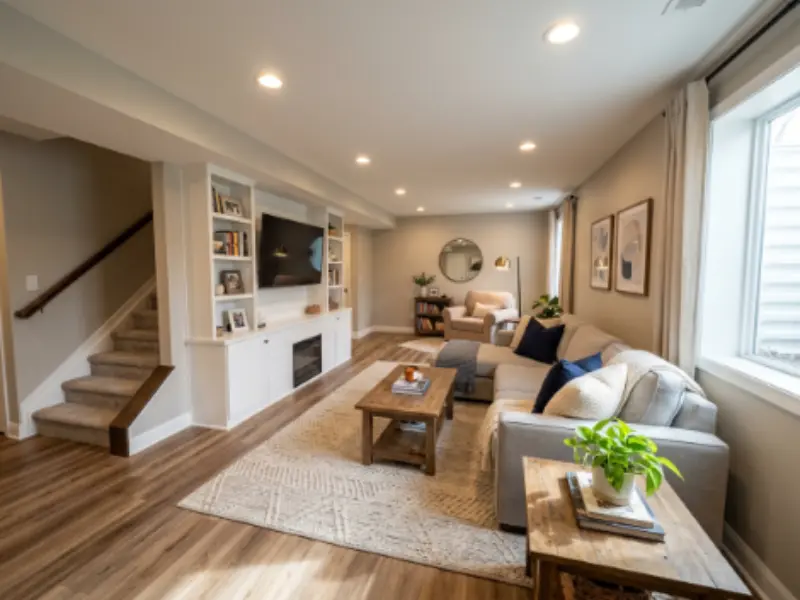
What Is a Basement Remodel or Conversion?
A basement remodel turns unused underground space into a real living area, like a bedroom, home theater, or gym, adding usable square footage without expanding your home’s footprint.
Most basements just sit there full of boxes and old furniture. Converting one is one of the few projects that adds real square footage without needing a full addition.
Basement Conversion Cost and ROI
Real numbers help you plan this one properly.
- Average basement conversion costs around $57,500.
- It can add about $49,250 to your home’s value.
- That works out to roughly an 86 percent return on investment.
That ROI edges out even the cosmetic kitchen remodel, making it one of the best returns on this entire list.
Insulation and Moisture Control Basics
Moisture, not design, is what actually sinks most basement projects.
- Check for water seepage before you start
- Add a vapor barrier behind drywall
- Use moisture-resistant flooring, not carpet, near exterior walls
- Run a dehumidifier during humid months
The single biggest mistake homeowners make is finishing a basement before fixing a small leak. That leak always gets worse behind new drywall, and by the time you notice, you’re tearing out work you just paid for.
Once your basement is solid, the next big structural piece of your home worth checking is what’s over your head, your roof.
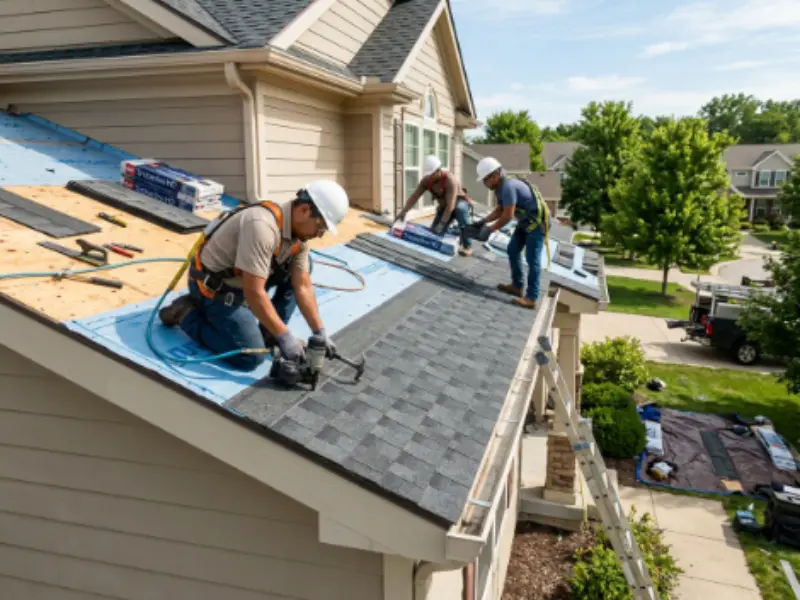
What Is a Roof Remodel or Replacement?
A roof remodel repairs or replaces your roofing material to protect your home from weather damage, and it can also make room for upgrades like solar panels.
But skip it too long, and water damage can quietly wreck your ceilings, walls, and insulation.
Roof Replacement Cost by Material
Material choice changes your cost and your return by a lot.
- Asphalt shingle roof: around $12,000, and it usually pays for itself.
- Metal roof: around $52,436, adding about $28,196 in value.
- That means asphalt returns close to 100 percent, while metal returns around 54.8 percent.
Most roofing guides leave this part out completely. Metal roofs cost more upfront but last two to three times longer than asphalt. If you’re staying in your home for decades, the lower ROI percentage still saves you money over time, because you won’t replace it again.
Signs You Actually Need a Roof Remodel
- Shingles curling or missing in patches
- Daylight visible through the attic boards
- Water stains spreading across ceilings
- Roof age past 20 years for asphalt
Kitchens, bathrooms, basements, and roofs cover the big remodel projects, but home additions open up a whole different way to add space and value.
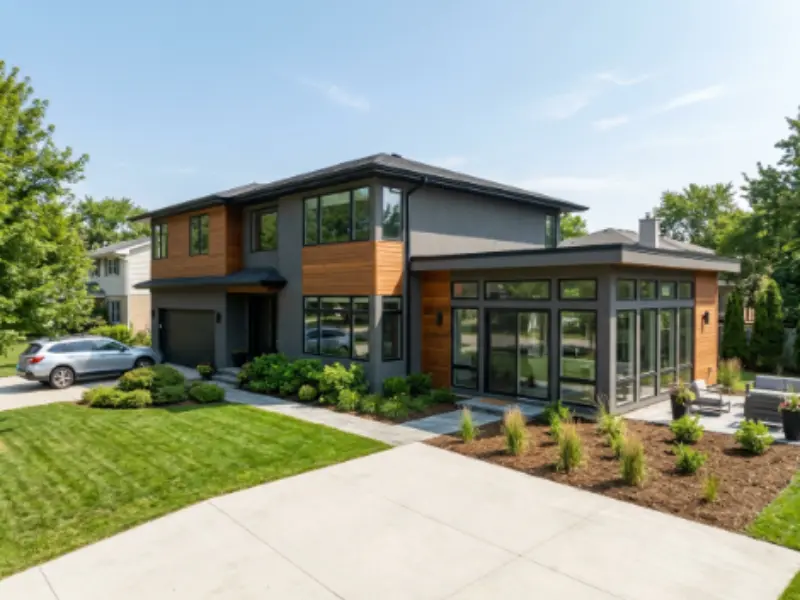
What Is a Home Addition?
A home addition adds brand new square footage to your house, like an extra bedroom, a sunroom, or an extended garage.
This is the one project type almost every competitor mentions in passing but never actually explains. That’s a real gap, because additions are one of the biggest decisions a homeowner can make.
Popular Types of Additions
- Bump-out addition: extends one room by a few feet, cheaper and less disruptive.
- Second-story addition: builds up instead of out, good for small lots.
- Sunroom or three-season room: adds living space without full foundation work.
- Garage addition or extension: adds storage and can raise resale appeal.
- In-law suite: a private space with its own entrance, popular for multigenerational homes.
What Makes Additions Different From Remodels
A remodel changes existing space. An addition creates space that didn’t exist before.
- Additions almost always need a permit
- Additions usually need a foundation extension
- Additions take longer, often several months, not weeks
Check your lot size and local setback rules before you fall in love with a design. We’ve seen homeowners plan a full addition, then find out local zoning only allows half of what they wanted. Always check zoning first, not last.
Additions grow your home’s footprint, but not every project needs to add space. Some of the biggest wins come from projects that just make your home run better.
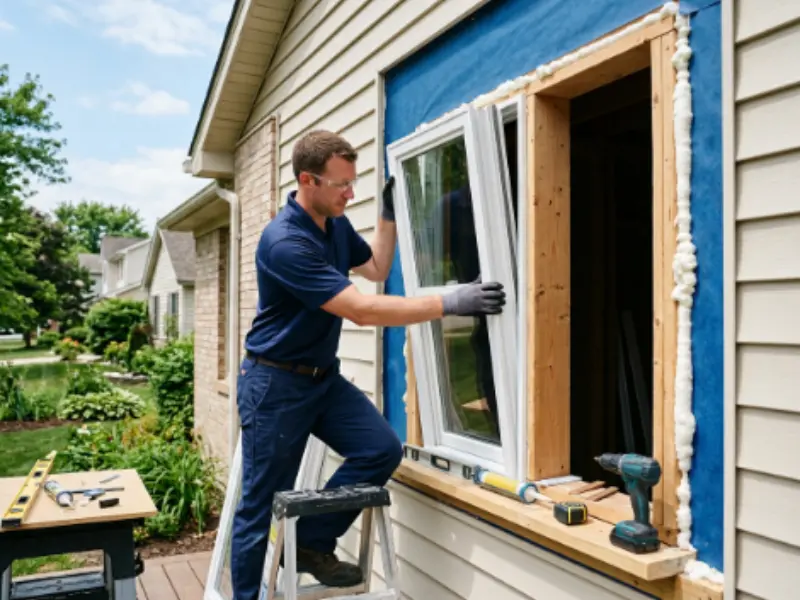
What Are Energy-Efficiency Home Improvements?
Energy-efficiency home improvements lower your monthly energy bill by upgrading windows, insulation, or your heating and cooling system.
Here’s the thing. These projects rarely show up in “types of home improvement” articles, yet they’re some of the few upgrades that pay you back every single month, not just at resale.
Windows and Doors
Old, drafty windows leak heat in winter and cool air in summer.
- Double-pane or triple-pane windows cut energy loss
- Weatherstripping on doors blocks drafts for cheap
- New exterior doors improve both security and efficiency
Insulation Upgrades
Insulation is the quiet hero of a comfortable home.
- Attic insulation stops heat from escaping through the roof
- Wall insulation keeps rooms at a steady temperature
- Basement insulation prevents cold floors upstairs
In practice, insulation projects almost always pay for themselves, since the Remodeling Impact Report shows most homeowners break even on cost the moment they sell.
HVAC and Smart Thermostats
- A smart thermostat learns your schedule and cuts waste
- Upgrading an old HVAC unit lowers monthly bills fast
- Sealing air ducts stops cooled or heated air from leaking out
A smart thermostat alone can cost under $250 installed, yet it often saves more per year than a $10,000 kitchen upgrade returns at resale. If your goal is monthly savings, not resale value, start here first.
Energy upgrades work behind the scenes, but sometimes the fastest way to change how your home feels is something you can see from across the room.
What Are Flooring and Painting Projects?
Flooring and painting are low-cost cosmetic projects that instantly change how a home looks and feels, without touching the structure at all.
These two projects get buried in most competitor lists, tossed in as a single bullet point. That’s a mistake, because they’re often the highest-impact, lowest-cost projects on this entire list.
Popular Flooring Types
- Laminate flooring: budget-friendly, easy to install, looks like wood
- Luxury vinyl plank: waterproof, great for kitchens and bathrooms
- Hardwood flooring: higher cost, but adds long-term value
- Tile flooring: durable, common in bathrooms and entryways
Interior vs Exterior Painting
- Interior painting: refreshes a room in a single weekend, low cost, high visual impact
- Exterior painting: protects siding from weather damage while boosting curb appeal
The truth is, a fresh coat of paint is still the single cheapest way to make a room look brand new. Most rooms only need one gallon of paint and a free Saturday.
Homeowners almost always underestimate how much old flooring drags down a room’s entire look. Even a fresh paint job looks dated next to worn, scratched flooring. If your budget only allows one, fix the floor first, then paint.
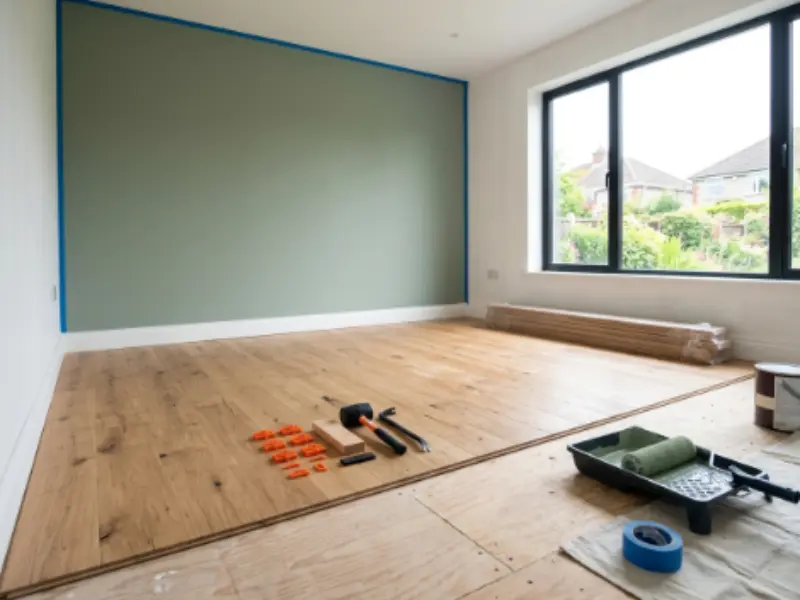
Flooring and paint fix how a room feels on the inside, but the very first thing anyone notices about your home happens before they even walk through the door.
What Are Curb Appeal and Landscaping Projects?
Curb appeal projects like landscaping, a new front door, or updated siding improve the first impression of your home and directly affect its resale value.
Buyers form an opinion about your home before they even step out of the car. That first ten seconds matters more than people admit.
Low-Cost Curb Appeal Fixes
- Fresh mulch and trimmed shrubs, done in an afternoon
- A bright, bold front door color
- New house numbers and a modern mailbox
- Power washing the driveway and siding
- Updated outdoor lighting near the entry
Bigger Curb Appeal Projects
- New siding, which also protects your home from weather damage
- A new garage door, one of the highest ROI exterior projects around
- Fresh sod or a redesigned front garden bed
What actually works is spending your first curb appeal dollar on the front door, not the yard. A $200 door paint job gets noticed by every single visitor, while a $2,000 landscaping refresh often blends into the background after the first glance.
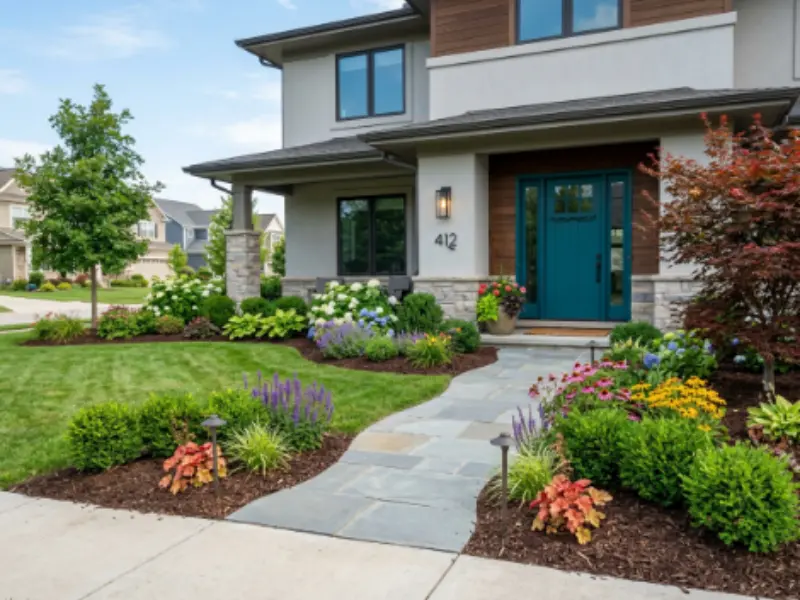
Now that you’ve seen every major project type, here’s the part everyone actually came for. Which of these projects gives you the most money back.
Which Home Improvement Projects Add the Most Value?
Kitchen remodels and basement conversions give the highest return on investment, both landing around 85 to 86 percent, based on real cost versus value data.
Seeing every project side by side makes the decision easy. No competitor puts this comparison in one place, so here it is.
ROI Comparison Table by Project Type
| Project Type | Average Cost | Value Added | ROI |
| Cosmetic kitchen remodel | $26,790 | $22,963 | 85.7% |
| Basement conversion | $57,500 | $49,250 | 86% |
| Mid-range bathroom remodel | Varies | Varies | 64% |
| Upscale bathroom remodel | Varies | Varies | 56% |
| Asphalt roof replacement | $12,000 | Pays for itself | ~100% |
| Metal roof replacement | $52,436 | $28,196 | 54.8% |
| Insulation upgrade | Varies | Break-even at resale | ~100% at sale |
Notice a pattern here. The highest ROI projects are the ones that fix something buyers already expect, a working kitchen, a dry basement, a solid roof. The lowest ROI projects are the ones built purely for luxury. If your main goal is resale, chase function first, luxury second.
How to Read This Table for Your Situation
- Selling soon: pick from the top of the table
- Staying long term: ROI percentage matters less than daily comfort
- Tight budget: insulation and roof repair protect what you already have
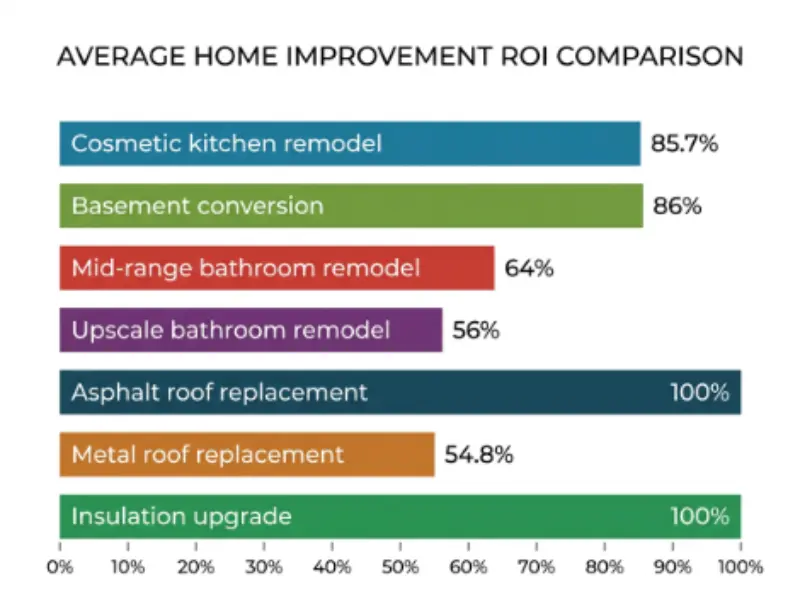
A high ROI number looks great on paper, but here’s something most homeowners never expect. Some projects actually work against you.
Can a Home Improvement Project Lower Your Home’s Value?
Yes, certain home improvement projects can actually lower your home’s value, especially ones that are overly personalized or poorly executed.
The truth is, some choices genuinely backfire.
Common Mistakes That Backfire
- Converting a bedroom into a closet, which cuts your official bedroom count and shrinks buyer interest
- Bold, unusual color choices like a neon accent wall or dark themed bathroom, which buyers see as extra work
- Overly personalized additions, like a built-in fish tank wall or a home theater with no other use
- Skipping permits on structural work, which creates legal headaches for the next buyer
- High-maintenance additions like elaborate water features that scare off buyers worried about upkeep costs
From real use, the biggest hidden value-killer is DIY work that looks unfinished. A half-tiled backsplash or mismatched flooring transition tells a buyer the whole house might have shortcuts hiding somewhere. Buyers punish half-done work worse than no work at all.
Knowing what hurts value is just as important as knowing what helps it, and it leads straight into the next big question every homeowner asks.
DIY vs Hiring a Professional: Which Projects Need a Pro?
Small cosmetic jobs are safe to DIY, but structural, electrical, gas, and plumbing work should always go to a licensed professional.
This question comes up more than almost any other, and no competitor actually answers it. Getting this wrong can cost you money, or worse, your safety.
Projects Safe for DIY
- Painting a room, inside or outside
- Swapping cabinet hardware or a faucet
- Installing floating flooring like laminate or luxury vinyl plank
- Basic landscaping and mulch refresh
- Caulking a tub or replacing a toilet seat
Projects That Need a Licensed Pro
- Anything involving gas lines or main electrical panels
- Removing a wall, even if it looks non-structural
- Roof replacement, since one mistake risks a leak that ruins your ceiling
- Basement waterproofing, since a wrong fix traps moisture instead of solving it
- Plumbing that involves rerouting pipes, not just swapping a fixture
Ask yourself one question before any project: could a mistake here hurt someone or flood your home? If a mistake just means repainting a wall, go ahead and DIY it. That one question saves most homeowners from expensive regret.
A Quick Cost Reality Check
- DIY saves labor cost, usually 20 to 50 percent of total project price
- A botched DIY job often costs more to fix than hiring a pro from the start
- Permits often require licensed work anyway, so check before you pick up a tool
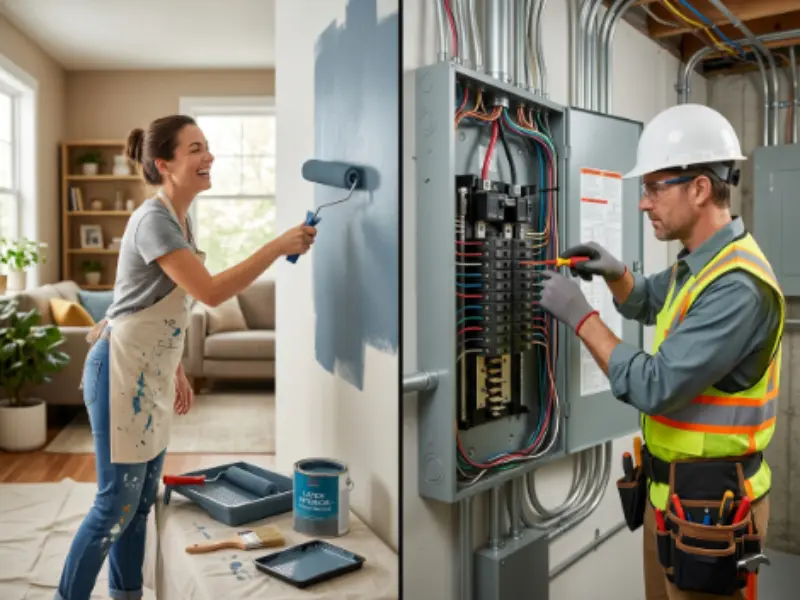
You now know every major project type, what it costs, what it returns, and who should actually do the work. Let’s wrap this up with the questions people ask most.
Frequently Asked Questions
What are the 5 types of home improvement?
The 5 types of home improvement projects are cosmetic, structural, energy-efficiency, safety, and maintenance. Cosmetic changes how a home looks, structural changes its layout or bones, energy-efficiency lowers bills, safety protects your family, and maintenance keeps existing systems working right. Every project fits into one of these five groups.
What is considered a home improvement project?
Any work that fixes, updates, or adds value to your home counts as a home improvement project. This includes small jobs like painting a wall and big jobs like a kitchen remodel or room addition. If it improves your home in any way, it qualifies as home improvement.
What home improvements add the most value?
Kitchen remodels and basement conversions add the most value, both returning around 85 to 86 percent of what you spend. Asphalt roof replacement often pays for itself completely. Bathroom remodels return less, typically 56 to 64 percent, depending on how upscale the finishes are.
What is the difference between a renovation and a remodel?
A renovation restores or updates something that already exists, like refinishing old hardwood floors. A remodel changes the actual structure or layout, like turning a bedroom into a bathroom. Renovations keep the same purpose for a space. Remodels change what that space is used for entirely.
What are the most common home improvement projects?
The most common home improvement projects are kitchen remodels, bathroom remodels, roof replacement, and basement conversions. Smaller, more frequent projects include painting, flooring updates, and landscaping. Homeowners tend to start with lower cost cosmetic fixes before moving on to bigger structural work.
Which home improvement project has the best ROI?
A cosmetic kitchen remodel and a basement conversion currently have the best ROI, each returning around 85 to 86 percent. Insulation upgrades and asphalt roof replacement often come close to breaking even or fully paying for themselves at resale, making them smart choices too.
Can home improvement projects lower resale value?
Yes, some projects can lower resale value. Overly personalized choices, unfinished DIY work, and unusual color schemes often turn buyers away. Converting a bedroom into a closet or skipping permits on structural work can also hurt your home’s value when it’s time to sell.
Do I need a permit for a home improvement project?
Most structural changes need a permit, including room additions, wall removals, and basement conversions. Cosmetic projects like painting or swapping cabinet hardware usually don’t. Always check with your local building department before starting, since permit rules vary by city and county.
What home improvement projects can I do myself?
Painting, installing floating flooring, swapping cabinet hardware, and basic landscaping are all safe DIY projects. Avoid DIY on anything involving gas lines, main electrical panels, structural walls, or plumbing rerouting. A good rule: if a mistake could flood your home or hurt someone, hire a pro.
How much does the average home improvement project cost?
Cost depends heavily on project type. A cosmetic kitchen remodel averages around $26,790, a basement conversion around $57,500, and an asphalt roof replacement around $12,000. Smaller projects like painting or flooring can cost a few hundred dollars, making them easy starting points for any budget.
Conclusion
By now, you understand something most homeowners never fully figure out about the types of home improvement projects out there. Every project serves a different goal, and picking the right one starts with knowing what you actually want, more comfort, more value, or just a home that finally feels like yours.
Whether it’s a kitchen remodel with real return on investment, a basement conversion that adds hidden square footage, or something as simple as a fresh coat of paint, you now have the numbers and the reasoning to choose with confidence.
You don’t need to guess anymore, and you don’t need to start with the biggest, scariest project on the list. Small wins add up. A weekend of painting can teach you just as much as a full remodel, minus the stress. Your home doesn’t need to change overnight.
It just needs you to start somewhere real. Pick one project from this guide, the one that matches your budget and your goal, and take that first step this week. You already have everything you need to begin.