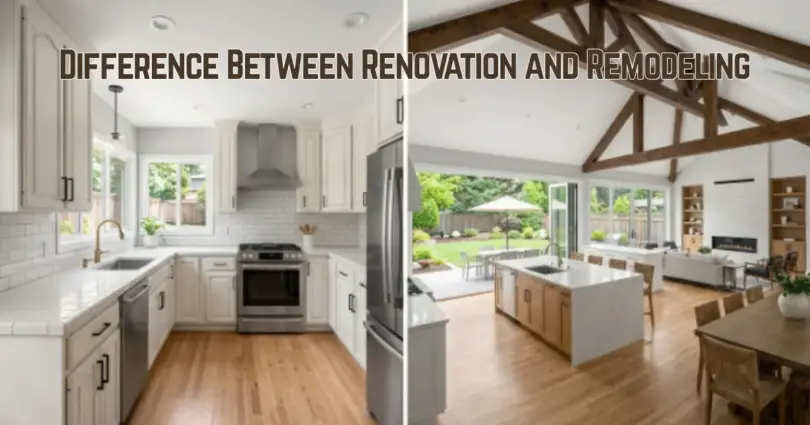

What is the difference between renovation and remodeling? Renovation means updating what’s already there, like new floors or paint, without changing a room’s layout. Remodeling means changing the structure itself, like moving walls or adding a room. Renovation costs less and moves faster. Remodeling costs more but can reshape how your home works entirely.
Most homeowners find this surprising. A wall removal and a fresh coat of paint both get called “remodeling” on Pinterest, but only one of them actually changes your home’s bones. That mix up costs people real money every year.
What is the difference between renovation and remodeling? It isn’t just word choice. It decides your budget, your timeline, and whether you’ll need a permit at all. Get it wrong and you could be stuck mid project with a contractor who’s doing far more, or far less, than what you actually wanted.
In this guide, you’ll get a clear, no confusion breakdown of both terms. You’ll see real project examples, real 2026 cost ranges, and a simple table you can glance at in ten seconds. We’ll even give you a quick checklist to figure out which one your home actually needs.
Let’s start with what each word really means.
What Do Renovation and Remodeling Actually Mean?
Renovation means updating something that already exists. Remodeling means changing the actual structure or layout of a space.
Truth is, both words get thrown around like they mean the same project. They don’t. One is a refresh. The other is a rebuild.
Renovation in Plain Words
Think of renovation as giving your home a fresh start without moving anything around.
- New paint on old walls
- New floors where the old ones wore out
- Updated light fixtures
- Fresh cabinet doors on the same layout
The room stays where it is. You’re just making it look and feel new again.
Remodeling in Plain Words
Remodeling is different. You’re changing what the space actually does, not just how it looks.
- Knocking down a wall between kitchen and dining room
- Turning a garage into a bedroom
- Moving plumbing to relocate a bathroom
- Adding a whole new room onto your house
One simple way to remember it: Renovation is the same house wearing new clothes. Remodeling is the house getting a new body. If your project needs a contractor to draw up new blueprints, it’s remodeling. If it just needs new materials in the same spots, it’s renovation.
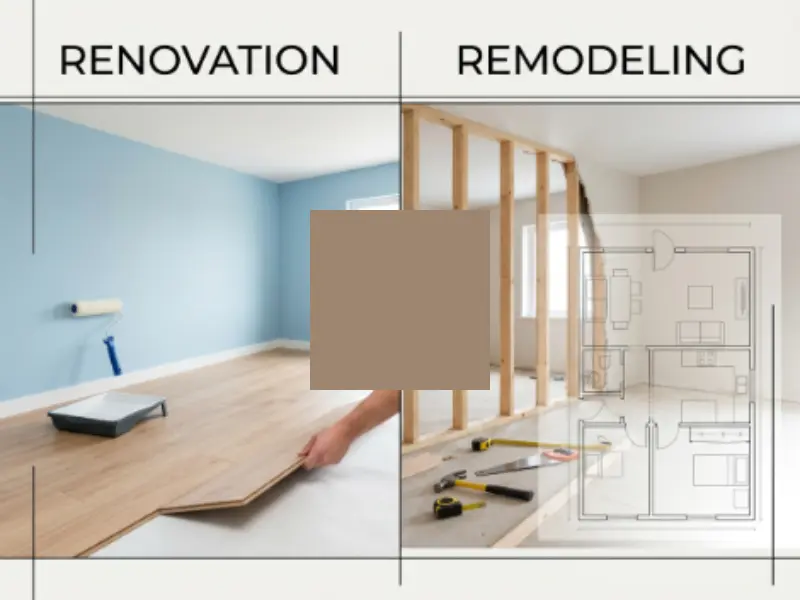
Once you know what each word actually means, the real question becomes how they stack up side by side. That’s exactly what the table below shows you.
Renovation vs Remodeling: Quick Comparison Table
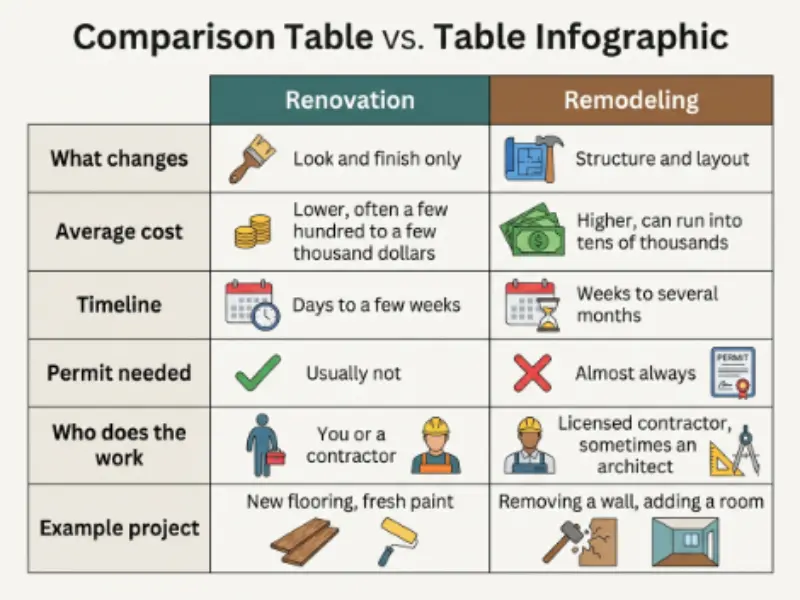
Renovation is cheaper, faster, and needs no permit most of the time. Remodeling costs more, takes longer, and almost always needs one.
This table gives you a quick glance whenever you’re not sure which project you’re actually planning.
| Factor | Renovation | Remodeling |
| What changes | Look and finish only | Structure and layout |
| Average cost | Lower, often a few hundred to a few thousand dollars | Higher, can run into tens of thousands |
| Timeline | Days to a few weeks | Weeks to several months |
| Permit needed | Usually not | Almost always |
| Who does the work | You or a contractor | Licensed contractor, sometimes an architect |
| Example project | New flooring, fresh paint | Removing a wall, adding a room |
No other article on this topic actually built this table. They talk about the idea and never deliver it. You just did in ten seconds what took them three paragraphs to almost explain.
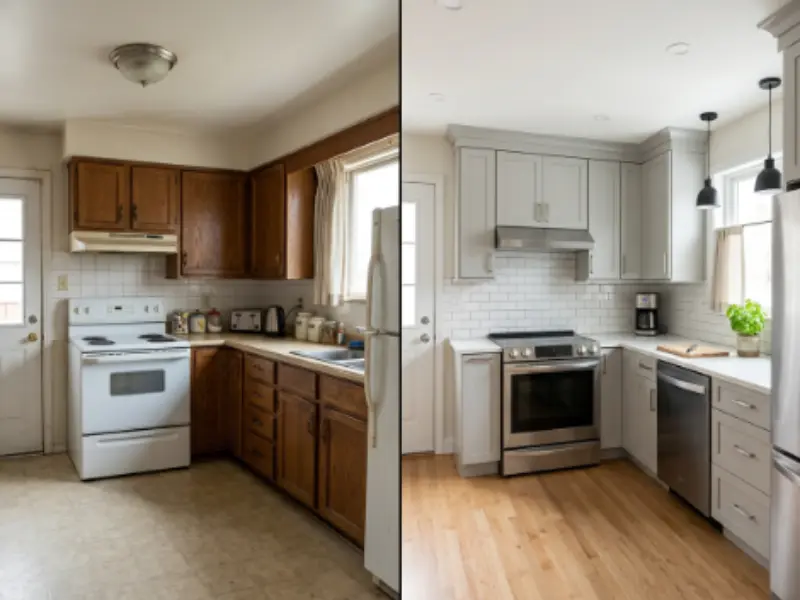
A table gives you the numbers. It doesn’t tell you what these projects actually look like in a real home. Let’s look at what renovation projects actually look like in real homes.
What Are Real Examples of Renovation Projects?
Renovation projects update what’s already there. Kitchen and bathroom renovations are the two most common ones homeowners take on.
You don’t need to guess what counts as a renovation. Here are real examples people do every year.
Kitchen Renovation Examples
- Swapping old countertops for new ones, average cost around $2,000 to $8,000
- Repainting cabinets instead of replacing them
- Installing a new backsplash
- Replacing an old sink and faucet
None of these change where your kitchen sits or how big it is. They just make it look better.
Bathroom Renovation Examples
- Replacing an old tub or shower insert
- Installing new tile on existing walls
- Swapping out an outdated vanity
- Updating the toilet and fixtures
A full bathroom renovation like this typically runs $3,000 to $10,000, depending on materials and your location.
In practice, most renovation projects share one thing in common. You can usually finish them without moving a single pipe or wire. If your contractor says they need to cut into a wall for new plumbing, you’ve actually stepped into remodel territory without realizing it.
Renovation keeps the bones of your home the same. Remodeling is a different story entirely, and that’s where things get bigger.
What Are Real Examples of Remodeling Projects?
Remodeling projects change your home’s structure or layout. Think wall removals, home additions, and moving rooms around entirely.
Renovation makes a space look better. Remodeling makes it work differently. Here’s what that looks like in real homes.
Kitchen Remodel Examples
- Removing a wall to create an open concept kitchen
- Moving the sink or stove to a new spot, which needs new plumbing
- Adding a kitchen island with its own electrical and plumbing lines
- Expanding the kitchen into a former dining room
A full kitchen remodel like this usually runs $25,000 to $50,000, sometimes more depending on how much structure changes.
Bathroom Remodel Examples
- Moving a bathtub to a different wall
- Turning a small closet into extra bathroom space
- Relocating plumbing to fit a new layout
- Combining a small bathroom with an adjoining room
Bathroom remodels typically land between $15,000 and $30,000 once plumbing and structural work get involved.
Home Additions and Layout Changes
- Adding a new bedroom onto the house
- Converting a garage into a livable room
- Raising a ceiling by using loft space
- Building a second story onto a single-story home
One quick gut check actually works well here. Ask yourself if the project needs a plumber or electrician to move something to a brand new spot, not just replace it in the same spot. If the answer is yes, you’re remodeling, not renovating. That one question saves people from underestimating their own project every time.
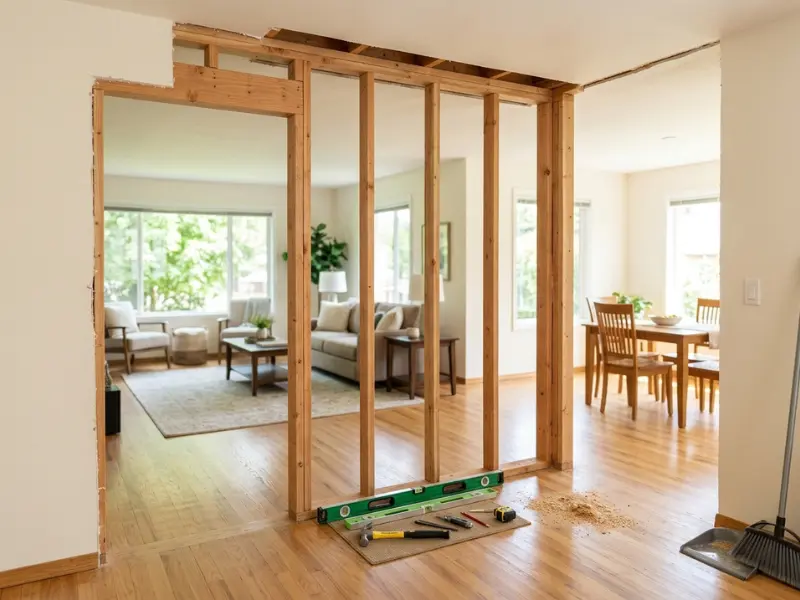
Remodeling changes what your home can do for you. But before you commit to one, you need real numbers. Let’s break down exactly what each option costs.
Does Renovation or Remodeling Cost More?
Remodeling costs more than renovation almost every time. The gap comes from labor, permits, and structural work that renovation simply doesn’t need.
Cost is usually the deciding factor for most homeowners. Here’s how the numbers actually break down.
Renovation Cost Range
- Small renovations like painting or new fixtures: a few hundred dollars
- Mid-size renovations like new flooring or countertops: $2,000 to $8,000
- Full kitchen renovation projects run close to $2,000 to $8,000, while a full bathroom renovation typically lands a bit higher, around $3,000 to $10,000, since plumbing fixtures cost more than kitchen finishes.
Most renovation costs come from materials, not labor, since there’s no structural work involved.
Remodeling Cost Range
- Kitchen remodel: $25,000 to $50,000
- Bathroom remodel: $15,000 to $30,000
- Full home remodel or addition: $50,000 to $190,000 or more
Remodeling costs climb fast because you’re paying for architects, permits, and multiple trades like plumbers and electricians working together.
Something most people miss. Remodeling costs don’t scale in a straight line. Adding just one more structural change, like moving a single wall six inches further, can add thousands of dollars because it often means redoing wiring or plumbing that would’ve otherwise stayed untouched. Small structural tweaks rarely stay small on the final bill.
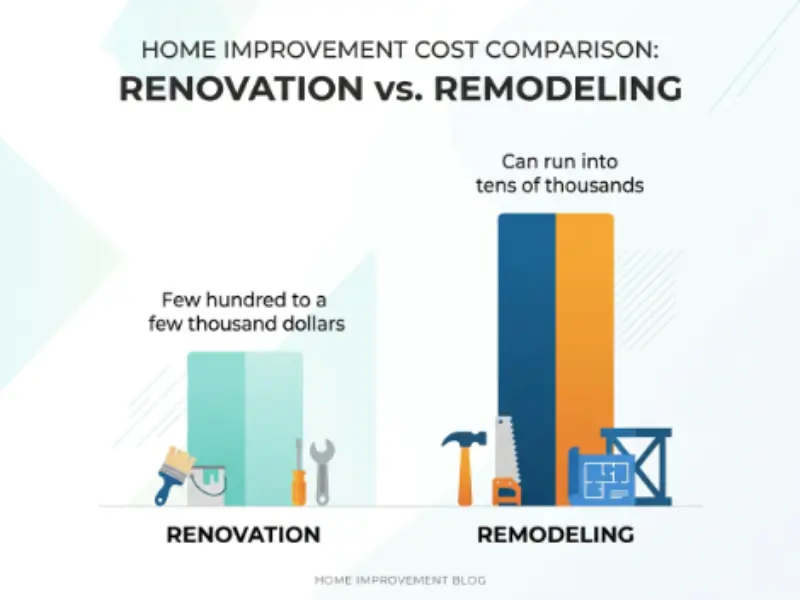
Cost tells you what you’ll spend today. Timeline tells you how long you’ll be living with the mess. Let’s talk about timelines.
How Long Does Each One Take?
Renovation projects usually finish in days to a few weeks. Remodeling projects often take one to six months, sometimes longer.
Nobody wants to guess how long their home will be under construction. Here’s a real breakdown.
Renovation Timeline
- Painting a room: one to two days
- Replacing flooring: two to five days
- Full kitchen or bathroom renovation: two to four weeks
Since renovation doesn’t touch the structure, most projects move fast and don’t need inspections along the way.
Remodeling Timeline
- Kitchen remodel: six to twelve weeks
- Bathroom remodel: four to eight weeks
- Home addition or second story: three to six months, sometimes longer
Permits and inspections add real time here. Each structural step usually needs sign off before the next one can start.
In practice, the biggest delay in remodeling isn’t the construction itself. It’s waiting on permit approval before work can even begin. In many cities, that alone can add two to six weeks before a single wall comes down. None of the competing articles on this topic even mention this, and it’s often the part that frustrates homeowners the most.
Timelines matter, but none of it matters if you skip a required permit. That’s exactly what we’re covering next.
Do You Need a Permit for Renovation or Remodeling?
Renovation usually skips permits. Remodeling almost always needs one because it changes the structure of your home.
Permits protect you, even if they feel like a hassle. Here’s when each project actually needs one.
When Renovation Needs a Permit Anyway
Most renovation work doesn’t touch permits at all. But a few exceptions exist.
- Replacing a water heater
- Upgrading an electrical panel
- Installing a new HVAC unit
- Adding a permanent gas line fixture
If your renovation involves anything connected to gas, electric, or major plumbing lines, check with your city first.
What Remodeling Permits Usually Cover
Remodeling touches your home’s structure, so building departments want to sign off.
- Removing or adding a wall
- Changing plumbing or electrical layouts
- Adding a new room or story
- Any work that changes your home’s footprint
What most people don’t realize is this. Skipping a required permit doesn’t just risk a fine. It can also block you from selling your home later, since many buyers’ inspectors flag unpermitted work automatically. What actually works is calling your local building department before you start, not after. A five minute call can save you months of trouble down the line.
Your city’s building department website usually lists exactly what needs a permit in your area, since rules shift slightly from city to city.
Permits decide what’s legally required. But the real question homeowners ask is simpler: which project actually fits their home right now?
Which One Should You Choose for Your Home?
Choose renovation if you want a quick refresh on a tight budget. Choose remodeling if you need more space or a completely different layout.
It comes down to your goals, your budget, and how long you plan to stay in your home.
Signs You Need Renovation
- You like your current layout, you just want it to look better
- Your budget is under $10,000
- You want the project done in a few weeks, not months
- Nothing structural is broken, it just looks tired
Signs You Need Remodeling
- Your kitchen or bathroom feels too small for how you actually use it
- You need more rooms, not just nicer ones
- You’re planning to stay in this home for years
- A wall, room, or layout is actively getting in your way
This simple four question check actually works in practice. Ask yourself: Do I like my current layout? Is my budget under $10,000? Do I need this done in under a month? Am I only fixing looks, not function? If you answered yes to most of these, you need renovation. If you answered no to most, you need remodeling. None of the competing articles give readers a clear self check like this, they just describe both options and leave you to figure it out.
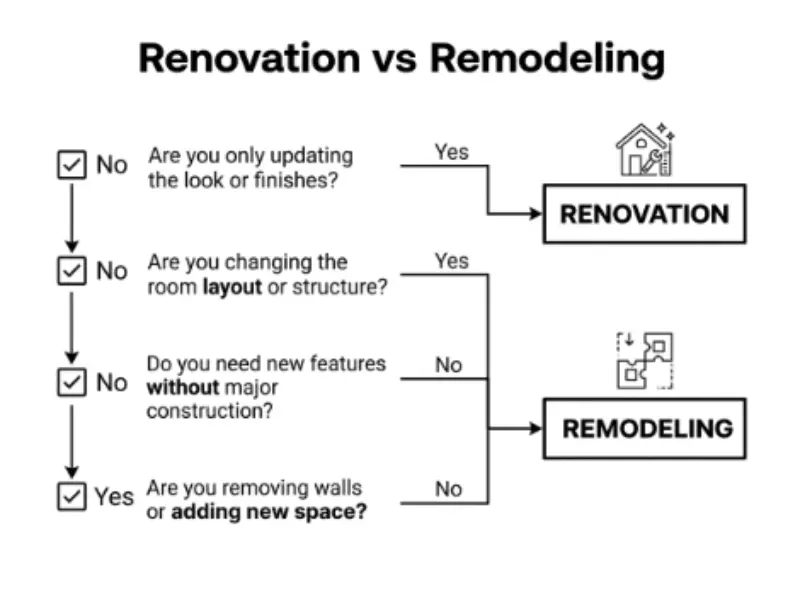
Knowing which project fits you today matters. But it’s also worth thinking about what each one does for your home’s value down the road.
Do Renovation or Remodeling Add More Home Value?
Remodeling usually adds more resale value than renovation, but renovation gives you a faster return for less money spent.
Value isn’t just about how much you spend. It’s about what you get back when you sell.
Where Remodeling Wins on Value
- Kitchen remodels often return 60 to 80 percent of their cost at resale
- Bathroom remodels typically return 60 to 70 percent
- Adding usable square footage almost always raises appraised value
Where Renovation Wins on Value
- Fresh paint can return over 100 percent of its cost, since it’s so cheap to begin with
- New flooring often returns 70 to 80 percent
- Small renovations recoup value fast because the upfront cost is so low
What actually works, when people ask us this directly, is this: Return on investment as a percentage looks better for small renovations, but remodeling adds more real dollars to your home’s price, just a lower percentage of what you spent. If you’re selling soon, small renovations make sense. If you’re staying long term, remodeling pays off in daily use, not just resale math.
Value, cost, timelines, and permits all point to the same conclusion. The right choice depends entirely on what you actually need from your home.
Frequently Asked Questions
Is remodeling the same as renovating?
No, they’re not the same. Renovating updates what’s already there, like paint or flooring, without changing the layout. Remodeling changes the actual structure, like moving walls or adding rooms. The difference between renovation and remodeling comes down to whether the bones of your home change or just the finish.
Which is cheaper, renovation or remodeling?
Renovation is cheaper almost every time. Small renovations can cost a few hundred dollars, while full renovations run $3,000 to $10,000. Remodeling starts around $15,000 and can climb past $50,000 because it involves permits, architects, and multiple contractors working on structural changes.
Do I need a permit to remodel my house?
Yes, most remodeling projects need a permit. Anything that changes your home’s structure, like removing a wall, moving plumbing, or adding a room, usually requires city approval. Skipping this step can lead to fines and problems later when you try to sell your home.
How long does a kitchen remodel take?
A full kitchen remodel typically takes six to twelve weeks. This includes demolition, structural changes, plumbing or electrical work, and final finishes. Permit approval can add extra time before construction even starts, so plan for closer to three months from start to finish.
What is considered a renovation vs a remodel?
A renovation is considered anything that updates existing features without changing layout, like new counters or fresh paint. A remodel is considered anything that changes structure or function, like knocking down a wall or adding a bathroom. The key difference is whether the layout itself changes.
Which adds more resale value, remodeling or renovating?
Remodeling adds more actual dollars to your home’s value, especially kitchen and bathroom remodels, which often return 60 to 80 percent of their cost. Renovation returns a higher percentage since it costs less upfront, sometimes over 100 percent for something simple like fresh paint.
Can I renovate and remodel at the same time?
Yes, many projects combine both. For example, you might remodel a kitchen by removing a wall while also renovating it with new countertops and flooring. Contractors handle this often, just make sure your permit covers both the structural and cosmetic parts of the job.
Is painting a house renovation or remodeling?
Painting is renovation, not remodeling. It only changes how a space looks, not its structure or layout. Renovation covers cosmetic updates like paint, flooring, and fixtures. Remodeling only applies when walls move, rooms get added, or the actual layout of your home changes.
What is restoration and how is it different from both?
Restoration means returning a space to its original condition, usually for older or historic homes. Unlike renovation or remodeling, restoration focuses on repairing or replicating original materials, like refinishing old hardwood floors, instead of updating or changing them to something new.
Do I need an architect for a remodel?
You need an architect for larger remodels involving structural changes, like moving load bearing walls or adding a second story. Smaller remodels, like updating a kitchen layout without touching walls, usually just need a licensed contractor. Always check with your city’s permit office to confirm.
Conclusion
You now know something most homeowners never fully figure out. Renovation and remodeling aren’t interchangeable words, they’re two completely different paths for your home, and picking the right one saves you money, time, and a lot of stress.
Renovation gives your space a fresh feel without touching its bones. Remodeling reshapes what your home can actually do for you. Neither one is better than the other, they just solve different problems. What matters is matching the project to what your home genuinely needs right now.
Whether you’re repainting a tired room or knocking down a wall to finally get that open kitchen you’ve pictured for years, you’re not guessing anymore. You know the real costs, the real timelines, and exactly what questions to ask before you call a contractor.
Your home has been waiting for this project longer than you think. Now that you know what is the difference between renovation and remodeling, go ahead and try the checklist from this article on your own space. You might be surprised how clear the right choice suddenly feels.